

Chinese Tube Mills vs European and American Brands: Cost, Lead Time, Customization, and Total Value Comparison
This guide compares Chinese tube mills with European and American brands across the dimensions that matter most in real procurement decisions.
For most stainless steel tube mill buyers, the real comparison is not simply “China vs Europe” or “China vs USA.” The actual decision is which supplier offers the best combination of technical fit, commercial risk, lead time, service support, and return on capital for the buyer’s specific market.
European and American tube mill brands still hold strong reputations for engineering depth, documentation discipline, and long-term machine durability. Chinese manufacturers, however, have become the default short-list option for many buyers because they now offer a much stronger price-to-performance ratio, shorter delivery times, and far more willingness to customize line configuration around niche market needs.
This guide compares Chinese tube mills with European and American brands across the dimensions that matter most in real procurement decisions.
The Real Decision Framework
A tube mill is not a commodity purchase. Buyers are usually balancing five questions at the same time:
- Can the machine make the required tube quality consistently?
- How much capital must be committed up front?
- How long will it take before production starts?
- How expensive and slow will service be after installation?
- How much process adaptation is possible for the buyer’s market?
Chinese, European, and American brands often arrive at different answers because they are optimized around different business models.
- European brands are typically optimized for engineering rigor, documentation completeness, and premium industrial buyers.
- American brands often perform strongly in controls integration, industrial ruggedness, and domestic service availability for North American customers.
- Chinese brands usually compete on faster customization, lower capital cost, broader configuration flexibility, and shorter commercial decision cycles.
Side-by-Side Comparison
| Фактор | Chinese Brands | European Brands | American Brands |
|---|---|---|---|
| Upfront purchase price | Lowest in most cases | Highest in most cases | Высокий |
| Delivery lead time | Usually shortest | Often longer | Medium to long |
| Customization flexibility | Высокий | Средний | Средний |
| Documentation depth | Improving, but variable by supplier | Strongest overall | Strong |
| Automation sophistication | Good and rising quickly | Typically strongest at the high end | Strong |
| Spare parts cost | Lower | Higher | Higher |
| Spare parts lead time | Usually fast from China stock | Can be longer and more expensive | Faster in North America, slower elsewhere |
| Service in Asia / Middle East / Africa | Often stronger value-for-money | Strong but expensive | More limited in some regions |
| Resale brand prestige | Moderate | Highest | Высокий |
| ROI for first investment | Often strongest | Depends on premium market need | Moderate |
Cost Structure
The clearest advantage of Chinese tube mills is capital efficiency. In broad industrial equipment comparisons, Chinese machinery is commonly priced around 30–60% lower than comparable European or American equipment, largely because of lower manufacturing costs, dense local supply chains, and more aggressive export pricing. Similar comparisons of industrial machinery sourcing also show Chinese suppliers often landing 25–35% below European sourcing on initial procurement cost. For tube mill buyers, that cost gap can materially shorten payback period and lower the risk of a first investment.
That lower entry price matters most for three buyer types:
- First-time investors entering stainless tube production.
- Regional distributors trying import substitution.
- Export-focused SMEs that need fast payback rather than prestige branding.
European and American brands can still justify their premium when the buyer’s economics depend on ultra-high uptime, advanced digital integration, or tight integration into a larger automated plant. But if the buyer’s market is decorative tube, standard industrial tube, or medium-scale food-grade production, Chinese equipment often delivers the better financial equation.
Lead Time and Project Speed
Chinese manufacturers are increasingly favored because they move faster from quotation to shipment. Broader machinery sourcing comparisons consistently note shorter delivery cycles and more export-ready logistics from Chinese suppliers than from European or American builders. In practice, this advantage is especially important when the buyer is trying to catch a market window, replace imports quickly, or start qualification with customers before competitors do.
For stainless tube mill buyers, project speed includes four separate phases:
- Technical clarification and quoting.
- Manufacturing lead time.
- Export packing and shipping readiness.
- Spare parts and post-installation response.
Chinese suppliers often compress all four phases because they operate in dense industrial clusters such as Foshan and Jiangsu, where frames, drives, polishing heads, PLC integration, and export packing can be coordinated quickly. European suppliers may be slower not because they are inefficient, but because they typically work through more formal engineering approval layers and stricter documentation workflows before release to production.
Настройка
Customization is one of the biggest practical differences.
Chinese manufacturers are often far more willing to modify:
- OD range.
- Polishing head count.
- TIG vs laser vs hybrid welding section.
- HMI language.
- Electrical standard.
- Layout constraints.
- Combined round/square/oval capability.
- Inline slitting, bead rolling, or PVD-ready polishing options.
European and American brands can absolutely customize too, but their standard approach is usually more platform-based. That means changes may be technically excellent but commercially expensive. Chinese suppliers are usually more comfortable making mid-level layout or component changes without completely repricing the entire project.
For buyers serving niche markets such as handrail tube, sanitary tube, elevator decorative tube, or export-to-Japan mirror-finish tube, this flexibility is often more valuable than the brand prestige of a Western supplier.
Automation and Precision
European brands still generally lead at the very high end of automation, controls sophistication, and long-term process stability. This is especially visible in:
- Servo synchronization.
- Digital quality traceability.
- Fully integrated recipe management.
- Energy optimization.
- High-end diagnostics and safety documentation.
That said, the gap has narrowed. Chinese suppliers now routinely offer Siemens PLC platforms, multilingual HMIs, servo-driven sizing systems, inline eddy current testing, and increasingly refined automation packages. In many commercial situations, the relevant question is no longer whether Chinese automation is “good enough,” but whether the buyer can actually monetize the incremental sophistication of a more expensive Western system.
If the buyer is supplying premium EU or pharmaceutical customers with strict audit requirements, the extra documentation discipline of European brands may justify the cost. If the buyer is supplying decorative construction tube in Asia, GCC, or Latin America, Chinese automation is often fully adequate.
Service and Spare Parts
Service quality is where buyers must be most honest with themselves.
A European machine with excellent engineering can still become a poor investment if spare parts are slow and expensive to import into the buyer’s country. Likewise, a Chinese machine with lower parts cost can become frustrating if the supplier lacks structure, documentation, or remote support discipline.
The practical comparison usually looks like this:
- Chinese suppliers often provide cheaper parts and faster dispatch.
- European suppliers often provide better manuals and more structured troubleshooting.
- American suppliers may be strongest for buyers operating inside North America.
For buyers in Southeast Asia, Middle East, Africa, and Latin America, Chinese after-sales support can be commercially stronger simply because the parts pipeline is faster and the supplier is more used to export troubleshooting over WhatsApp, VPN, and video calls.
The right question is not “Which country makes the best machine?” but “Which specific supplier can support this line in my country within the downtime tolerance my business can afford?”
Documentation and Compliance
European brands generally lead in documentation quality. This includes:
- CE files.
- Risk assessment structure.
- Drawings.
- Electrical schematics.
- Spare parts coding discipline.
- Maintenance manuals.
Chinese suppliers vary widely. The best Chinese exporters now provide very solid CE documentation, PLC backup files, bilingual manuals, and FAT reports. The weakest still underinvest in documentation and rely too heavily on informal support.
This is why supplier selection matters more than country-of-origin stereotypes. A top-tier Chinese exporter with real international experience may be a safer purchase than a lower-tier European builder whose machine is expensive but poorly aligned with the buyer’s market.
Which Buyer Should Choose What?
Chinese brand is usually the better fit when:
- Budget sensitivity is high.
- Payback speed matters.
- The buyer needs customization.
- The target market is decorative, structural, or mid-range process tube.
- The project is in Asia, Middle East, Africa, or Latin America.
- The buyer values fast quoting and practical communication.
European brand is usually the better fit when:
- The project serves premium audited sectors.
- Documentation depth is critical.
- Budget is secondary to engineering prestige.
- The plant requires deep automation integration.
- The buyer already operates European equipment and wants compatibility.
American brand is usually the better fit when:
- The machine will run in North America.
- Local service response is essential.
- Plant controls architecture is US-standard.
- The buyer prefers domestic or near-domestic support structures.
Procurement Mistakes to Avoid
| Mistake | Why It Hurts |
|---|---|
| Comparing by price only | Lowest price can hide weak service, poor tooling, or weak documentation |
| Comparing by brand prestige only | Premium branding may not create real commercial value in your market |
| Ignoring spare parts logistics | Downtime cost can exceed purchase savings quickly |
| Under-specifying the product mix | OD range, finish, and grade mix determine whether the line is truly fit for purpose |
| Not checking FAT discipline | FAT quality predicts commissioning quality |
| Assuming all Chinese or all European suppliers are the same | Supplier quality varies more than country labels suggest |
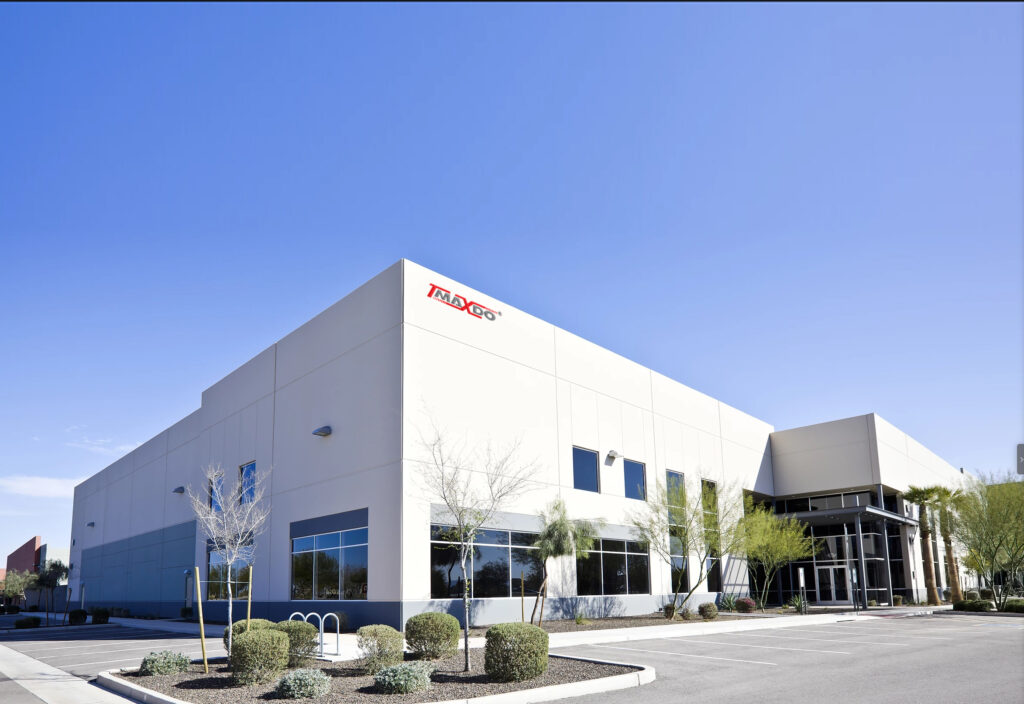
MaxDo Positioning in This Comparison
MaxDo’s competitive position is strongest where buyers want the advantages typically associated with Chinese manufacturing—lower capital cost, quicker lead times, and high customization—but do not want the weak documentation or weak after-sales structure often associated with low-end exporters.
In practical terms, that means competing most effectively against European and American brands in projects where:
- The buyer wants 70–90% of the functional performance at materially lower capital cost.
- The target output is decorative, architectural, sanitary, or medium-scale industrial tube.
- The investment case depends on ROI within roughly 2–4 years.
- The buyer values configuration flexibility over fixed-platform standardization.
Final Selection Rule
A useful rule of thumb:
- Choose European/American premium brands when failure cost is extremely high and documentation, integration, and prestige are worth the premium.
- Choose a strong Chinese exporter when ROI, speed, and customization are the primary commercial drivers.
The best buying outcome usually does not come from choosing a country. It comes from choosing a supplier whose machine, support model, and commercial structure match the buyer’s market reality.