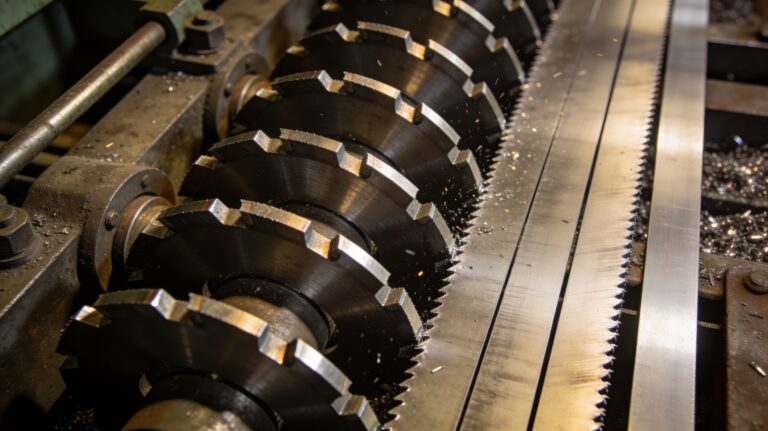



Compact Slitting Line Engineering: MD-850 Tradeoff Checklist
A narrow compact slitting line engineering checklist for 850-class projects, focused on rigidity, footprint, tension path, recoiling, access, automation, and model fit.
A compact slitting line is not simply a smaller version of a wide slitting line. Compact engineering changes the tradeoffs around frame rigidity, strip path, maintenance access, operator visibility, tension control, recoiling stability, and automation layout. The right question is not whether a compact line can fit the floor. The right question is whether the compact layout can still protect strip quality and daily serviceability.
For 850-class fit and setup intake, use the MD-850 thin-gauge slitting setup checklist. For the product entry, review the MA-850 metal slitting machine. This page is a narrow support page for compact-line engineering tradeoffs. It owns only the compact 850-class engineering layer: rigidity, footprint, tension path, recoiling space, service access, automation boundary, and model-fit tradeoff. It is not the MA-850 product page, not the 850-class setup-fit checklist, and not the MA/MD model fit matrix.
Compact Layout Changes the Engineering Problem
Compact slitting equipment must keep the strip path short without creating unstable tension zones or difficult service access. A smaller footprint can improve plant layout, but it can also concentrate loading, reduce maintenance clearance, and make coil handling less forgiving. Engineering review should include both production performance and daily access.
| Tradeoff | What to check |
|---|---|
| Footprint vs access | Can operators load, thread, inspect, and service the line safely? |
| Rigidity vs compact frame | Does the frame control vibration and maintain alignment under load? |
| Short strip path vs tension stability | Can the line maintain stable tension through slitting and recoiling? |
| Compact recoiling vs coil build | Can finished coils remain tight, aligned, and easy to unload? |
Rigidity and Alignment Come First
Thin-gauge slitting still needs a rigid mechanical foundation. If the frame, knife shafts, guides, or recoiler alignment drift under load, the plant may see width variation, burr inconsistency, camber, or poor coil build. Compact design should not remove the stiffness needed for repeatable slitting.
If the main concern is blade setup, clearance, overlap, or first-piece release, use the slitting line blade setup guide. This page stays at the engineering-layout level.
Check the Tension Path and Recoiling Behavior
A compact line has less room to hide poor strip control. Review uncoiler behavior, loop or tension control, guide position, separator setup, recoiler tension, finished coil OD, and unloading route. If finished coils telescope, loosen, scratch, or distort, the compact footprint is not helping the project.
Service Access Is a Specification Item
Maintenance space should be part of the RFQ, not a late installation detail. Operators and technicians need access to knives, spacers, guides, sensors, guards, lubrication points, electrical cabinets, and recoiling components. A compact line that is hard to inspect will be harder to keep stable over repeated jobs.
Automation Must Fit the Compact Layout
Automation features should support the compact line instead of crowding it. Recipe storage, tension settings, alarm history, production records, and remote diagnostics can be useful when sensors, cabinets, operator screens, and service routes are placed logically. For line-control behavior, review the advanced slitting line control guide. For project execution, use the metal production line automation execution plan.
Know When Compact Is the Wrong Choice
A compact 850-class line is not the right answer when the plant regularly runs wider coils, heavier stock, long high-volume programs, or jobs that need more layout space for handling and recoiling. In those cases, compare model boundaries through the MA and MD model fit matrix, or review the MA-1350 metal slitting machine and the full metal slitting machine category.
Compact Slitting Engineering Checklist
- Confirm coil width, thickness range, material grade, and finished strip program.
- Check frame rigidity, shaft alignment, guide layout, and vibration control.
- Define tension path, separator method, recoiling target, and finished coil handling.
- Verify maintenance access for knives, guides, sensors, cabinets, and guards.
- Define automation features only after the layout and service routes are clear.
If you are evaluating a compact slitting line, send your floor space, coil window, material mix, finished strip program, recoiling target, maintenance access limits, and automation requirements through the MaxDo contact form.