Industrial Slitting Lines: Verified 2026 Guide to Architecture, Platform Class, and Buyer Fit
Use this verified 2026 guide to evaluate industrial slitting lines by architecture, width class, controls, and MaxDo's live public catalog.
An industrial slitting line should be judged as a production system, not as a single machine with a speed label. The line has to manage entry handling, strip stability, slit quality, strip separation, recoiling, and the workflow that supports all of those steps.
A line becomes industrial only when the full system can hold strip tracking, slit width, edge condition, recoiling quality, and workflow stability under the plant’s real operating conditions. A high headline speed by itself does not prove that.
What makes a slitting line industrial
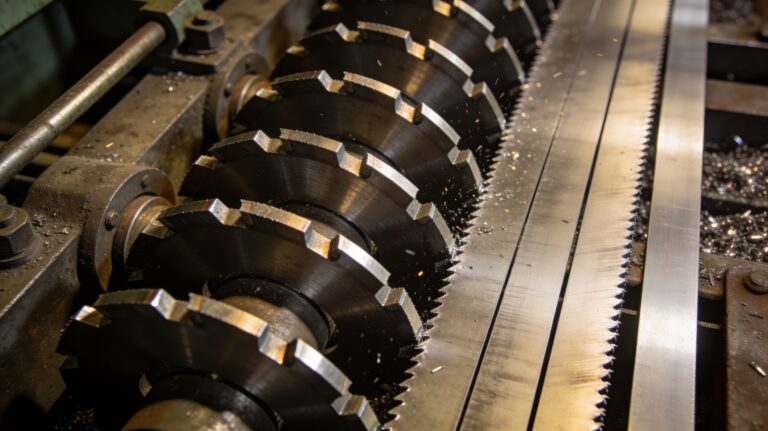
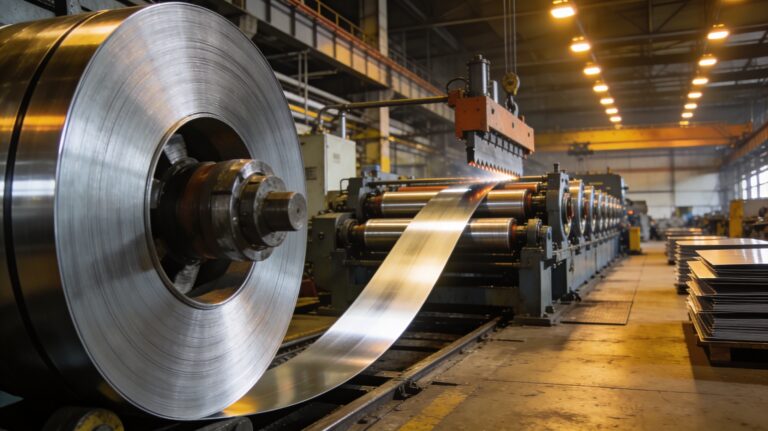
Every component in a well-engineered slitting line has a defined role: coil car, uncoiler, peeler breaker, parting shear, slitting head, roll tensioner, divider tooling, recoiler, and exit coil car. When any zone is underspecified, the defects show up downstream — in width tolerance, edge condition, strip tracking, and finished coil build.

An industrial slitting line is not defined by the knives alone. It is defined by the system that controls entry, cutting, strip handling, and finished coil quality. That is the standard we engineer to.
| Industrial Requirement | Why It Matters In Production | Buyer Consequence |
|---|---|---|
| Managed coil entry | Entry instability creates tracking problems before the knives can even be evaluated | Coil handling belongs in the quotation, not in a later clarification |
| Controlled slitting head and tooling workflow | Setup quality determines whether width and edge condition remain stable | Tooling, setup method, and recipe discipline have to be reviewed before PO |
| Tension and strip separation control | Post-cut strip instability still creates commercial defects | Separator and tension scope are part of line capability, not optional detail |
| Recoiling fit for downstream use | Loose or unstable coils create handling problems and downstream feeding issues | Recoiler capability must match the plant’s actual coil-output requirements |
| Controls and safety scope | Mechanical capacity alone does not guarantee repeatability or safe operation | Controls, alarms, and operator workflow belong in the technical package |
If the internal team is still mixing slit-coil and cut-sheet logic in the same decision, it is safer to close the process question before the platform question. Two of our most useful supporting references are metal slitting vs. cut-to-length lines y what is the cut-to-length process.
Our Product Lineup and What Each Platform Covers
We build our slitting lineup around clear width classes, so buyers can move directly from their material program to the platform that fits. Each model in our MD series is engineered as a complete production system — from coil entry through recoiling — and every quotation is backed by a signed technical package that serves as the final engineering authority.
| Plataforma | Anchura de trabajo | Key Capability |
|---|---|---|
| MD-850 | 300-820 mm | Compact-width slitting line suited for light-to-medium gauge programs with a manageable footprint and setup rhythm |
| MD-1350 | 300-1350 mm | Mid-width industrial slitting line covering a broad daily order mix with stable strip tracking and recipe discipline |
| MD-1650MM | 300-1650 mm | Wider platform built for heavier service-center programs where coil handling, tension stability, and broader workflow burden matter |
| MD-2200 | 300-2150 mm | Our widest slitting platform, designed for ultra-wide strategic programs and high-volume production environments |
| CT-1350 | Cut-to-length class | Sheet-output system — keep separate from slitting-only shortlists unless the plant runs both processes |
| CT-1650 | Cut-to-length class | Wider CTL platform for higher-volume sheet programs requiring broader material handling |
We offer both slitting lines and cut-to-length systems. If your program requires both output forms, we can scope them together — but each process should be evaluated on its own requirements before the equipment scope is combined.
The machine zones that matter more than the family label
One reason industrial slitting-line projects get misread is that buyers compare product names instead of comparing machine zones. The architecture of the line is a stronger indicator of buyer fit than a series name.
| Line Zone | What It Controls | Why It Matters Commercially |
|---|---|---|
| Coil loading and entry | Safe loading, stable strip entry, and startup rhythm | Weak entry handling creates production loss before slitting quality is even judged |
| Slitting head and tooling area | Cut definition, width repeatability, and setup discipline | This zone determines whether the line can reproduce the required slit pattern reliably |
| Strip separation and tension section | Post-cut strip stability and strip path control | Instability here creates defects even if the slitting head is technically correct |
| Recoiler and exit handling | Finished coil build, discharge, and transport readiness | Commercial output is judged by the coil that leaves the line, not by the cut alone |
| Controls and safety package | Recipe consistency, diagnostics, alarms, and operator workflow | Repeatability depends on the control system as much as on the mechanical hardware |
That is why the inquiry file should describe the full process burden instead of saying only industrial slitting line. The broader and heavier the program becomes, the more important each of these zones becomes.
Matching Our Platforms to Your Width Class
Our lineup is organized by width class. The most practical starting point is to match the platform to your width envelope and production burden, then confirm all technical details on the specification sheet.

| Buyer Need | Our Platform | What It Covers |
|---|---|---|
| Compact-width slitting | MD-850 | Slitting up to 820 mm — the right starting point when the real work lives in the compact class |
| Mid-width industrial slitting | MD-1350 | Full-range capability from 300–1350 mm, practical for mixed daily orders in the mid-width range |
| Wider and heavier slitting | MD-1650MM | 300–1650 mm, built for programs where width, coil handling, and production burden move beyond mid-width assumptions |
| Widest slitting platform | MD-2200 | 300–2150 mm — use when ultra-wide work is routine enough to justify the largest platform class |
| Sheet-output programs | CT-1350 / CT-1650 | Keep these in process-comparison work; do not mix into a slitting-only shortlist |
In our lineup, width windows of 300-820 mm, 300-1350 mm, 300-1650 mm, and 300-2150 mm are the clearest separators between platform classes. Use those boundaries as your primary filter before evaluating any other specification.
Application fit should change the platform discussion
A slitting line should be shortlisted around your next process and the profitable order mix — not around a speed figure or a series name. The downstream consequence is what defines whether a line is truly industrial for a given plant: edge condition, strip tracking, and recoiling consistency all show up directly in forming, stamping, roll forming, and fabrication yield.
| Application Pattern | What Matters Most | Direction |
|---|---|---|
| Narrow slit programs with tighter floor space | Compact footprint, manageable setup, and stable coil flow | Start with the MD-850 |
| Mixed daily orders in the mid-width range | Recipe discipline, strip tracking, and recoiling consistency | Build the shortlist around the MD-1350 |
| Wider service-center or production programs | Coil handling, tension stability, and broader workflow burden | Move into the MD-1650MM class earlier |
| Ultra-wide strategic work | Width envelope, layout impact, crane burden, and exit handling | Use the MD-2200 only when the business case is real |
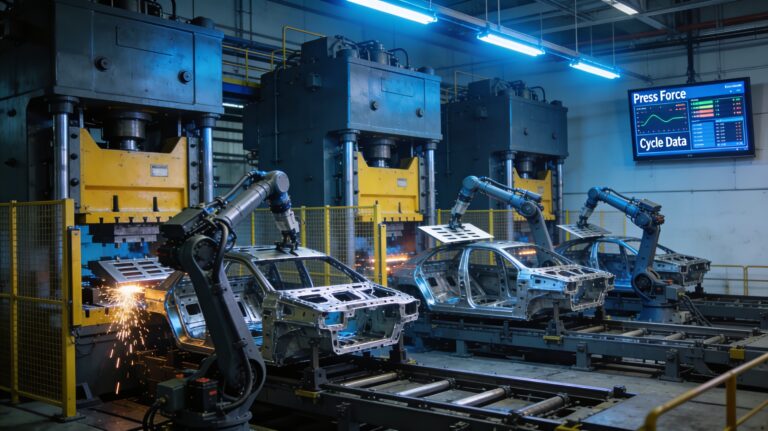
| Mixed slitting and sheet-output discussions | Output form, downstream route, and plant logistics | Close the slitting-versus-CTL question before freezing equipment scope |
If the internal team still compares width and thickness with mixed gauge language, clean that up first with the sheet metal gauge thickness chart. A vague manufacturing envelope almost always produces a vague recommendation.
Facility and workflow questions that should change the recommendation
Many line recommendations fail because the machine is sized separately from the plant. A line that looks technically suitable on paper can still become a poor choice when coil staging, lifting, tooling preparation, or downstream packing are weak.
| Plant Question | Why It Matters | What It Changes |
|---|---|---|
| How are coils staged before and after the line? | Industrial output depends on coil flow, not only on the slitting head | It affects layout, coil-car scope, and safe working rhythm |
| Is lifting mainly crane-based or forklift-based? | Handling method changes how practical wider and heavier platforms really are | It affects entry handling, exit handling, and safety planning |
| Can tooling be prepared offline? | Recipe variety demands setup discipline outside the machine frame | It changes how much value the plant can capture from a broader platform |
| Is first-coil approval formalized? | Without a release gate, one setup problem can become a full-order problem | It changes the value of controls, inspection discipline, and documentation |
| Where does the slit coil go next? | Downstream use defines whether edge, tracking, or recoil defects are minor or commercially unacceptable | It should shape the acceptance plan and line scope together |
That is also why how slitting lines maximize material yield and reduce scrap belongs in the evaluation pack. Yield is not a separate topic from platform fit. It is one of the clearest operational results of choosing the correct line class.
Common mistakes in industrial slitting-line selection
Common mistake: Treating a product page alone as the complete technical specification.
Our commercial catalog is a starting point for discovery — every order should be confirmed on the signed technical package, which is the final engineering authority.
Common mistake: Comparing only headline speed.
Speed is easier to compare than strip tracking, recoiling stability, and coil handling. The better comparison starts with architecture and production burden.
Common mistake: Defaulting to the compact platform for every project.
Width, strip count, and coil handling complexity can move a program out of the MD-850 class very quickly.
Common mistake: Mixing CTL evidence into a slitting-only decision.
We offer both slitting lines and cut-to-length systems. Make sure the process question is settled before building the equipment shortlist — otherwise the comparison weakens rather than clarifies.
Quote-ready checklist before supplier comparison
- Attach the real material program with grade family and governing purchasing standard.
- Attach the true width envelope, including maximum incoming width, narrowest finished strip, and slit-count patterns that matter commercially.
- Attach coil weight, OD, ID, loading method, lifting limits, and floor-space constraints.
- Attach downstream quality requirements, including how width, edge condition, and coil build will be checked.
- Attach the controls scope, FAT expectations, SAT expectations, training, and spare-parts package.
- Reference the specific platform page from our catalog and confirm all parameters against the signed technical package before issuing the PO.
If your team still needs help closing the shortlist, the best next step is a direct engineering conversation with our team, followed by a factory tour if the project is moving toward a serious RFQ.
Ready to Evaluate an Industrial Slitting Line Against Real Plant Data?
- Request a custom quote → contact our engineering team
- Browse our full product catalog → our product catalog
- Schedule a factory tour → our factory tour