

Metal Cut-to-Length Line
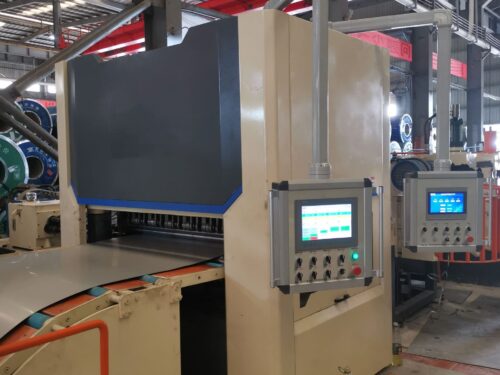
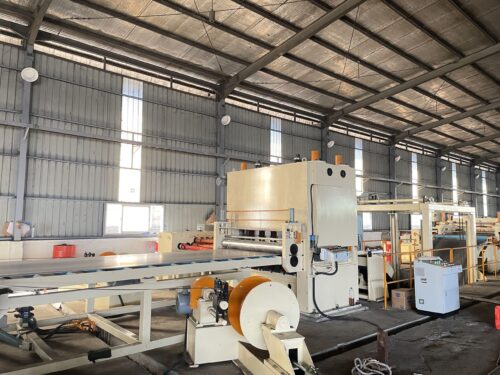
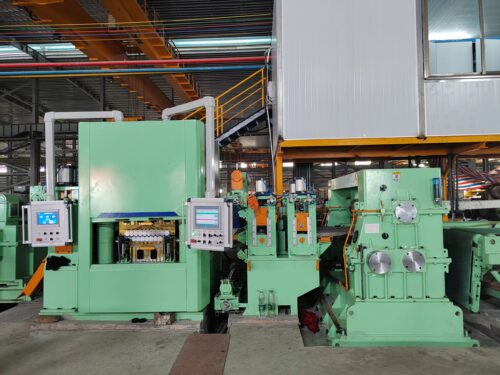
MaxDo metal cut-to-length lines convert coils into flat sheets and blanks through decoiling, leveling, NC length control, precision shearing, conveying, and stacking. Use this category as the CTL equipment entry page: it separates compact sheet programs, mid-width service-center output, and wider mixed-width blank production before the buyer opens a model page.
Cut-to-length model selection matrix
Model routeBest-fit production scopeEvidence to confirm before RFQ
CT-850 compact cut-to-length line300-820 mm coils, compact flat sheets, HVAC panels, appliance skins, and small-blank programs.Coil width, thickness, flatness target, length tolerance, shear edge, stack method, site layout, and FAT/SAT records.
CT-1350 mid-width cut-to-length line300-1350 mm coils, panel work, stamping preparation, fabrication blanks, and mid-width sheet programs.Yield strength, sheet length range, surface rule, stack alignment, shear timing, flatness release, and operator handoff.
CT-1650 wide cut-to-length line300-1650 mm coils, wider flat sheets, service-center output, appliance panels, and mixed-width blank programs.Installation space, crane route, safety zone, surface marks, length accuracy, stack release, and SAT acceptance records.
When to start from this CTL category
Start here when the required output is flat sheet or blank, not slit coil. If the buyer is still deciding between slit coil and sheet output, compare the cut-to-length process main page with the slitting process route before selecting a model. For acceptance detail, use the medium-gauge CTL acceptance specification or the heavy-gauge CTL load release matrix.
Application and case evidence
Use delivered project evidence to test whether the model route is realistic. The Poland high-precision CTL case study is useful for flatness and service-center acceptance. The Turkey stainless CTL case study is useful for stainless sheet, surface protection, export delivery, and commissioning support.
CTL category FAQ
Which CTL model should be checked first? Start with CT-850 for compact sheet output, CT-1350 for mid-width sheet programs, and CT-1650 when wider sheet capacity or future mixed-width production matters.
What should be sent with a CTL RFQ? Send coil width, thickness range, material strength, flatness target, sheet length, length tolerance, shear edge requirement, stack method, layout constraints, and FAT/SAT acceptance requirements through the MaxDo contact form.
Por qué elegirnos
Con más de 15 años de experiencia en equipos de procesamiento de acero, MaxDo Supply Chain ha realizado con éxito más de 500 instalaciones en más de 30 países. Nuestra fabricación con certificación ISO garantiza los más altos estándares de calidad.
Certificaciones: Marcado CE | ISO 9001:2015 | Preparado para Industria 4.0
01
Rendimiento de corte superior
Tecnología punta de nivelación de rodillos y corte de barras que garantiza un procesamiento preciso del material con un mínimo de residuos y la máxima eficiencia de producción.
02
Cartera de soluciones escalables
Cuatro series de modelos (850, 1350, 1650, 2200) diseñadas para adaptarse a su capacidad de producción, desde pequeños talleres hasta operaciones industriales a gran escala.
03
Asociación de confianza
Asistencia directa del fabricante con asesoramiento técnico completo, orientación para la instalación y servicios de mantenimiento continuos para un éxito operativo a largo plazo.

India Precision Stainless Slitting Line Case Study
mayo 13, 2026

Poland High-Precision CTL Line Case Study
mayo 13, 2026

Mexico Bathroom Hardware Tube Mill Case Study
mayo 13, 2026
¿Qué es una línea de corte de metal a medida?
Una línea de corte longitudinal de metal es una máquina industrial que desenrolla, endereza, mide y corta automáticamente bobinas de metal en planchas planas precisas de longitudes especificadas. Es esencial para las operaciones de procesamiento y fabricación de acero.
¿Qué materiales pueden procesarse con máquinas de corte a medida?
Las líneas de corte a medida pueden procesar diversos metales, como acero, aluminio, acero inoxidable, cobre y otras bobinas metálicas de distintos grosores y anchuras, que suelen oscilar entre 0,5 mm y 16 mm de grosor.
¿Cuáles son las principales ventajas de utilizar una línea de corte a medida?
Entre las principales ventajas se incluyen la alta precisión de corte, el aumento de la eficacia de la producción, la reducción del desperdicio de material, la calidad uniforme de la chapa y un funcionamiento automatizado que reduce al mínimo la necesidad de mano de obra.