

Топ 10 поставщиков оборудования для обработки рулонов 2026
Planning a new slitting or cut-to-length line in 2026? Compare 10 leading coil processing equipment suppliers, see specs, ROI benchmarks and get a practical selection checklist.
Reducing coil scrap from 6–7% to 3–4% or cutting changeover time by 20–30 minutes per shift can easily translate into six‑figure annual savings for a mid‑sized steel service center or fabricator. This 2026 guide helps you shortlist coil processing equipment suppliers, understand which line types you actually need, and avoid costly selection mistakes.
We first clarify how to evaluate coil processing OEMs, then profile 10 major supplier types and show where each is the best fit. Use it as a practical reference when planning RFQs, budget approvals, or line upgrades.
Who This 2026 Supplier Guide Is For
This guide is written for technical and commercial decision‑makers who either plan a new coil line or consider upgrading existing equipment:
- Steel service centers and coil processors
- Sheet metal fabricators and metal distribution centers
- Automotive and appliance component manufacturers
- Construction material producers (roofing, cladding, framing, HVAC)
- Production managers, plant engineers, maintenance and purchasing teams
If you are comparing slitting, cut‑to‑length (CTL), multi‑blanking, or coil feed lines across multiple vendors and need a structured way to narrow down options, this article is designed for you.
How to Shortlist Coil Processing Equipment Suppliers in 2026
Before you look at any “Top 10” list, you need a clear technical and business filter. The “best” supplier in general may still be the wrong fit for your material mix, volumes, or budget.
1. Define Your Process Scope
Start with what you actually need the line to do, not with the catalog:
- Process type: slitting, CTL, multi‑blanking, press feeding, or a combination.
- Thickness and width window: for example 0.3–6.0 mm, up to around 1,600–2,000 mm coil width.
- Materials: mild steel, AHSS, stainless, aluminum, pre‑painted, silicon steel, or mixed portfolios.
A supplier strong in thin‑gauge construction sheet may not be ideal for heavy‑gauge automotive chassis parts.
2. Set Performance and Quality Targets
Translate business expectations into engineering requirements:
- Line speed (m/min) at your typical thickness range
- Width and length tolerance, flatness and camber limits
- Changeover frequency, target setup time window
- Scrap/yield targets, especially for high‑value coils or safety‑critical components
Having quantified targets lets you challenge vendor claims and compare proposals on more than headline speed.
3. Evaluate Lifecycle Support
Equipment choice is also a support decision:
- Track record of installations in your region and industry
- Local service partners, remote diagnostics capabilities, spare‑parts stocking
- Ability to integrate with existing presses, stackers, packaging, and ERP/MES systems
A technically strong line without reliable service can quickly erode expected ROI.
4. Check Reference Projects and Data
Ask each candidate supplier for reference projects with similar:
- Materials and thickness ranges
- Throughput and changeover profiles
- Industry (e.g., automotive stampings vs. construction sheets)
Where possible, validate uptime, scrap reduction, and payback claims with reference customers rather than relying only on brochures.
Coil Processing Line Types and When to Use Them
Clarifying line types early prevents you from comparing quotes for fundamentally different solutions.
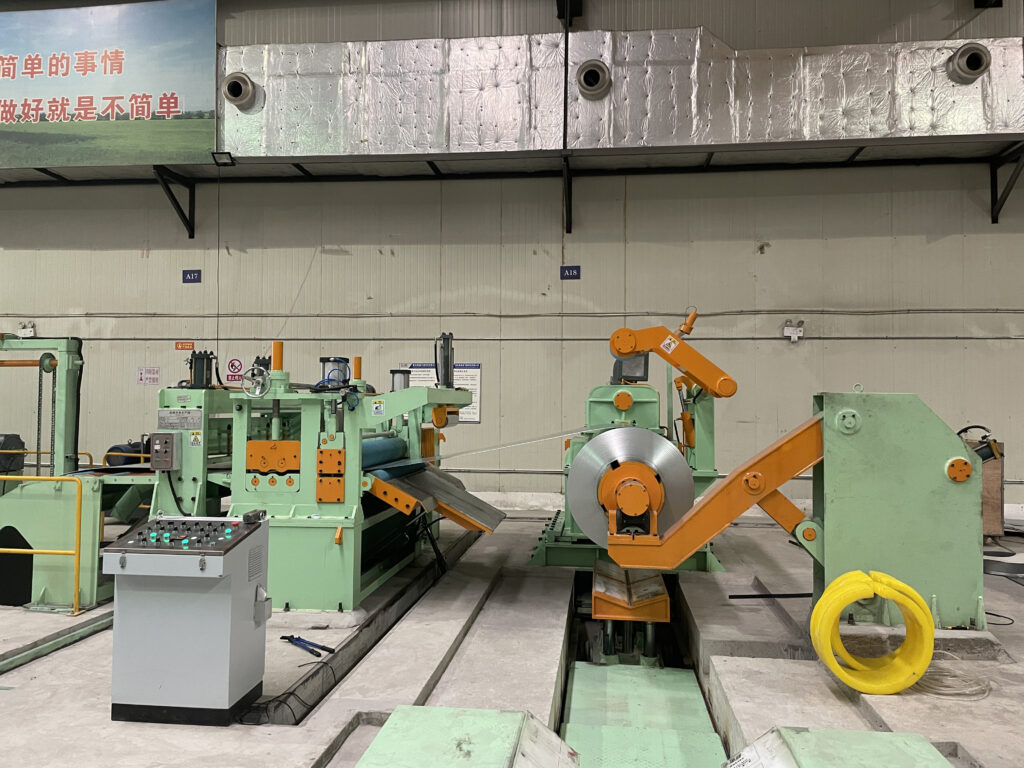
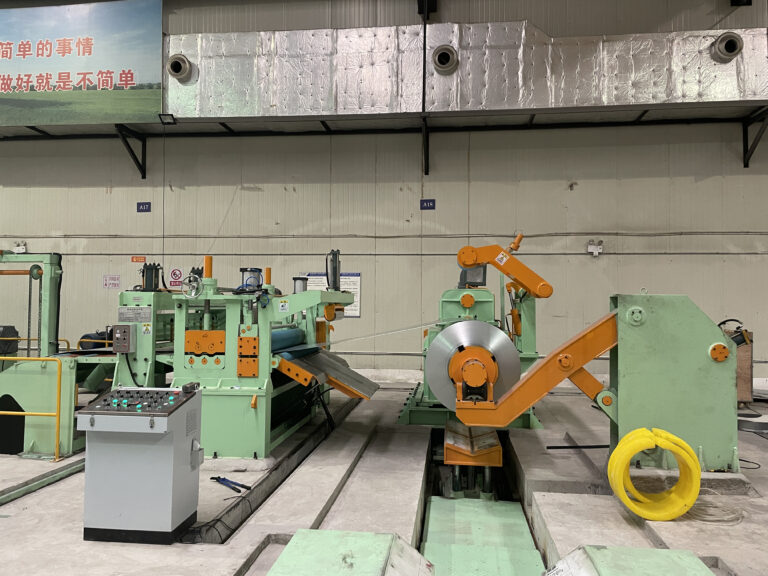
Линии продольной резки
- Function: Cut wide master coils into multiple narrower coils in a single pass.
- Best for: Service centers, roll formers, tube mills, roofing and siding producers.
- Key criteria: Knife change and setup time, tension control, scrap handling, edge quality, and width tolerance.
Slitting is usually the core process for service centers feeding multiple downstream customers.
Cut‑to‑Length (CTL) Lines
- Function: Unwind, level, and cut coil into flat sheets or blanks of specific lengths.
- Best for: Service centers and OEMs needing stacked blanks (appliance panels, construction sheets, general fabrication).
- Key criteria: Leveling performance, length accuracy, stacking system, surface protection, and marking systems.
The quality of leveling determines whether your blanks run problem‑free in lasers or presses.
Multi‑Blanking Lines
- Function: Combine slitting and CTL in one pass to produce multiple blanks across the strip width.
- Best for: High‑volume OEMs where yield and throughput are critical, and product sizes repeat predictably.
These lines can deliver significant material savings but require careful layout planning and tooling strategies.
Coil Feed / Press Feeding Lines
- Function: Feed coil directly into stamping or forming presses via decoilers, straighteners, and servo feeds.
- Best for: Stamping operations in automotive, appliance, and general industrial sectors.
- Key criteria: Feed accuracy, synchronization with press, loop control, and straightening performance.
Press feeding is often the most efficient way to automate high‑volume stamping where part geometry allows coil feeding.
Top 10 Coil Processing Equipment Suppliers in 2026: Snapshot
The market includes global OEMs specializing in mill‑grade lines, regional manufacturers focused on mid‑market needs, and niche players for leveling or press feeding. The table below presents a functional view of 10 key supplier types and where they typically fit, rather than listing only brand names.
Note: Capabilities shown are typical ranges based on publicly available information and industry practice; always confirm exact specs with each supplier.
| Supplier Type | HQ Region | Main Line Types | Typical Capability Focus | Типовые применения |
|---|---|---|---|---|
| MaxDo | Asia (China) | Slitting, CTL, multi‑blanking, feed lines | Up to ~2,000–2,150 mm, mid‑thickness range | Global service centers, fabricators, OEMs |
| North American Heavy‑Duty OEMs | North America | Slitting, CTL, multi‑blanking | Wide coils, medium‑to‑heavy gauges | Steel mills, large service centers |
| European Automotive‑Grade Integrators | Europe | High‑speed blanking, press feeding, coil lines | AHSS, coated steels, tight tolerances | Tier‑1 automotive, appliance OEMs |
| Precision Leveler Specialists | Europe / North America | Corrective and stretch leveling | Flatness‑critical strips and sheets | Service centers, plate and laser shops |
| Press Feed Specialists | North America / Europe | Decoilers, straighteners, servo feeds | Coil‑to‑press integration, flexible feed systems | Stamping and forming lines |
| Construction Sheet OEMs | Europe / US | Compact slit & CTL lines, coil handling | Light‑gauge galvanized and pre‑painted coils | Roofing, cladding, HVAC |
| Budget‑Oriented Asian OEMs | Asia | Basic slitting, CTL, compact lines | Standard gauges, cost‑sensitive solutions | Regional fabricators, emerging markets |
| Automation‑Focused Integrators | Глобальная | Custom coil lines + automation | MES/ERP integration, data logging, diagnostics | Multi‑plant industrial groups |
| Rebuild & Retrofit Specialists | North America / Europe | Control and mechanical upgrades | Legacy lines with solid frames | Plants extending existing line life |
| Service‑Linked OEMs | Глобальная | Lines + coil processing services | Process know‑how plus equipment | OEMs wanting combined capacity & technology |
The following sections explain what each type does best and when to prioritize them.
Supplier Profiles and Best‑Fit Scenarios
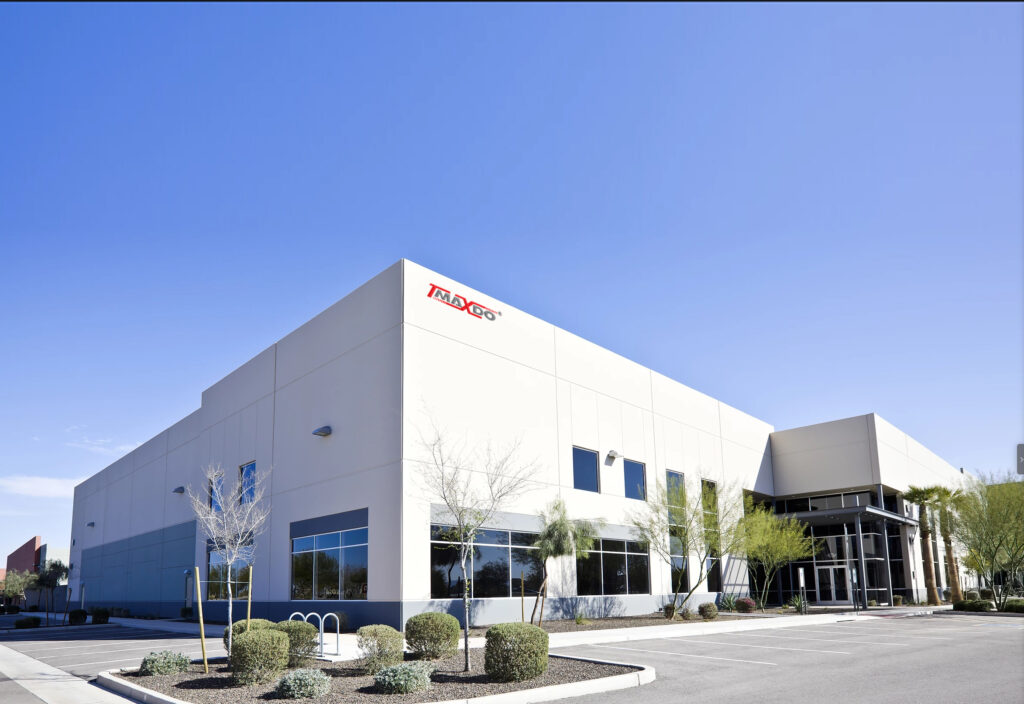
1. MaxDo – Flexible, High‑Value Lines for the Global Mid‑Market
MaxDo is an ISO 9001 certified coil processing equipment manufacturer with over 20 years of R&D experience and more than 500 installations across 30+ countries. Its MD‑series coil lines focus on achieving high material yield (often 96%+ in typical applications) and precision up to around ±0.1 mm, while keeping project budgets accessible for mid‑sized plants.
Best fit when you:
- Run mixed materials—galvanized steel, stainless, aluminum—for automotive parts, appliances, or construction components.
- Need slitting or CTL lines that balance automation with operator‑friendly controls, rather than fully custom mill‑level systems.
- Operate in Asia, the Middle East, Latin America, or Eastern Europe and value responsive remote support plus on‑site commissioning.
Typical MaxDo projects include complete slitting and CTL lines, multi‑blanking solutions, and integrated coil feed systems matched to customer coil specs and space constraints.
2. North American Heavy‑Duty OEMs – Mills and Large Service Centers
Several established North American OEMs focus on heavy‑duty, high‑throughput coil processing lines designed for steel mills and large service centers.
Best fit when you:
- Process wide, heavy‑gauge coils and need coil weights well above 25–30 tons.
- Require highly customized slitting or CTL layouts integrated into existing mill infrastructure.
- Prioritize long‑term durability and on‑site service presence across North America.
These suppliers typically deliver wide process windows, from thin automotive strip to thick structural plate, with extensive integration of levelers, stackers, and packaging lines.
3. European Automotive‑Grade Integrators – High‑Speed and High Precision
European integrators specializing in press technology and coil lines are strong in high‑speed blanking, servo‑driven press feeding, and AHSS‑capable lines.
Best fit when you:
- Supply Tier‑1/Tier‑2 automotive body panels, structural parts, or high‑spec appliance skins.
- Need extremely tight dimensional tolerances, flatness, and surface protection, especially on coated materials.
- Plan full press‑shop projects where coil lines, presses, and automation come from a single source.
These integrators often combine advanced line controls, in‑line inspection, energy‑efficient drives, and comprehensive safety concepts.
4. Precision Leveling and Stretch Leveling Specialists
Leveling specialists focus on corrective leveling and stretch leveling where standard levelers cannot meet flatness requirements.
Best fit when you:
- Supply flat sheets to laser cutting shops, shipbuilding, or structural steel applications where coil set, crossbow, or edge wave are unacceptable.
- Work with high‑strength or quenched and tempered steels that require more aggressive leveling strategies.
These suppliers frequently integrate with third‑party decoilers and stackers but provide the core flatness performance that differentiates your product.
5. Coil Handling and Press Feed Experts
Press feed specialists design decoilers, straighteners, servo roll feeds, and compact feed lines that connect directly to stamping presses.
Best fit when you:
- Run progressive‑die or transfer presses and want to replace manual blank feeding.
- Need synchronized press feeds at high strokes per minute with reliable loop control.
- Prefer incremental automation upgrades around existing presses instead of full new coil lines.
They typically support a wide thickness range and can retrofit modern controls and feeds onto legacy presses.
6. Construction Sheet and HVAC‑Focused OEMs
Some OEMs focus on coil handling, slitting, and CTL solutions tailored to construction sheet and HVAC markets.
Best fit when you:
- Process mainly light‑gauge galvanized or pre‑painted coils for roofing, guttering, cladding, or ductwork.
- Need compact lines that combine decoiling, slitting, and shearing with minimal footprint.
- Value simple operation and high surface quality more than extreme thickness capability.
Their systems often integrate directly with roll formers, folding machines, or panel forming lines.
7. Budget‑Oriented Asian OEMs – Cost‑Sensitive Projects
A wide range of Asian manufacturers provide budget‑friendly coil lines for standard applications.
Best fit when you:
- Have moderate line‑speed and precision requirements and must keep CAPEX as low as possible.
- Operate in markets where local or regional equipment significantly reduces import costs and lead times.
- Run mainly standard materials and gauges with relatively stable product portfolios.
When considering budget OEMs, it is critical to review support capability, spare parts logistics, and compliance with regional electrical and safety standards.
8. Automation‑Focused System Integrators – Data and Connectivity First
Some engineering companies position themselves primarily as automation and controls experts while delivering turnkey coil lines via mechanical partners.
Best fit when you:
- Need deep integration with plant‑wide MES/ERP, including production tracking, coil genealogy, and performance dashboards.
- Want predictive maintenance, OEE monitoring, and remote diagnostics as integral parts of the line.
- Operate multiple plants and want standardized control architecture and HMI concepts.
These integrators typically take responsibility for automation architecture, commissioning, and long‑term software lifecycle support.
*
9. Rebuild and Retrofit Specialists – Extending Line Life
Rebuild specialists upgrade existing lines with new controls, drives, safety systems, and sometimes new levelers or heads, maintaining the mechanical base where it is still sound.
Best fit when you:
- Own legacy coil lines whose mechanical frames are still solid but whose electrics and controls are obsolete.
- Need improved uptime, accuracy, and safety at lower cost and shorter downtime than a full line replacement.
- Face building or pit constraints that make greenfield installation challenging.
Typical upgrades include servo drives, new HMIs, safety PLCs, and improved loop control, often delivering significant performance gains at a fraction of new‑line CAPEX.
10. Service‑Linked OEMs – Combining Equipment and Processing Experience
Some coil processors have developed their own equipment or partnered closely with OEMs, selling both equipment and processing services.
Best fit when you:
- Want an equipment partner that also runs production lines daily and brings practical process know‑how.
- Value continuous improvement support, audits, and tuning over the lifetime of the line.
- Prefer arrangements where overflow processing capacity and technology support come from the same group.
Their dual role often leads to designs that reflect real‑world operating constraints such as coil quality variation, manpower limits, and maintenance realities.
Investment, ROI, and Total Cost of Ownership Benchmarks
Coil processing lines can be among the largest single CAPEX items in a plant, so you need a clear view of payback and lifetime economics rather than only catalog prices.
Typical Investment Ranges
- Entry‑level slitting lines for standard gauges and moderate speeds: mid‑six to low seven figures depending on width, automation, and material scope.
- Advanced CTL or multi‑blanking lines with precision leveling and automated stacking: generally higher seven figures for automotive‑grade or high‑speed systems.
- Coil feed and press automation packages: wide spread in cost, but often deliver strong ROI when replacing manual blank feeding or outdated feeds.
These bands are indicative and vary significantly with regional labor, freight, civil works, and local integration needs.
Main ROI Drivers
- Scrap reduction from improved tolerances, better flatness, and optimized nesting
- Higher line speed and throughput without increasing defect rates
- Lower unplanned downtime through modern controls and diagnostics
- Labor savings via automation and safer, more efficient coil handling
Ask each supplier to quantify how their solution affects these levers and build a simple 3–5 year cash‑flow model comparing scenarios.
Supplier Evaluation Checklist for Your Next RFP
Use this checklist as a working tool when preparing RFQs or scoring proposals.
1. Technical Fit
- All material types and thicknesses covered?
- Max coil weight, width, ID/OD compatible with your coils?
- Line speed at your typical gauges, not only at best‑case thickness.
- Tolerance, flatness, and surface‑quality capability aligned with your customers’ specs.
2. Layout and Integration
- Does the line fit existing building, pits, coil storage, and crane capacity?
- Interfaces to presses, roll formers, stackers, packaging, and downstream logistics?
- Compliance with local safety, electrical, and environmental regulations?
3. Automation and Data
- Manual, semi‑automatic, or fully automatic operation for threading, setup, and coil change?
- Integration options with MES/ERP, data logging, and coil genealogy?
- Availability of remote diagnostics, condition monitoring, and easy recipe management?
4. Service and Lifecycle
- Local or regional service presence and response times?
- Spare‑parts strategy: recommended stock, lead times, and critical components?
- Operator and maintenance training programs, documentation quality, and language options?
- Clear upgrade path for future speed, automation, or process expansions?
5. Commercial and Risk Factors
- Transparent breakdown of equipment, installation, training, and commissioning costs.
- Warranty terms, performance guarantees, and acceptance tests.
- Realistic payback and TCO projections over 5–10 years, with underlying assumptions stated.
Many buyers formalize these points in a weighted scoring matrix to compare suppliers in a structured way.
When MaxDo Is the Right Coil Processing Partner
After you have applied the above framework, MaxDo is typically a strong candidate when you:
- Run mixed‑material, mid‑thickness slitting or CTL operations and need high yield and tight tolerances without the budget of mill‑grade custom systems.
- Operate in growth regions where local support, commissioning experience, and practical training are as important as peak line speed.
- Prefer a partner that can configure MD‑series coil lines around your actual coil specs, plant layout, and manpower profile rather than forcing a one‑size‑fits‑all design.
A practical next step is to map your current coils (materials, gauges, widths, coil weights) against the MD‑series capability envelope, estimate yield and throughput gains, and compare the resulting payback with alternative suppliers.