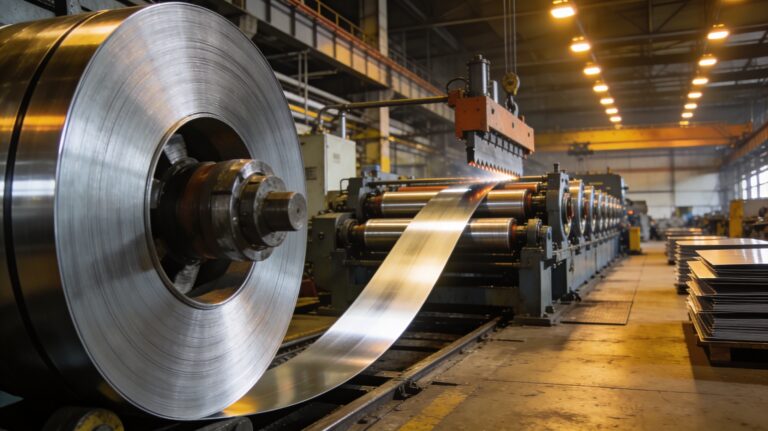



Coil Processing Manufacturer Evaluation Matrix
A narrow coil processing manufacturer evaluation matrix for product range, engineering evidence, FAT/SAT, delivery, training, spare parts, cases, and slitting or CTL model routing.
A coil processing equipment manufacturer should be evaluated with a supplier scorecard, not only with machine specifications. The buyer should check whether the manufacturer can prove product range, engineering fit, application experience, FAT/SAT discipline, installation planning, spare parts, operator training, and post-delivery support before comparing individual slitting or CTL models.
This page is a narrow support page for coil processing manufacturer evaluation in the MaxDo topic network. It owns only the manufacturer-evidence layer: product range, engineering fit, application experience, FAT/SAT discipline, installation planning, spare parts, training, and post-delivery support. It is not the main slitting core page, not the CTL process main page, and not an ROI decision record. For the main slitting process and specification route, use the metal slitting line core page. For CTL station acceptance, use the cut-to-length process station acceptance map. For project scope before RFQ, use the industrial slitting line project scope checklist. Use this matrix only for evaluating the manufacturer behind the equipment.
Score Product Range Before Comparing Prices
The first scorecard section should confirm whether the manufacturer covers the buyer’s real output mix. A coil processor may need slit coils, flat sheets, blanks, or both slitting and CTL workflow. The scorecard should record product category coverage, model range, coil width boundary, material burden, and whether the manufacturer can explain when one platform class is enough and when the next class is justified.
| Scorecard field | Evidence to request | Why it matters |
|---|---|---|
| Product range | Slitting, CTL, model classes, and product category routing | Prevents choosing a supplier that fits only one part of the workflow |
| Model boundaries | Width, thickness, coil weight, material, and future expansion logic | Separates real engineering fit from brochure comparison |
| Application fit | Service center, HVAC, appliance, construction, tube mill, or fabrication cases | Shows whether the supplier understands the buyer’s operating reality |
For slitting model paths, review the metal slitting machine category. For CTL model paths, review the metal cut-to-length line category. If the team is still deciding between strip coils and sheets, use the slitting vs CTL ROI decision record.
Request Engineering Evidence, Not Only Specifications
A manufacturer scorecard should ask how specifications are proven. Record the material envelope, strip or sheet program, tolerance target, surface requirement, tension or leveling evidence, setup rhythm, plant constraints, and the measured output records the supplier can provide. The strongest manufacturer answers with acceptance data, not only model tables.
- For slitting: request width tolerance, burr, camber, recoiling, tension, setup, and strip-count evidence.
- For CTL: request length accuracy, flatness, squareness, shear edge, stacking, and sample evidence.
- For controls: request recipe, alarm, production record, operator permission, and remote-diagnostic evidence.
For slitting evidence, connect the scorecard to the steel coil slitting machine selection checklist and the light gauge slitting customization RFQ checklist. For CTL evidence, connect it to the CTL precision acceptance evidence checklist.
Check FAT and SAT Discipline
The scorecard should ask whether the manufacturer builds FAT and SAT into the commercial process. FAT should prove the agreed material or documented equivalent before shipment. SAT should repeat the same checks on site with the buyer’s utilities, operators, material handling route, and production conditions. A weak supplier treats acceptance as a shipment formality; a strong supplier defines sample count, measured values, deviation owners, retest rules, and final sign-off.
| Acceptance item | Supplier evidence | Buyer question |
|---|---|---|
| FAT plan | Material, speed, sample count, measured values, correction record | Can the test represent our real production burden? |
| SAT plan | Site utilities, operator involvement, handling route, retest method | Will the same evidence be repeated after installation? |
| Deviation control | Owner, root cause, correction method, retest and sign-off | How are unresolved items closed before production release? |
Evaluate Delivery, Installation, Training, and Spare Parts
A manufacturer evaluation is incomplete if it stops at machine capability. Record the promised delivery window, installation plan, foundation requirements, electrical and hydraulic preparation, operator training, maintenance training, spare-part list, recommended consumables, response time, and warranty scope. The best scorecard compares the support package as carefully as the machine specification.
For controls and reporting questions, use the slitting line control upgrade roadmap and the automated metal processing system map. These pages help separate real control support from a generic PLC statement.
Route the Shortlist to Slitting and CTL Product Paths
After the manufacturer scorecard is complete, route the shortlist to product paths. Slitting projects can compare MA-850, MA-1350, MD-1650, and MD-2200. CTL projects can compare Cutlength-850, CT-1350, and CT-1650.
Ask for Cases That Match the Buyer Scenario
Case evidence should be tied to the buyer’s material, product form, tolerance, plant layout, and commercial reason for investment. A general case list is weaker than one case that matches coil width, material class, output type, setup rhythm, acceptance method, and support need. If the manufacturer cannot provide an exact case, ask for the closest application and the differences that remain.
Send the Manufacturer Scorecard to MaxDo
To ask MaxDo for a manufacturer evaluation response, send product form, material range, coil data, strip or sheet program, tolerance targets, plant constraints, FAT/SAT expectations, delivery window, training needs, spare-parts expectations, and preferred product path through the contact form.