


MaxDo Stainless Steel Tube Mill to Mexico: Bathroom Hardware Manufacturer Case Study
The Guadalajara client evaluated three suppliers: MaxDo, a Taiwan-based tube mill manufacturer, and a domestic Mexican machinery company offering a locally assembled machine.
| Detail | Information |
|---|---|
| Client Location | Guadalajara, Jalisco, Mexico |
| Business Type | Bathroom hardware OEM manufacturer (towel bars, toilet paper holders, shower rods, grab bars) |
| Primary Customers | Mid-tier and value bathroom accessory brands sold through Home Depot Mexico, Walmart Mexico, and regional hardware distributors |
| Products | Round stainless steel tube: 16 mm – 32 mm OD; square tube: 15×15 mm – 25×25 mm |
| Wall Thickness | 0.6 mm – 1.0 mm |
| Material | SS 304 (primary); SS 201 (secondary, for value-tier products) |
| Equipment Supplied | TIG Tube Mill with pulsed TIG welding + 4-head polishing line |
| Surface Finish | No.4 and Satin 240 (primary); Hairline (HL) for premium product line |
| OD Tolerance Required | ±0.10 mm (for press-fit assembly with die-cast zinc end caps) |
| Daily Output Target | 800–1,000 m/day (1 shift), scaling to 2 shifts within 18 months |
The Client’s Challenge
The Guadalajara bathroom hardware manufacturer had been sourcing stainless tube from Chinese suppliers for six years — a supply chain that functioned adequately until 2023, when three compounding problems made the arrangement commercially unsustainable.
OD tolerance failures at assembly. The client’s die-cast zinc end cap tooling was designed for tube OD ±0.10 mm tolerance. Chinese tube suppliers, though nominally quoting ±0.15 mm ASTM A554 tolerance, were delivering product ranging from ±0.20–0.30 mm in actual production — causing end cap press-fit failures on approximately 12% of assembled towel bar sets. The reject and rework cost was eroding the product margin on the company’s highest-volume SKUs.
Surface finish inconsistency across shipments. No.4 and Satin 240 finish appearance varied visibly between shipments from the same Chinese supplier — even when Ra measurements were within the nominal specification range. The client’s quality team documented visual grain density differences that caused mixed-finish appearance on display racks in retail stores, triggering buyer complaints from their two largest retail customers.
Supply chain lead time and nearshoring pressure. Under Mexico’s nearshoring expansion — driven by North American manufacturing reshoring from Asia — the client’s retail customers were applying increasing pressure to demonstrate Mexico-origin supply chain documentation for their “locally sourced” product marketing programs. Chinese-origin tube did not qualify. The client needed Mexico-produced tube to retain preferred supplier status with one major retail chain that was implementing a USMCA-compliant sourcing program.
The investment decision crystallized around a simple calculation: the capital cost of in-house tube production would pay back in approximately 20 months based on current import tube cost, freight, and rework expense — while simultaneously solving the OD tolerance problem, the finish consistency problem, and the origin qualification problem together.
Why MaxDo Was Selected
The Guadalajara client evaluated three suppliers: MaxDo, a Taiwan-based tube mill manufacturer, and a domestic Mexican machinery company offering a locally assembled machine.
The Mexican machinery option was eliminated early — the local company’s proposed machine used imported Chinese forming rolls and a standard (non-pulsed) TIG welding section. It could not demonstrate OD tolerance better than ±0.18 mm for 0.6 mm wall tube, and the polishing section was a manual belt grinder rather than an automatic 4-head line. It was the lowest initial cost option but could not meet the OD and finish specification requirements.
Between MaxDo and the Taiwanese supplier, the decision came down to three points:
Thin-wall pulsed TIG capability. For 0.6 mm wall tube at 19–25 mm OD, pulsed TIG is required to maintain the narrow welding current window without burn-through. MaxDo’s proposal specified a Panasonic pulsed TIG power source as standard. The Taiwanese proposal offered pulsed TIG as an optional upgrade at additional cost — suggesting it was not their standard configuration for thin-wall production.
Polishing line OD range and finish consistency protocol. MaxDo provided documented Ra measurement data from two existing installations producing No.4 and Satin 240 finish tube in the 16–32 mm OD range, including Ra values at the start and end of belt life cycles. This data addressed the finish consistency concern directly. The Taiwanese supplier provided a written finish specification but no supporting production measurement data.
Price and delivery. MaxDo’s proposal was approximately 18% below the Taiwanese supplier’s quotation for equivalent specifications, with a 70-day lead time vs. 90 days. The price difference alone was significant, but the combination of lower cost, pulsed TIG standard, and documented Ra performance data made MaxDo the clear selection.
Equipment Configuration
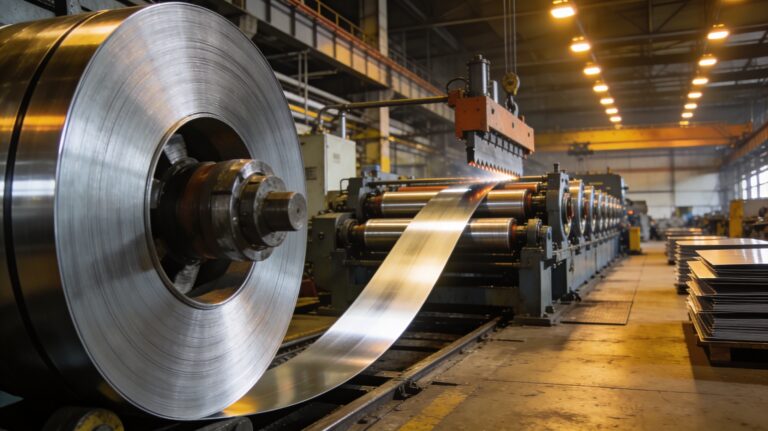
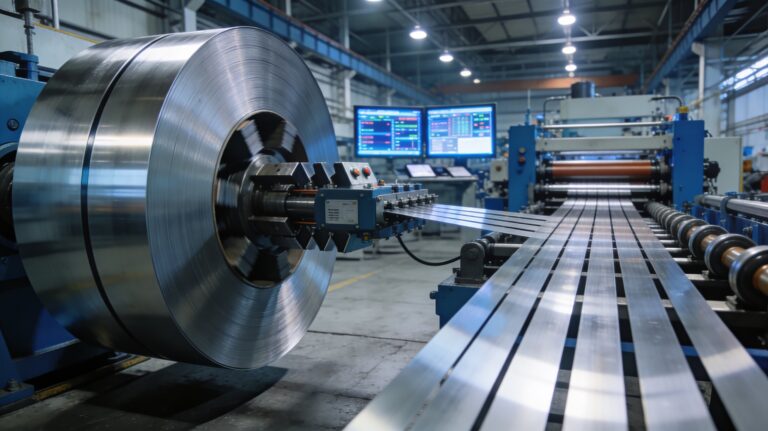
TIG Tube Mill (Round + Square, Thin-Wall Specialty)
- OD range: 16 mm – 38 mm (round); 15×15 mm – 25×25 mm (square)
- Wall thickness range: 0.5–1.2 mm
- Forming section: 18 passes (optimized for thin-wall tube in 16–32 mm OD range)
- TIG welding: Panasonic pulsed TIG power source (peak/background current cycling)
- External argon shielding + internal back-purge argon (standard — not optional)
- Sizing section: 6-pass precision sizing; OD tolerance guaranteed ±0.10 mm at FAT
- Round-to-square conversion: 4-pass square conversion section (included)
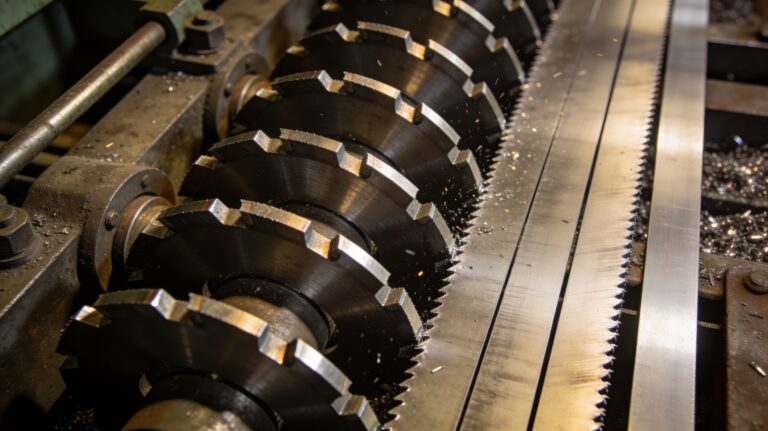
- Cut-off: Cold disc saw (burr-free tube ends for direct press-fit assembly)
- Control: Siemens S7-1200; Spanish-language HMI (client requirement)
4-Head Automatic Polishing Line
- OD range: 16–51 mm (round); 15×15–25×25 mm square (with corner polishing attachment)
- Belt configuration: Head 1: 120 grit; Head 2: 180 grit; Head 3: 240 grit; Head 4: 320 grit
- Line speed: 3–6 m/min (adjustable per OD and finish grade)
- Belt mineral: Zirconia alumina (heads 1–2); aluminum oxide (heads 3–4)
- Infeed and outfeed neoprene-sleeved roller conveyors (no contact marking)
- Spanish-language HMI, matching tube mill control system
Instalación y puesta en marcha
Mexico-specific logistics notes:
- Equipment shipped to Manzanillo Port (Pacific coast) via sea freight from Foshan
- Mexico import: machinery classified under HTSUS 8462/8463; IMMEX (maquiladora) temporary import possible for qualifying manufacturers
- Guadalajara industrial zone: well-served by domestic freight from Manzanillo (approximately 350 km)
Timeline:
| Fase | Duración |
|---|---|
| Engineering and manufacturing | 70 days |
| Factory Acceptance Test at MaxDo (video call) | 2 days |
| Sea freight (Foshan → Manzanillo) | 22 days |
| Mexico customs clearance and inland freight | 8 days |
| Installation by MaxDo engineer + local electrician | 7 days |
| Trial production and commissioning | 3 days |
| Total: order to commercial production | ~112 days |
The client chose video FAT rather than travelling to Foshan — a pragmatic decision for a 2-person management team with limited travel capacity. MaxDo ran the FAT with the client’s technical director on a live video call: the FAT included real-time OD measurement display, live bend test sampling, and surface finish Ra measurement shown via camera.
Spanish HMI commissioning: MaxDo’s commissioning engineer (Mandarin/English) worked with the client’s production manager (Spanish) through a combination of diagrams, the Spanish-language HMI, and WhatsApp translation. Operator training for 2 operators was completed in 2 days covering: tube mill parameter setup, pulsed TIG parameters for each OD/wall combination, polishing line belt change, and basic maintenance checks.
One commissioning finding: the 16 mm OD × 0.6 mm wall combination required a slightly lower pulsed TIG peak current than the initial parameter table. MaxDo’s engineer adjusted the parameter card on-site. All OD sizes confirmed within ±0.09 mm at commissioning.
Production Results After 9 Months
OD tolerance in production: Regular sampling by the client’s QC team shows OD tolerance of ±0.08–0.10 mm across all OD/wall combinations in production. End cap press-fit rejection rate has dropped from 12% to under 0.8% — the client has eliminated dedicated rework labor from the assembly line.
Surface finish consistency: The client implemented a simple belt-change interval protocol based on meters processed (recommended by MaxDo during commissioning). Ra variation across a production run is now ±0.04 μm against a target of No.4 (0.4–0.6 μm Ra) — the batch-to-batch visual finish variation that caused retail buyer complaints has not recurred since startup.
USMCA origin qualification: The client has obtained a USMCA Certificate of Origin for tube produced on the MaxDo line, qualifying their products for the retail chain’s Mexico-origin sourcing program. The company has since added a second retail customer requiring USMCA documentation — business they could not have won with Chinese-origin tube.
Output achieved: 850–950 m/day on single shift — within the 800–1,000 m target. The client has accelerated the timeline for adding a second shift (originally planned at 18 months, now planned at 12 months) based on growing domestic order volume.
Mexico and North America Market Context
Mexico’s position in the nearshoring wave is creating durable manufacturing investment opportunities across multiple sectors, including bathroom hardware and consumer metal products. The USMCA agreement creates a structural commercial advantage for Mexico-manufactured products supplied into the US and Canadian retail markets — and as US retailers increasingly require or prefer USMCA-compliant product documentation, manufacturers with Mexican domestic production gain a qualifying criterion that Chinese-origin product cannot meet.
For bathroom hardware manufacturers in Mexico and Central America currently importing stainless tube from China, the combination of USMCA commercial incentive, import tube price volatility (driven by Chinese export duty adjustments and freight rate cycles), and the OD/finish quality problems that are endemic to general-purpose Chinese tube supply creates a compelling investment case for domestic production.
Frequently Asked Questions from Mexican Buyers
Can MaxDo equipment qualify for IMMEX (maquiladora) temporary import programs?
MaxDo can provide all documentation required for IMMEX applications, including equipment technical specifications, HS code pre-classification recommendations, and purchase invoices. IMMEX qualification requires a licensed Mexican customs agent and is the buyer’s responsibility, but MaxDo’s experience with Mexican customs documentation means the process is straightforward.
Is financing available for equipment purchases from Mexico?
MaxDo does not provide direct financing, but the company’s equipment qualifies for NAFINSA (Nacional Financiera) equipment loan programs for qualifying Mexican manufacturers. MaxDo can provide the project documentation required for NAFINSA applications.
Does MaxDo have other reference customers in Mexico or Latin America?
Yes. MaxDo has supplied equipment to manufacturers in Mexico, Brazil, Colombia, and Argentina. Reference contacts in Mexico are available on request for qualified buyers.
What is the Spanish-language technical support capability?
MaxDo provides remote video support in Mandarin and English. For Spanish-speaking operations, WhatsApp video call with real-time screen sharing has been the working protocol for all Mexico installations. MaxDo is developing a Spanish-language technical manual library — available on request for installed customers.
Next Steps
Bathroom hardware manufacturers and stainless steel tube producers in Mexico and Latin America can request:
- Tube mill and polishing line configuration matched to your OD range, wall thickness, output target, and finish specification
- OD tolerance FAT protocol documentation demonstrating ±0.10 mm guarantee for thin-wall applications
- USMCA and IMMEX documentation package for customs and origin qualification purposes
- Reference contact at the Guadalajara installation
→ Contact MaxDo for a bathroom hardware tube mill proposal