


Metal Slitting vs CTL Lines: Main Comparison Matrix
The main MaxDo metal slitting vs CTL comparison matrix for choosing strip coils or flat sheets by output format, tolerance, flow style, ROI layer, product family, and support pages.
This page is the single main comparison page for the MaxDo slitting vs CTL topic cluster. It is the trunk page for deciding whether the buyer needs narrow recoiled strip from a slitting line or flat sheets from a cut-to-length line. Support pages should handle narrower order-mix planning, material-specific choices, ROI modeling, output acceptance, and product RFQ details.
For the upstream workflow hub, use the sheet metal coil processing workflow map. For narrower mixed-order planning, use the slitting vs CTL order-mix support page. Then route equipment evaluation to the metal slitting machine category or the metal cut-to-length line category.
Choosing between corte de metal frente a líneas CTL is not a formatting decision. It is a throughput, tolerance, output-format, and downstream-risk decision. Use this main comparison matrix before RFQ when the plant must decide whether strip coils or flat sheets are the correct output state.
Metal Slitting vs CTL Lines: Core Process Difference
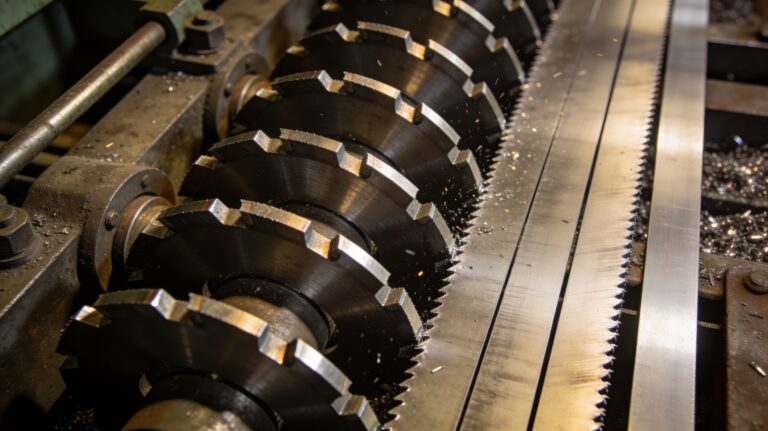
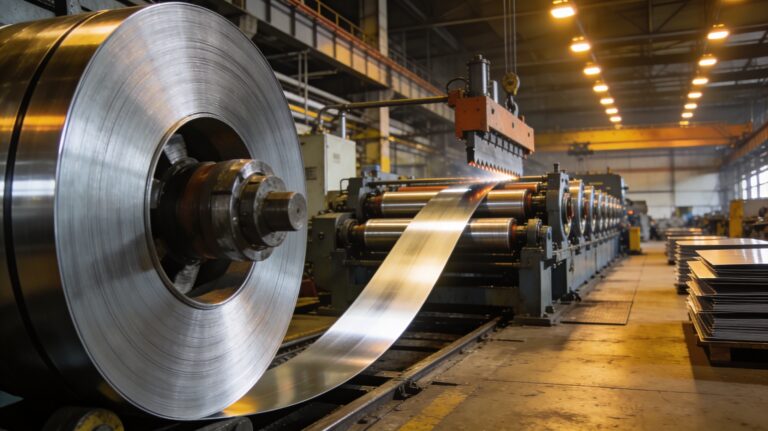
A slitting line cuts along coil length (longitudinal direction) to convert one wide master coil into multiple narrower coils. A CTL line cuts across coil width (transverse direction) to produce flat sheets at programmed lengths.
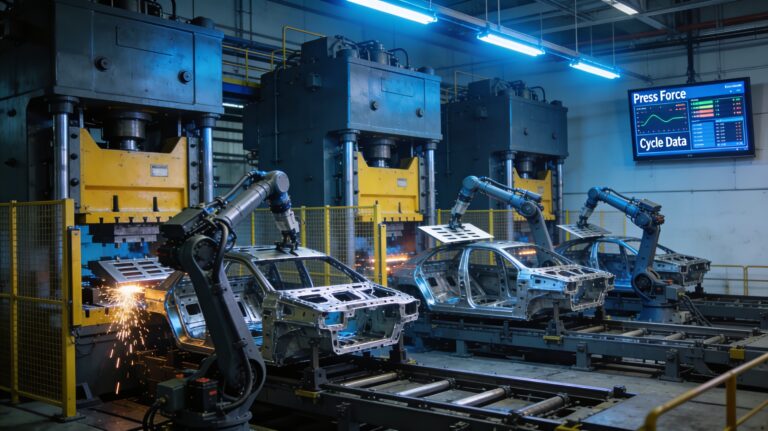
Use slitting when your downstream process consumes coil strips (tube mills, roll forming, progressive stamping). Use CTL when your downstream process needs flat blanks (laser cutting, fabrication, press blanking).
Important: Process geometry determines handling cost. Strip coils reduce staging space for continuous lines; flat sheets simplify batch fabrication and nesting workflows.
How Slitting and CTL Perform Under Real Production Constraints
Throughput and flow style
- Slitting lines: Continuous flow, fewer stop-start cycles.
- CTL lines: Batch output with cut-and-stack behavior.
- If OEE loss comes from frequent pallet exchange and sheet staging, slitting often recovers more runtime.
- If downstream re-leveling or re-flattening is your bottleneck, CTL often reduces rework.
Tolerance emphasis
- Slitting selection is usually driven by width control and edge condition.
- CTL selection is usually driven by length repeatability and flatness performance.
- Current MaxDo article positioning cites slitting width accuracy around
±0,1 mmand CTL tight-tolerance use cases around±0.05 mm[VERIFY by MA datasheet].
Material and thickness behavior
- Thin gauges often favor higher-speed slitting economics.
- Medium gauges can be either process, depending on final part geometry.
- Heavier gauges frequently push buyers toward robust leveling and shearing architecture in CTL workflows.
Technical Selection Matrix (Process First, Model Second)
Use this matrix to decide process architecture before selecting a machine model.
| Production Requirement | Slitting Line Priority | CTL Line Priority |
|---|---|---|
| Output format | Narrow strip coils | Flat sheets or blanks |
| Downstream process | Tube, roll-form, progressive feed | Laser, fabrication, welding |
| Best flow mode | Continuous, high-volume | Batch, mixed-length orders |
| Primary tolerance focus | Width and burr control | Length and flatness |
| Changeover pattern | Width recipe changes | Length or stacking recipe changes |
| Floor-space profile | Recoiler and coil logistics | Stacker and pallet logistics |
Pro tip: If your plant sells both slit strip and sheet blanks, evaluate a two-stage architecture (slit + CTL) instead of forcing one line to do both jobs poorly.
MaxDo Equipment Anchors You Can Use in RFQ Discussions
The currently accessible live product pages provide these confirmed anchors:
| Modelo | Verified Live Data Point | Practical Implication |
|---|---|---|
| MD-1650 | Velocidad 1-250 m/min; working size 300-1600 mm; power 422,5 kW | Suitable for wide-format, high-output strip programs |
| MD-2200 | Velocidad 1-250 m/min; working size 300-2150 mm; power 422,5 kW | Better fit for very wide coils and heavy production width mix |
| MA-1350 page | Shows 318,5 kW but page template appears slitting-oriented [VERIFY] | Confirm MA CTL specs from official datasheet before PO |
| MA-850 page | Shows 138,5 kW but title and content mismatch [VERIFY] | Use only after internal product-page cleanup |
Source pages: MD-1650, MD-2200, MA-850, MA-1350.
2026 Context: Why This Decision Is Getting Harder
Two pressures are raising specification risk in 2026:
- Automotive lightweighting and EV scaling increase demand for tighter process control across mixed grades and thinner targets.
Reference: IEA Global EV Outlook 2025 - Digital quality expectations are rising. Buyers now expect traceable process data, not just final dimensional pass/fail.
- Compliance expectations remain strict for export equipment (QMS + product conformity workflows).
Practical overview: CE Marking vs ISO 9001
Common mistake: Buying on top speed only. If your defect cost is edge wave, burr, or flatness rework, nominal speed will not fix margin leakage.
Decision Tree: Metal Slitting vs CTL Lines
Step 1: Start with output geometry
- Need coils for continuous downstream feed -> choose slitting path.
- Need sheets for batch fabrication -> choose CTL path.
Step 2: Check tolerance risk
- Width-critical with multi-stream output -> slitting-focused CAPEX.
- Length or flatness critical for blank quality -> CTL-focused CAPEX.
Step 3: Validate volume and changeover profile
- Long runs, fewer stops -> slitting usually wins.
- Mixed sheet lengths, frequent job swaps -> CTL usually wins.
Step 4: Confirm layout and handling
- Coil logistics maturity available -> slitting integrates easier.
- Sheet staging and pallet automation ready -> CTL integrates easier.
Step 5: Model mapping and trials
- Shortlist by max width, thickness, and coil weight.
- Run FAT and SAT acceptance criteria with measurable KPIs.
Common Failure Modes (and How to Avoid Them)
1) Wrong process for downstream geometry
- Root cause: Selecting CTL when downstream is continuous coil-feed.
- Correction: Align process with first consuming machine, not with current operator preference.
2) Tolerance spec copied from customer drawing without process check
- Root cause: Quoting tight tolerances that are not economically sustainable for actual mix.
- Correction: Separate critical and non-critical dimensions in technical offer.
3) Ignoring setup-loss economics
- Root cause: Capacity estimate based on nameplate speed only.
- Correction: Model real OEE including blade setup, stacking, and handling interruptions.
4) Unverified product-page data in purchasing documents
- Root cause: Web page or data mismatch carried into RFQ.
- Correction: Freeze specs from signed datasheet revision and attach it to contract pack.
Pro tip: For RFQ scoring, weight criteria as process fit (40%) + quality risk (25%) + lifecycle cost (20%) + speed (15%). This avoids cheap-but-wrong purchases.
ROI Payback Template (Use With Your Actual Numbers)
This template is intentionally simple and usable in first-pass CAPEX screening.
| Input Parameter | Example Value | Notes |
|---|---|---|
| Annual processed tonnage | 48,000 t | Replace with your audited annual volume |
| Gross margin impact from reduced scrap or rework | $18/t | Use plant financials |
| Additional annual uptime gain | 220 h | From reduced changeover and defect stops |
| Hourly contribution margin | $420/h | Use conservative finance number |
| Annual maintenance delta | -$85,000 | Negative means extra cost |
| Estimated annual benefit | $1,033,400 | (48,000*18) + (220*420) - 85,000 |
| Project CAPEX | $1,950,000 | Include installation and integration |
| Simple payback | 1.89 years | CAPEX / annual benefit |
Preguntas frecuentes
Q: Is metal slitting always faster than CTL?
A: Not always in end-to-end plant output. Slitting often has higher continuous line speed, but the real comparison is shipped good output per shift after setup, handling, and quality losses. If your process requires flat blanks and re-leveling causes rework, CTL can outperform slitting at the factory level.
Q: Which process is better for automotive and appliance suppliers?
A: It depends on part geometry and feeder format. Coil-fed stamping and roll-forming programs generally prefer slitting. Flat blank workflows for laser or press blanks typically prefer CTL. Mixed plants often run both architectures to avoid forcing one line into unsuitable jobs.
Q: Can one machine handle both strip and sheet output efficiently?
A: Hybrid approaches exist, but most plants get better quality stability with dedicated process paths. If both outputs are strategic, evaluate staged architecture and shared logistics instead of overloading one line with conflicting requirements.
Q: How should I compare MD models when product pages are inconsistent?
A: Use signed technical datasheets and FAT criteria as the source of truth. Live pages can lag updates. For currently visible anchors, confirm MD-1650 and MD-2200 data from their product pages, then request the latest revision package for MD-850 and MD-1350 before procurement approval.
Q: Are ±0.05 mm CTL tolerances realistic in production?
A: They can be, but only with matched material condition, leveling setup, feed control, and maintenance discipline. Treat very tight tolerance claims as application-specific and verify on trial runs with your real grade mix and thickness range.
Q: What standards should spec sheets reference?
A: Use current, full designations where applicable (for example, ASTM A568/A568M family for sheet requirements context), and ensure the edition is confirmed at purchase time. Do not rely on shorthand standard labels copied from older documents.
Q: What is the first KPI to track after commissioning?
A: Track first-pass yield segmented by grade, thickness, and shift. It reveals whether your setup recipes and process control are stable faster than top-speed tracking alone.
Q: Where do IIoT features matter most on these lines?
A: Changeover reproducibility, tension or leveling consistency, and quality traceability. You get the most value when recipe control and fault history are tied to defect categories, not just machine alarms.
Ready to Specify the Right Coil Processing Line?
- Request a custom quote -> Contact page
- Explore the MD Series lineup -> metal slitting machine category
- Schedule a factory tour -> Visita a la fábrica
Related Resources
metal cut-to-length line category
cut-to-length process main page
slitting vs. blanking vs. CTL lines
how slitting lines maximize material yield
science behind cut-to-length precision
slitting blade setup checklist
slitting line maintenance schedule
Industry 4.0 in metal processing