
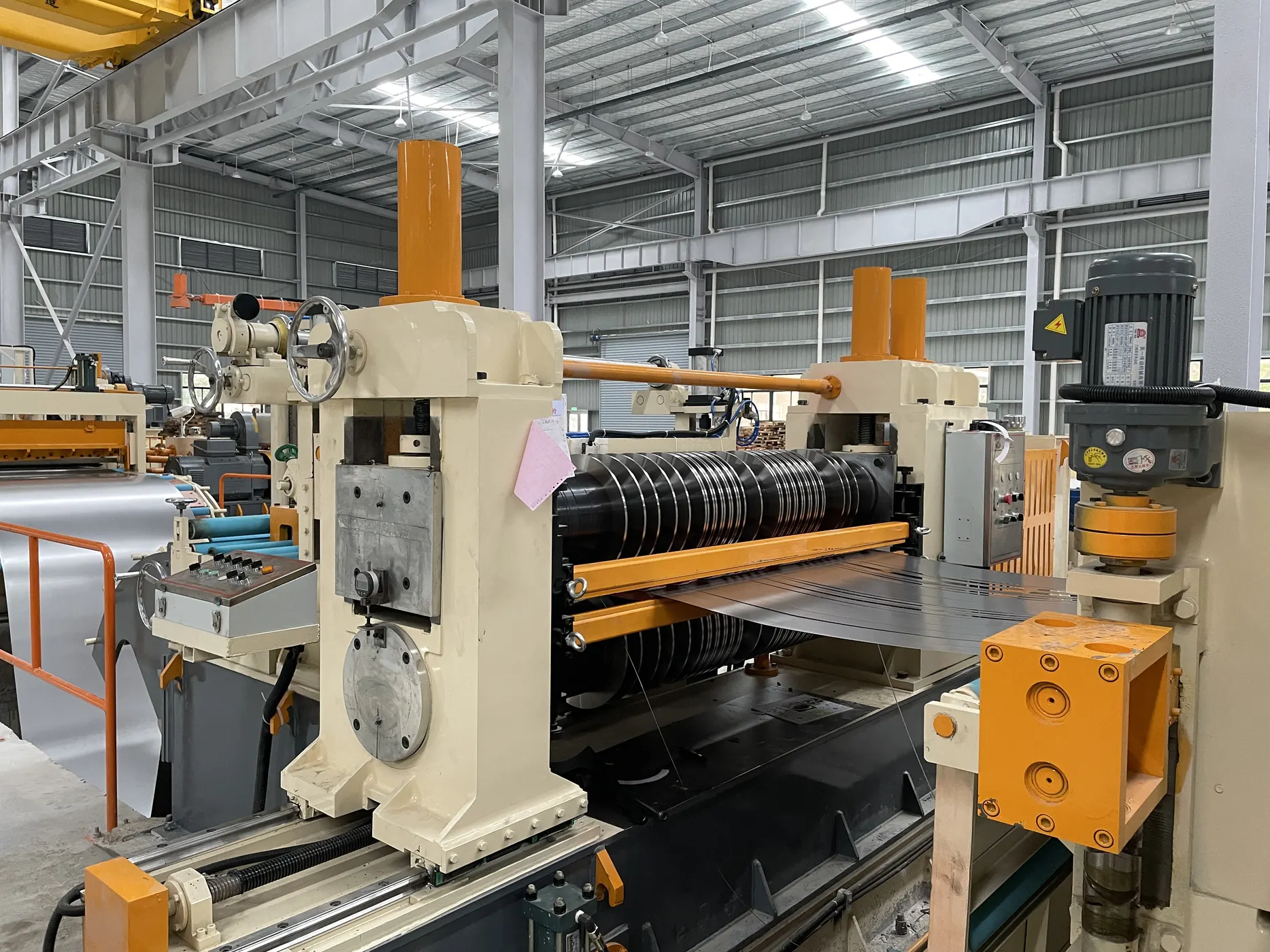
When slit strip does not lie or track as expected, first describe the shape and the condition in which it was observed. “Deformation” can refer to sideways curvature, curvature along the strip, curvature across its width or local waviness. These observations lead to different investigations; one adjustment cannot be prescribed for all of them.
This guide is a diagnostic record checklist. It does not replace the machine manufacturer’s setup instructions or establish a universal corrective setting.
Describe the shape under a defined condition
Camber describes curvature of the strip edge in its plane. Coil set describes curvature along the length associated with the coiled shape. Crossbow describes curvature across the width. Edge wave and center buckle describe different locations of waviness.
Photograph the sample with its orientation marked. Record length, width, thickness and which edge came from which part of the parent coil. State whether the strip was measured under tension, supported on a table or released into a free condition. Comparing unlike conditions can make an apparent improvement misleading.
Compare incoming material and slit strips
Keep a representative incoming sample where practical, following the plant’s approved sampling procedure. Compare edge and center positions across the original width, and identify whether all slit strips or only certain positions show the issue.
| Observation | Evidence to collect | Investigation to discuss |
|---|---|---|
| Similar shape in incoming and slit material | Samples with matching orientation | Incoming material shape and subsequent processing requirements |
| Issue concentrated in one slit position | Strip-position map and measurements | Tooling, guidance and strip-path review |
| Shape appears different after release | Measurements in both conditions | Tension condition and material-stress assessment |
| Change follows a new coil or grade | Coil identification and setup record | Material variation and approved recipe suitability |
These patterns organize an investigation; they do not prove a particular cause. Slitting, tension, material condition and later handling must be considered together.
Review cutting and strip handling records
Record the tooling set, approved setup, recent tool service, material identification and when the problem began. Note any change in strip tracking or recoiling behavior. Include burr and width measurements so an edge-quality problem is not confused with a shape-only complaint.
Do not reach into moving material or change knife, guide or tension settings by trial and error. Inspection and adjustment must follow the site’s isolation procedures and the equipment instructions.
Agree on a corrective trial and acceptance test
Define the defect, the measurement condition and the acceptance limit before a trial. Change only approved variables, keep the before-and-after samples and record the production conditions. A successful trial must meet the agreed width, edge, shape and surface requirements together.
Where material shape remains a concern, discuss whether the proposed leveling or downstream process is suitable for the grade and thickness. A generic statement that a leveler “removes deformation” is not sufficient to confirm the result for a particular product.
Review slitting width and edge inspection for a complementary quality record, or provide the sample evidence through the coil slitting inquiry.
Technical reference
Bradbury: Precision Roller Levelers explains the relationship between leveling, material stress and flatness. Its leveling systems are manufacturer-specific and are not presented here as MAXDO equipment features.