
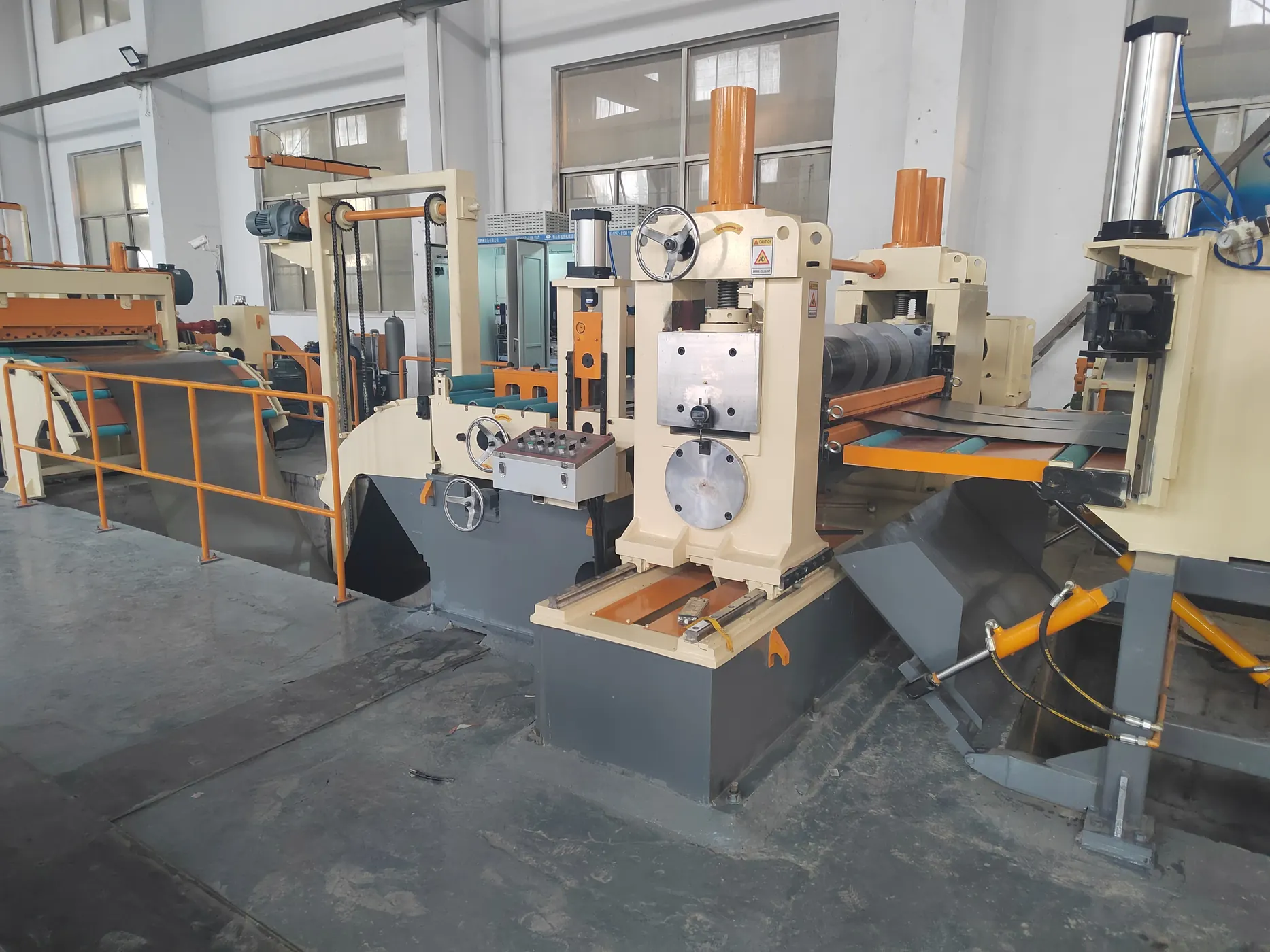
A slitting line’s running speed does not describe the time required to change an order. Coil handling, tooling preparation, threading, first-piece inspection and finished-coil removal all affect the production schedule. A useful changeover review starts by measuring these activities separately.
The aim is to identify the delay in the actual process, not to assume that a faster drive or a new control screen will solve every interruption.
Define when changeover starts and ends
Choose an observable start and finish, such as the last accepted output of one order and the first accepted output of the next. Keep that definition consistent. Record waiting time and active work separately so an equipment issue is not confused with missing material or instructions.
Compare similar jobs as well as difficult ones. A tooling pattern change, a material-grade change and a coil replacement without a width change may involve different work.
Record the activities around the stopped line
| Activity | Record | Question to investigate |
|---|---|---|
| Material preparation | Coil availability and identification | Was the next approved coil ready? |
| Tooling preparation | Correct tools, inspection and setup information | Was preparation complete before the change? |
| Coil handling | Loading and finished-coil removal time | Did handling block another activity? |
| Threading and guidance | Time and approved procedure | Where did the sequence pause? |
| First-piece approval | Measurements and release time | Were methods and limits agreed beforehand? |
Do not overlap activities unless the machine instructions and the site’s approved work method permit it. Faster changeover does not justify bypassing guarding, isolation or quality checks.
Improve information and preparation first
Use an approved order sheet containing material, width pattern, finished-coil requirements and inspection criteria. Identify tools and parts before the planned change. Make the latest setup instructions available at the correct workstation.
Compare the recorded job with the instructions. If time is lost searching for tools or resolving an ambiguous width order, correct that information problem before specifying equipment modifications. If the restriction is mechanical access or handling capacity, document it for an engineering review.
Assess equipment changes against the measured delay
Some manufacturers offer offline tooling preparation, quick-change heads or automated handling. Those are specific equipment options, not universal features of a slitting line. Confirm compatibility, required space, guarding, training and acceptance testing before treating an option as a solution.
A proposed improvement should state which measured activity it changes and how the result will be checked. Re-measure using the same start and end points. Report the result for the tested job mix, not as a guaranteed percentage for every order.
Prepare slitting process and selection requirements alongside the timing record. MAXDO’s coil slitting inquiry can then describe the required process and the documented constraint without assuming an unconfirmed upgrade service.
Technical reference
Butech Bliss: Multi-Blanking Lines gives an example of offline setup and quick-change equipment in a particular line configuration. It does not establish availability on MAXDO machines.