


Advanced Slitting Line Control Architecture Matrix
A narrow advanced slitting control architecture matrix covering servo positioning, multi-zone tension, recipe management, monitoring, yield stability, and model fit.
This page is a narrow support page for advanced slitting control architecture. It owns only the control layer after the slitting process and machine family are known: servo positioning, tension zones, recipes, monitoring, alarm logic, and yield-stability handoff. It is not the main metal slitting line core page, not the ROI decision record, and not a product model page.
Advanced metal slitting performance comes from control architecture, not from speed alone. A line can only protect yield when the strip path, knife position, tension zones, recipe settings, and recoiling behavior stay coordinated from coil loading to finished slit strips. This guide focuses on the control layer that turns a slitting line from a mechanical cutting system into a repeatable production platform.
For the full process, components, and equipment selection overview, use the core metal slitting line core page. For financial payback, use the slitting line ROI decision record. This page sits between them: it explains which advanced controls protect yield, tolerance, and uptime after the machine is already selected.
Why Advanced Control Matters More Than Rated Speed
Rated speed is only useful when quality stays stable at production speed. If knife position drifts, tension changes across slit widths, or recoiling becomes unstable, the line slows down in practice. Operators reduce speed, add inspection, restart jobs, or accept more scrap. Advanced control is valuable because it keeps the usable operating window wider.
The control goal is not maximum motion. The goal is controlled motion. A well-configured line keeps strip movement predictable, reduces manual correction, and makes the first acceptable strip easier to repeat across shifts. That is where yield stability comes from.
| Control layer | What it stabilizes | Business effect |
|---|---|---|
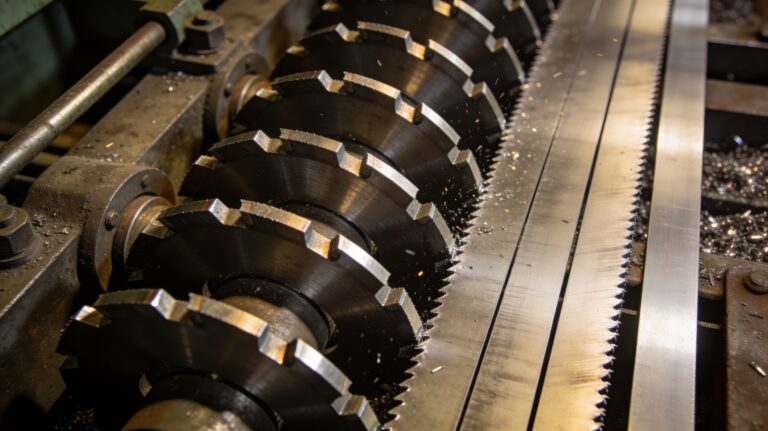
| Servoposicionamiento | Knife setup, feed movement, and repeatable adjustment | Shorter setup and fewer first-piece corrections. |
| Multi-zone tension | Strip path, deformation risk, and recoiling behavior | Fewer rejected strips and more stable output. |
| Recipe management | Settings for material, gauge, width, and customer order | Less operator variation between repeat jobs. |
| Monitoring and alarms | Process drift before it becomes visible scrap | Earlier intervention and lower hidden quality cost. |
Servo Positioning: Repeatability at Setup
Servo positioning improves slitting performance when it reduces the gap between the planned setup and the first acceptable output. Manual adjustment can work, but it depends heavily on operator experience and repeated inspection. Servo-assisted positioning gives the plant a more repeatable baseline for knife spacing, feed control, and order changeovers.
This is especially important for mixed-order production. When a plant changes slit widths frequently, setup repeatability becomes a capacity issue, not only a quality issue. The less time operators spend chasing first-good-strip approval, the more time the line spends producing sellable strip.
Multi-Zone Tension Control: Stability Across the Strip Path
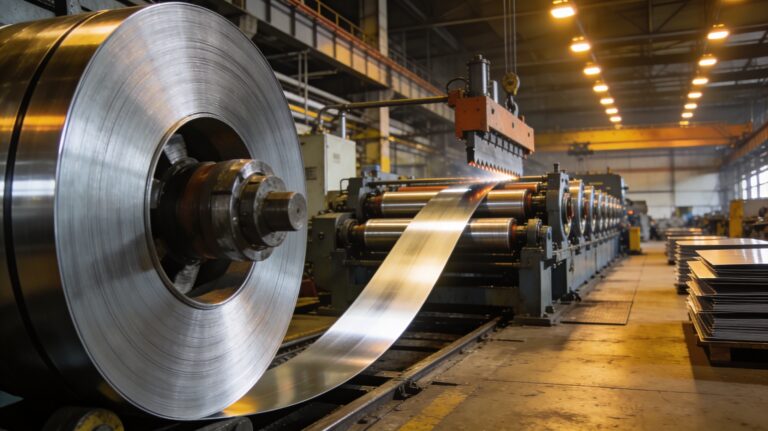
Tension is one of the main reasons a slitting line can look good in a drawing but struggle in production. Different strip widths, material strengths, and coil conditions all change how the material behaves. Multi-zone tension control helps keep the strip path stable before and after slitting, reducing deformation, edge wave, and recoiling problems.
If deformation is already a production problem, review the dedicated guide on how to eliminate material deformation after slitting. In an advanced-control review, the key question is whether the line can keep tension consistent enough for the material family and slit width pattern you actually run.
Recipe Management: Turning Operator Knowledge Into Repeatable Settings
Recipe management is the bridge between skilled operators and repeatable production. A useful recipe stores more than a product name. It should connect material type, thickness, incoming width, target slit pattern, knife setup notes, tension settings, speed range, inspection points, and recoiling requirements.
Without recipes, the same order can behave differently across shifts. With disciplined recipe control, a repeat job starts from known settings, and operators improve the baseline instead of rebuilding it from memory. This is how advanced slitting lines reduce variation without removing operator judgment.
Monitoring: Finding Drift Before It Becomes Scrap
Advanced monitoring does not replace inspection. It changes when the plant discovers a problem. Instead of finding drift after a coil has produced unusable strips, the line can alert operators when speed, tension, width behavior, or recoiling conditions move away from the accepted window.
This control layer supports the broader yield strategy explained in how slitting lines maximize material yield and reduce scrap. Yield is not protected by one feature. It is protected by a chain of controlled decisions that reduce avoidable loss at each stage.
Tolerance Control: Where Advanced Systems Pay Off
Width tolerance depends on tooling, machine rigidity, material behavior, and control discipline. Advanced controls help by keeping setup, motion, and tension closer to the intended condition, but they still need the correct mechanical foundation. The right question is not whether the control system is advanced. The question is whether the control system supports the tolerance your customers actually require.
For a deeper technical discussion, connect this page with the guide on precision width tolerance in metal slitting machines. That page covers the tolerance mechanism; this page explains how the control architecture keeps the mechanism repeatable.
Model Fit: Where Advanced Control Belongs
Advanced control should match the line’s real production role. A compact MA configuration may need repeatable setup and stable tension for narrower coil programs. A wider MD configuration may need broader width coverage, stronger recipe discipline, and more monitoring for mixed service-center work. Controls should be selected against the plant’s bottleneck, not added as decorative complexity.
Review the MA and MD model fit matrix, then compare the MA-1350 metal slitting machine, MD-1650 metal slitting machine, and MD-2200 metal slitting machine according to the control features that release the most value in your plant.
Advanced Control Checklist Before Buying
- Identify the current defect that causes the largest loss: width drift, deformation, burr, setup scrap, or recoiling instability.
- Confirm which settings need recipe control for repeat orders and mixed shifts.
- Ask how tension is controlled across different slit widths and material families.
- Check whether monitoring alerts operators early enough to prevent full-coil scrap.
- Match the control package to the machine model, operator workflow, and payback target.
If you are reviewing an advanced slitting line upgrade, share your coil width, gauge range, defect history, changeover frequency, and target output through the MaxDo contact form. The most useful control recommendation starts with the problem you are trying to stabilize.