


Slitting Deformation Control: Residual Stress Checklist
A narrow residual-stress checklist for reducing camber, waviness, edge deformation, strip curvature, and recoiling defects after slitting.
This page is a narrow support page for slitting deformation control. It owns only the residual-stress and strip-shape problem after slitting: camber, waviness, edge deformation, strip curvature, tension history, and recoiling correction. It is not the main metal slitting line core page, not a width-tolerance measurement protocol, and not a product category page.
For the main equipment route, use the metal slitting line core page. For width tolerance evidence, use the slitting width tolerance measurement protocol. For equipment-family routing, use the metal slitting machine category.
Material deformation after slitting is usually a residual-stress problem, not a single-machine problem. Camber, waviness, edge wave, twist, and strip curvature appear when the incoming coil stress state, leveling condition, knife setup, line tension, and recoiling load do not stay balanced through the slitting pass.
This page defines the deformation-control checklist in the MaxDo topic network. For defect diagnosis after parts are already rejected, use the slit vs blanked quality troubleshooting guide. For width accuracy targets, use the slitting width tolerance guide. This page stays focused on preventing strip shape instability before it becomes a downstream complaint.
Read Deformation as a State Change
A useful engineering model is to treat the coil as a state graph: incoming master coil, leveled strip path, knife-entry state, separated strip state, and recoiled finished strip. Slitting changes width and releases stored stress. If the stress release is symmetrical, the strip stays stable. If one edge, one zone, or one strip path carries more load, the output changes phase into camber, wave, bow, or twist.
| Observed deformation | Likely state imbalance | First check |
|---|---|---|
| Camber or saber bend | Uneven stress release across strip width | Incoming coil set, leveling, knife clearance, strip tension |
| Edge wave | Edge elongation or separator pressure mismatch | Side guides, separator setup, recoiler pressure |
| Twist | Unbalanced strip path or recoiling load | Strip threading, tension zones, coil build |
| Surface mark with shape change | Handling pressure plus material sensitivity | Roller contact, coating risk, guide material |
Start With Material and Coil History
Before adjusting the slitting line, confirm material grade, thickness, yield strength, coating, coil width, coil weight, incoming flatness, and whether the coil already has set, crown, edge wave, or surface sensitivity. The same setup can behave differently on mild steel, stainless steel, aluminum, galvanized coil, or coated material. For material-specific intake, connect this check to the MD series material compatibility checklist.
Check Leveling Before Increasing Tension
Operators often try to pull deformation out with more tension. That can hide one symptom while creating another. First verify whether the coil needs leveling, whether the leveler is set for the actual thickness and strength, and whether the strip exits the leveling section without adding new edge load. Tension should stabilize a correctly prepared strip, not compensate for unresolved coil stress.
Balance Knife Setup With Strip Separation
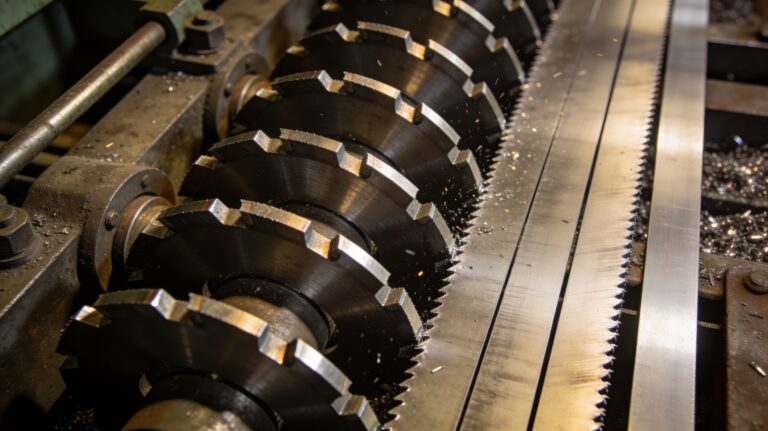
Knife clearance, blade condition, arbor rigidity, separator position, trim width, and strip count all affect stress release. A burr problem can become a deformation problem when clearance is wrong or when separator pressure pushes one strip path harder than another. If the issue appears after a tooling change, compare the setup log before replacing material or adding downstream correction.
Control Tension by Zone, Not by Guesswork
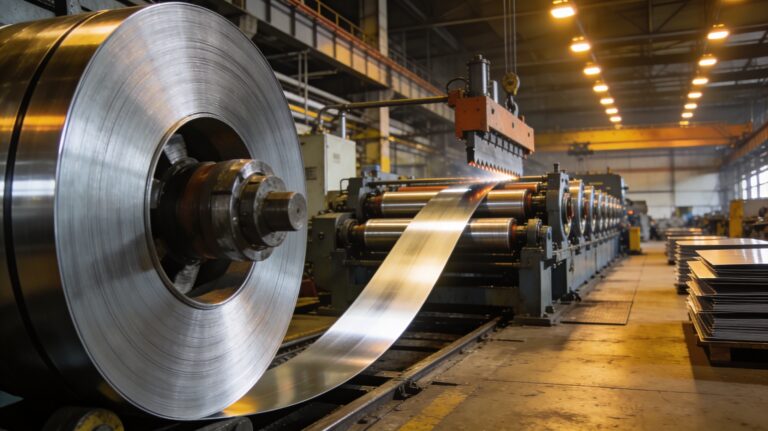
Deformation control needs stable tension through uncoiling, leveling, slitting, strip separation, and recoiling. Watch for sudden loop changes, uneven strip pull, recoiler cone pressure, separator drag, and tension differences between narrow and wide strips. For projects where frequent changeover creates unstable setup, use the slitting setup-time reduction checklist.
Build a Simple Deformation Control Record
- Incoming coil data: material, grade, thickness, width, weight, flatness, coating, and visible coil set.
- Line setup: leveler setting, knife clearance, blade condition, strip count, trim, separator method, and recoiler setup.
- Process state: speed, loop behavior, tension zones, strip path, operator adjustments, and changeover history.
- Inspection: camber, wave, bow, twist, burr, width tolerance, surface marks, and where the defect first appears.
- Decision: material issue, leveling issue, tooling issue, tension issue, recoiling issue, or downstream handling issue.
When Equipment Upgrades Are the Right Fix
If deformation repeats across coils and operators cannot keep the line stable, review whether the existing line needs better tension feedback, servo control, loop control, tooling rigidity, or recoiling hardware. For retrofit planning, use the slitting line control system upgrade roadmap. For new-line architecture, compare the advanced metal slitting line control architecture.
For equipment selection, start with the metal slitting machine category, including the MA-1350 y MD-1650. To discuss a deformation issue, send MaxDo the material data, defect photos, strip program, setup record, tension notes, and inspection target through the contact form.
If the defect belongs to flat-sheet leveling, shearing, or stacking rather than strip tension and recoiling, keep this page as the slitting deformation checklist and route the equipment path to the metal cut-to-length line category. That prevents a CTL flatness problem from being hidden inside a slitting-machine adjustment plan.