


What Is a Cut-to-Length Line? CTL Definition & RFQ Checklist
A narrow CTL definition and RFQ checklist for cut-to-length lines, explaining when CTL fits coil processing and what buyer data to prepare.
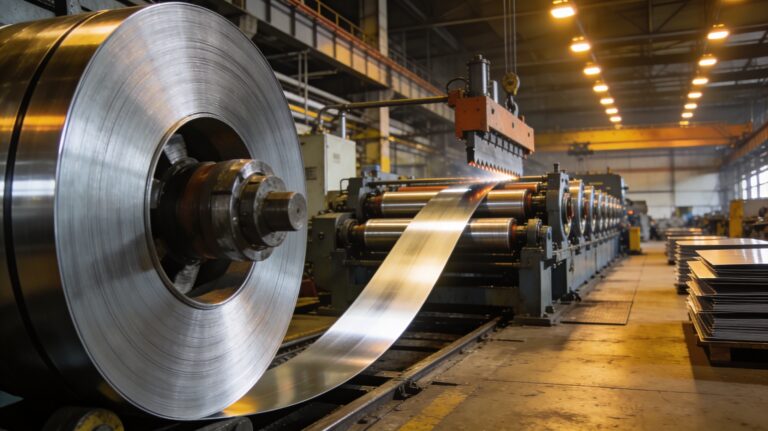
A cut-to-length line, often called a CTL line, converts metal coil into flat sheets cut to a specified length. The line normally uncoils the strip, levels it to reduce coil set, feeds it to length, cuts it with a shear, and stacks the finished sheets. CTL is used when the plant or customer needs flat stock instead of narrow coils or slit strip.
For the full step-by-step process, use the cut-to-length process main page. This page is a narrow support page for CTL definition and RFQ intake. It owns only the first decision layer: what a cut-to-length line does, when CTL fits, what data the buyer should prepare, and which product path to review next. It is not the main cut-to-length process page and not a supplier acceptance matrix. It helps buyers confirm whether they need CTL, what information to prepare, and which related MaxDo pages to review next.
What a CTL Line Does
A CTL line changes the output form of coil stock. Instead of rewinding the material into narrow coils, it produces flat sheets or blanks that can be sent to fabrication, laser cutting, stamping, bending, panel production, or resale. The process is useful when length accuracy, flatness, surface handling, and stacking are more important than keeping the material in coil form.
| Question | CTL answer |
|---|---|
| Input form | Master coil or pre-slit coil |
| Output form | Flat sheets or blanks |
| Main quality controls | Flatness, length accuracy, surface condition, stack quality |
| Common next operations | Fabrication, cutting, stamping, bending, panel work |
When CTL Is the Right Process
CTL is usually the right process when the downstream operation needs flat sheets, fixed-length blanks, or leveled stock. It is especially useful for fabrication shops, service centers, panel producers, appliance suppliers, construction material processors, and plants that need consistent sheet length and stack presentation.
If the plant mainly needs narrow coils or strips, compare the decision with the metal slitting vs CTL line guide. If the real issue is order family, changeover rhythm, and downstream flow, review the slitting vs CTL order-mix planning guide.
What Buyers Should Prepare Before an RFQ
A CTL recommendation depends on more than coil width. Prepare the material grade, thickness range, coil width, coil weight, sheet length range, flatness target, cut tolerance, surface protection requirement, stacking method, daily tonnage, changeover frequency, and downstream process. This information helps prevent a generic machine quote from missing the real production constraint.
| RFQ data | Why it matters |
|---|---|
| Thickness and grade | Sets leveling force, shear capacity, and drive load. |
| Sheet length and tolerance | Defines feed accuracy and shear control requirements. |
| Flatness target | Determines leveler design and commissioning checks. |
| Surface requirement | Controls roller, guide, conveyor, and stacking choices. |
How CTL Differs From Slitting
Slitting cuts coil lengthwise into narrower coils or strips. CTL cuts coil crosswise into sheets. Both can be part of a coil processing plant, but they solve different output problems. A service center may need both if some customers buy strip coils and others buy flat sheets.
For material-specific decisions across aluminum, stainless steel, and mild steel, use the slitting or material-route matrix. Material behavior often decides whether flatness, edge quality, surface protection, or strip width is the controlling factor.
Which CTL Product Path to Review
If the project is light or medium gauge, review the light vs medium gauge CTL boundary matrix. For model-level comparison, start from the MaxDo metal cut-to-length line category, including the CT-850, CT-1350, and CT-1650 product pages.
Simple CTL Fit Checklist
- The required output is flat sheet or blank, not narrow coil.
- Flatness and length accuracy affect downstream quality.
- The plant can define material, thickness, coil width, sheet length, and stack requirements.
- The RFQ includes surface protection, changeover frequency, and daily tonnage.
To discuss a CTL project, send your material range, coil width, thickness, sheet length, flatness target, surface requirement, stacking method, and production volume through the MaxDo contact form.