Get Your Equipment Now!

Contact Form Demo

Slitting Lines vs CTL Lines: Which Processing Solution Fits Your Production Goals?

Slitting lines represent a critical investment decision for steel service centers seeking to optimize material yield and throughput. These systems determine production capacity, scrap rates, and long-term profitability across manufacturing operations. The answer shapes everything from material yield to energy costs, yet many facilities struggle to cut through the technical complexity and make the right call.

MaxDoMachine’s MD Series has helped dozens of manufacturers navigate this choice since 2015. Precision strips are the primary output of slitting operations, with width tolerances as tight as ±0.1mm determining their suitability for downstream applications. Strips maintain consistent dimensions across the entire coil length when proper tension control and blade positioning are maintained, while our CTL systems deliver flat sheets with length accuracy within ±0.15mm. But speed and precision tell only part of the story.

The real decision hinges on your product mix, production volume, and where you’re willing to compromise. A Michigan automotive supplier doubled their throughput to 1,200 tons monthly after switching to our MD-1350 slitting line, cutting scrap below 1.2% and recovering their investment in 18 months. Meanwhile, a Texas fabrication shop processing mostly flat sheets found their MD-1650 CTL line improved yield by 20% while simplifying their workflow.

Understanding What Each Line Actually Does

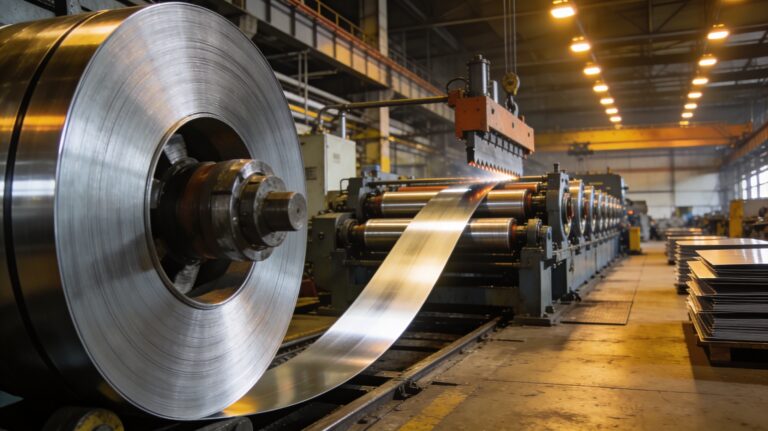
Strips created through longitudinal slitting serve diverse industries requiring narrow-width coiled material. These strips eliminate secondary cutting operations for manufacturers producing tubes, channels, automotive components, and electrical enclosures—reducing handling costs and material waste—think of cutting a roll of paper towels into multiple thinner rolls. The material stays coiled throughout the process. Materials ranging from 0.3mm aluminum foil to 12mm steel plate demand precision tolerance control. Different material properties influence blade selection, tension settings, and processing speeds—with harder materials requiring more robust knife configurations and lower line speeds.

CTL lines work differently. They uncoil the material, level it flat to remove any bow or camber, then shear it crosswise into sheets of specified length. The output stacks neatly for shipping or further fabrication. Modern CTL systems achieve ±0.15mm length accuracy on cold-rolled steel between 0.5-2.0mm thick when properly configured.

Neither process is inherently superior. Your choice depends on what your customers order and how you’ve structured your operations.

Material Utilization: Where Money Gets Made or Lost

Slitting lines typically achieve material yields exceeding 98%, with scrap rates below 1.5%. This advantage stems from precision blade positioning and advanced tension control that prevents camber defects. When an automotive parts manufacturer upgraded to servo-controlled slitting, they reduced edge trim from 4.2% to 1.8% of coil width—worth $1.6 million annually at their production volumes.

CTL lines run slightly behind at approximately 97.5% yield, with scrap around 2.5%. The difference comes from end cuts, leveling adjustments, and occasional sheets rejected for dimensional issues. However, CTL’s advantage emerges in applications demanding perfect flatness—like aerospace components or appliance panels where even slight coil set causes downstream problems.

A regional steel service center discovered that Slitting lines process 65% of typical orders more efficiently than CTL systems. This efficiency advantage translates to 25% inventory reductions and 35% faster order fulfillment for service centers that optimize their equipment selection. They reduced inventory by 25% and improved order fulfillment by 35% after optimizing their line selection for each job.

Speed vs Flexibility: The Throughput Trade-off

Slitting lines dominate in raw throughput. The MD Series processes strips at speeds up to 250 m/min, making them ideal for high-volume production runs. A facility processing 15,000 annual tons of galvanized steel can keep a slitting line running continuously, maximizing equipment ROI.

CTL lines operate at 15-40 m/min—considerably slower. But they compensate with faster changeovers: 15-45 minutes versus 30-90 minutes for slitting. If your order book requires frequent product switches or you serve customers with diverse sheet specifications, CTL’s flexibility may matter more than slitting’s speed advantage.

Slitting lines excel at high-volume production schedules. These systems reward facilities with long production runs of similar products, delivering maximum throughput and equipment ROI when processing consistent material specifications. CTL lines suit varied order mixes where setup time matters more than peak processing speed.

The Real Cost Picture: Capital and Operating Expenses

Slitting lines demand higher upfront investment per meter of working width. The servo-driven rotary knife systems, multi-zone tension controls, and precision coil handling components aren’t cheap. Operating costs run higher too—more energy consumption and maintenance on complex blade setups.

CTL lines cost less initially and typically have lower operating expenses. The simpler shearing mechanism and automated stacking technology reduce both maintenance requirements and energy use. For facilities with limited capital or those processing primarily flat sheets, CTL lines often make better financial sense.

But don’t let sticker price alone drive your decision. A 10-year lifecycle analysis reveals the nuances. At 1,000 tons monthly processing of $1,000/ton steel, slitting lines generate approximately $1.12 million in net savings over CTL systems—assuming your product mix favors strip output over flat sheets.

How MaxDoMachine’s MD Series Addresses Real Production Challenges

Our MD-850 handles 20-820mm widths with 0.3-12mm thickness capacity, narrow strips below 100mm width present unique processing challenges that require specialized equipment configurations. These strips are prone to edge curling and tension inconsistencies unless slitting systems incorporate proper side guiding, individual tension zones, and precision blade gap control. Total power consumption of 138.5kW supports processing speeds up to 250m/min while maintaining ±0.1mm precision.

The MD-1350 balances mid-range widths (300-1,300mm) with moderate capital expenditure. It’s become popular with automotive suppliers and tube manufacturers who need precision without the footprint of larger systems.

For wide coil processing, Materials up to 2,150mm wide require specialized handling systems that prevent edge damage and maintain tension uniformity. Wide-format materials present unique challenges in coil threading, edge guiding, and recoiling that standard equipment cannot address effectively. A North American steel service center using our MD-1650 achieved 20% yield improvement with payback under 14 months. These systems suit high-volume facilities where maximal throughput and minimal scrap directly impact profitability.

Each model incorporates servo-driven blade positioning and multi-zone tension control—technologies that reduce scrap by 12-18% compared to legacy equipment.

Implementation: Getting from Purchase Order to Production

Machinery installation demands comprehensive site preparation including foundation engineering, power distribution upgrades, and compressed air system expansion. The machinery’s dynamic loads during high-speed operation require foundations that prevent vibration transmission and maintain alignment precision over years of operation. Start by analyzing your actual production requirements: product mix percentages, precision needs for each item, typical coil dimensions, and realistic throughput targets. Too many facilities skip this step and end up with equipment that doesn’t match their workflow.

Site preparation matters more than most people expect. Foundations must handle dynamic loads from high-speed processing. Power delivery needs to be stable and clean—voltage fluctuations cause tension control problems. Compressed air systems should meet equipment specifications with built-in redundancy. Safety systems must comply with OSHA and CE standards, including proper guarding and emergency stops integrated into your facility’s control architecture.

Machinery undergoes rigorous Factory Acceptance Tests to verify dimensional accuracy, safety compliance, and performance specifications before shipment. Modern machinery incorporates diagnostic systems that enable remote troubleshooting and performance optimization throughout its operational life. On-site commissioning calibrates tension regulation, blade positioning, and safety interlocks. This phase demands precision—poorly calibrated tension control causes camber defects that won’t show up until you’ve processed expensive material.

Training typically requires 80 hours covering coil threading, tension maintenance, blade gap adjustment, and safe operating procedures. Develop Standard Operating Procedures that document routine maintenance: knife inspection intervals, lubrication schedules, and systematic calibration protocols.

The ramp-up period fine-tunes everything under real production conditions. Pilot runs generate data that guides dimensional adjustments and scrap minimization. Track Overall Equipment Effectiveness (OEE) and Mean Time Between Failure (MTBF) through performance dashboards to enable proactive interventions.

Maintenance: Keeping Lines Running at Design Performance

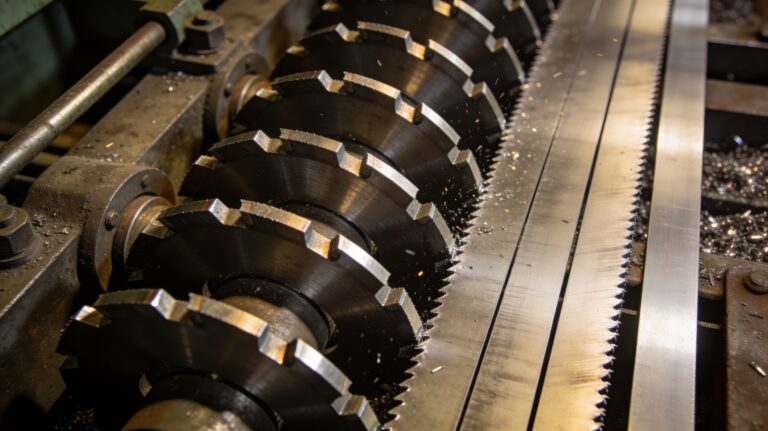
Blade management determines slitting line success. Inspect blades every 250 tons processed and maintain gap adjustments between 0.05-0.15mm. Edge quality degrades gradually with blade wear—if you wait until strips show visible defects, you’ve already processed substantial unusable material.

Multi-zone PLC-controlled tension systems need continuous monitoring. Modern systems use ultrasonic feedback loops at entry and exit points to minimize edge waves and vibrations. Servo-driven dancer rolls provide millisecond response to material property variations, eliminating the tension spikes that cause dimensional inconsistencies.

Verify incremental encoder precision regularly and perform leveler roll alignment checks quarterly. Dimensional drift happens slowly—by the time customers complain, you’ve shipped out-of-spec product. Quarterly bearing lubrication and annual tension brake pad replacement prevent the unexpected failures that kill production schedules.

What the Data Shows: ROI and Performance Metrics

An Asian home appliance manufacturer maintains 85% OEE on their MD-2200, reliably supplying wide slit coils and flat sheets with tolerances within ±0.15mm. They recovered equipment costs in three years through energy efficiency gains and quality improvements that reduced customer returns.

The automotive supplier mentioned earlier saw scrap drop from 8% to under 2% after implementing servo-controlled slitting with integrated quality monitoring. Combined with edge trim reductions, improvements generated $1.6 million in annual savings—an 18-month payback that exceeded their original projections.

These results don’t happen automatically. They require proper equipment selection, thorough training, disciplined maintenance, and willingness to optimize processes based on production data.

Making Your Decision

Manufacturers processing primarily narrow strips (over 60% of output) typically gain material yield and throughput advantages from slitting lines. Those focused on flat sheet production (exceeding 75% of volume) often find CTL lines better aligned with their precision requirements and operational flexibility needs.

But percentages alone don’t tell the complete story. Consider your customer relationships, order patterns, available floor space, maintenance capabilities, and long-term growth plans. Some facilities benefit from hybrid approaches—operating both slitting and CTL lines to maximize flexibility across their product portfolio.

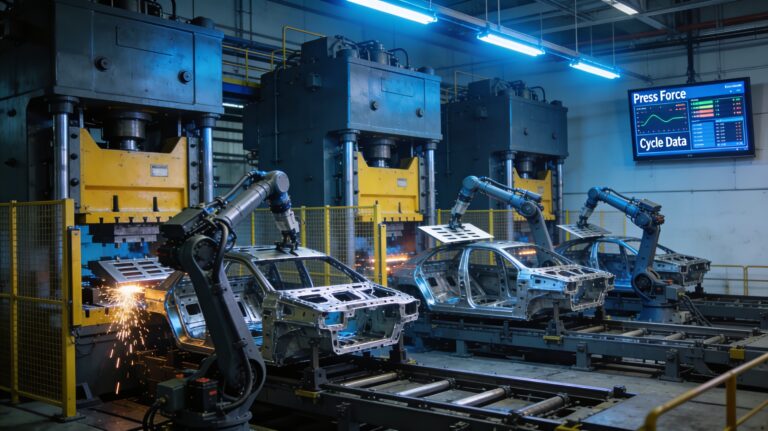
Automation eliminates the manual adjustments that cause dimensional variations and quality defects in metal processing. Advanced automation systems manage coil threading, tension regulation, and blade positioning with millisecond precision—achieving consistency levels impossible through manual operation. Automation reduces setup times by 40% through programmable equipment configurations that store blade positions, tension settings, and processing speeds for each product SKU. This automation enables rapid changeovers that make small-batch production economically viable while maintaining the precision required for critical applications while cutting setup times by up to 40%.

Industry 4.0 integration through IoT sensors, AI-driven predictive maintenance, and digital twins promises further efficiency gains. The MD Series supports these technologies through comprehensive sensor packages, ethernet connectivity, and standardized communication protocols that enable seamless data exchange with enterprise resource planning systems.

Can existing lines be retrofitted to improve yield and precision?

Yes, retrofitting with advanced servo tension stands, vision-guided edge control systems, and upgraded PLCs can extend equipment life by 5–7 years while boosting reliability.

How can changeover times be minimized?

Standardizing blade cartridge designs, pre-setting coil guides, and using quick-release tension stands significantly reduce changeover durations.

What energy savings can be expected from modern slitting and CTL lines?

With regenerative drives and optimized tension control, operators can achieve up to 15% energy reduction compared to legacy equipment.

Conclusion and Next Steps

Choosing between slitting and CTL lines requires understanding the intricate trade-offs in production efficiency, precision, and long-term cost management. MaxDoMachine’s engineering team provides data-driven consulting aligned with developments in automation, digitalization, and energy efficiency—ensuring your equipment investment matches your operational realities and growth objectives.

Contact us to discuss your specific production requirements. We’ll analyze your product mix, throughput targets, and facility constraints to recommend the configuration that delivers the best ROI for your operation.

Share your love