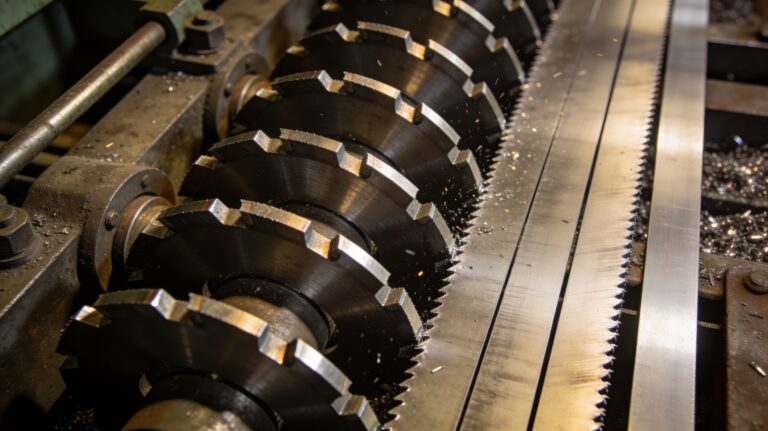



Metal Processing Safety Acceptance Matrix
A metal processing safety acceptance matrix for slitting and CTL lines, covering guarding, E-stop, interlocks, operator zones, maintenance access, alarms, FAT/SAT checks, and support evidence.
Metal processing safety should be accepted with written evidence, not with broad claims about advanced systems. A slitting line, CTL line, or mixed coil-processing cell needs a safety acceptance matrix that defines guarding, emergency stop circuits, interlocks, operator zones, maintenance access, alarm behavior, restart rules, FAT/SAT tests, and documentation handoff before the line is released for production.
This page is the safety acceptance matrix in the MaxDo operating-risk topic network. For automation project governance, use the metal production line automation execution plan. For slitting and downstream data handoff, use the slitting and flatbed automation handoff checklist. For staged PLC, HMI, recipe, and safety-interface retrofit planning, use the slitting line control upgrade roadmap. This page focuses only on safety evidence and sign-off.
Define the Safety Boundary Before the RFQ
The safety boundary should match the physical process. Slitting safety covers coil loading, strip path, knives, separator, recoiler, scrap handling, guarding, and finished-coil unloading. CTL safety covers decoiling, leveling, feed, shear, conveyor, stacker, sheet handling, and maintenance access. A flatbed or downstream cell adds its own operator zones, fixtures, tooling, and part release risks.
| Safety area | Evidence to define | Risk if missing |
|---|---|---|
| Guarding and access | Fixed guards, movable guards, access panels, maintenance routes | Operators bypass protection to clear jams or adjust tooling |
| Emergency stop and interlocks | E-stop zones, reset rules, door interlocks, permissives, restart behavior | Unsafe restart or unclear stop ownership during abnormal events |
| Operator zones | Loading zone, setup zone, inspection zone, unloading zone, restricted areas | People and moving material share the same space without a rule |
| Alarm and fault records | Alarm category, event context, recovery step, owner, retest record | Stops happen, but the plant cannot prove why or how it recovered |
| Maintenance access | Lockout points, service clearance, cabinet access, tooling access | Maintenance becomes slow, risky, or dependent on improvisation |
Keep Safety Acceptance Separate From Automation Claims
Automation can support safety, but it is not the same as safety acceptance. The buyer should test whether the line stops correctly, prevents unsafe restart, records the abnormal event, guides the operator through recovery, and returns to production only after the correct release step. A safety matrix should not become another list of sensors, PLC features, or monitoring buzzwords.
Use automation pages for project sequencing and signal ownership. Use this matrix to decide whether guarding, emergency stops, interlocks, operator permissions, alarms, and maintenance access are accepted before shipment and again after installation.
Build FAT and SAT Safety Tests
FAT should test safety behavior before shipment under controlled conditions. SAT should repeat the same tests with the buyer’s layout, utilities, operators, coil handling route, maintenance access, and production rules. Each test should record expected behavior, actual behavior, deviation, correction owner, retest method, and final sign-off.
| Acceptance test | What to verify | Record owner |
|---|---|---|
| E-stop zone test | Correct equipment stops, reset requires deliberate action, restart is controlled | Controls and safety |
| Guard or door interlock | Access stops unsafe motion and restart requires closed state and reset | Controls and mechanical |
| Jam or abnormal material event | Alarm appears, motion response is safe, recovery step is documented | Production and controls |
| Maintenance access test | Tooling, sensors, cabinets, lubrication, and guards are serviceable safely | Maintenance |
| Operator handoff | Operators understand zones, alarms, reset permissions, and escalation route | Training and production |
Route Safety Evidence to Equipment Type
Safety evidence should follow the selected equipment path. Slitting projects should begin with the metal slitting machine category, including MD-1650 and MD-2200 when coil width, handling burden, and operator zones grow. Sheet-led projects should use the metal cut-to-length line category, including CT-1350 and CT-1650 when shear, stacker, and sheet handling define the main safety burden.
Connect Safety to Wear Parts and Support
Some safety risk appears after production starts. Worn guards, damaged sensors, bearing noise, poor access, unreliable alarms, and unclear spare-parts ownership can all weaken the accepted state. Use the slitting and flatbed wear-parts trigger matrix when wear symptoms affect safe operation. Use the coil processing equipment support evidence matrix to define spare parts, remote diagnosis, service escalation, documentation, training, and warranty boundaries.
Prepare the Safety Documentation File
The safety documentation file should be simple enough for operators and complete enough for maintenance and audits. Include line layout, safety zones, guard list, E-stop list, interlock list, reset permissions, alarm categories, lockout points, maintenance clearance notes, training records, FAT/SAT safety test records, deviation closeout, and final sign-off.
- Define safety zones before installation, not after operators begin production.
- Test normal stops, emergency stops, guarded access, abnormal material events, and restart rules.
- Record which alarms are warnings, stops, safety events, maintenance events, or quality holds.
- Attach operator training, maintenance handoff, spare-parts route, and retest records.
For factory and certification context, review the factory tour and certificate page. To ask MaxDo for a metal processing safety acceptance review, send equipment type, line layout, operator zones, guarding expectations, E-stop and interlock requirements, maintenance access, alarm rules, FAT/SAT checks, and support questions through the contact form.