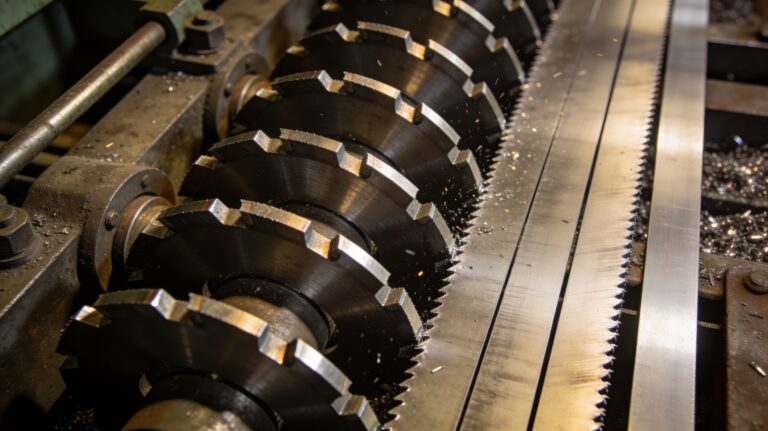



Slitting vs Flatbed Output Format Decision Checklist
A narrow slitting vs flatbed output-format decision checklist for choosing slit coils, CTL sheets, flatbed laser blanks, or a combined workflow before equipment routing.
A slitting machine and a flatbed machine should not be compared as direct substitutes until the required output form is defined. Slitting produces narrow coils or strips from a master coil. CTL produces flat sheets or blanks from coil. A flatbed laser normally cuts shapes from sheets that already exist. The buyer should decide the material state first, then route the project to the right equipment path.
This page is the slitting vs flatbed output-format decision checklist in the MaxDo topic network. For the main slitting process and ROI decision route, use the metal slitting line core page. For CTL station acceptance, use the cut-to-length process station acceptance map. For the narrower slitting vs blanking comparison, use the slitting vs blanking output-format decision map. This page is a narrow support page for slitting vs flatbed output-format routing. It owns only the pre-RFQ output-state decision: slit coils, CTL sheets, flatbed laser blanks, combined workflow, and the equipment route that follows. It is not the main metal slitting line core page, not the CTL process main page, and not an ROI decision record.
Start With the Required Output State
The first decision is what the downstream operation consumes. Tube mills, roll formers, strip-fed presses, and coil resale usually need slit coils. Fabrication, laser cutting, bending, panel work, and resale sheets usually need CTL sheets or blanks. A flatbed laser is often downstream of CTL, not a replacement for coil preparation.
| Required output | Likely route | Main acceptance evidence |
|---|---|---|
| Narrow coils or strips | Slitting line | Width tolerance, burr, camber, recoiling, separator, strip count |
| Flat sheets or blanks | Cut-to-length or blanking route | Length accuracy, flatness, squareness, shear edge, stack quality |
| Cut shapes from sheets | Flatbed laser after sheet preparation | Sheet flatness, surface condition, nesting, part accuracy, downstream handling |
| Mixed customer orders | Combined slitting and CTL workflow | Order split, inventory flow, setup rhythm, product path, FAT/SAT records |
Use Slitting When Coil Continuity Matters
Choose a slitting path when the customer or downstream process needs continuous narrow strip. The RFQ should define master coil width, finished strip widths, strip count, trim allowance, width tolerance, burr limit, camber limit, recoiling quality, separator method, and packing route. This is the same evidence layer used in the steel coil slitting machine selection checklist.
For custom thin-material programs, use the light gauge slitting customization RFQ checklist. For platform selection after the output is confirmed, use the industrial slitting platform-class decision record.
Use CTL When Flat Sheet Quality Is the Product
Choose a CTL path when the commercial product is a flat sheet or blank. The RFQ should define sheet length, length tolerance, flatness target, squareness, surface condition, stack height, stack alignment, handling route, and FAT/SAT evidence. This is different from slitting because length, flatness, and stack quality become the controlling acceptance points.
For first-scope intake, use the CTL buyer first-scope checklist. For precision records, use the CTL precision acceptance evidence checklist.
Treat Flatbed Laser as a Downstream Sheet Process
A flatbed laser normally needs sheets that are already cut to length, leveled, and staged for cutting. If the plant buys sheet stock, the laser decision may stand alone. If the plant buys coil, the project should first decide how sheets will be created, inspected, stacked, and fed to the flatbed process. A flatbed machine does not solve coil leveling, length control, or sheet preparation by itself.
Use the slitting vs CTL ROI decision record if the team is still deciding whether coil should become strips or sheets before downstream processing. For a full workflow map, use the sheet metal coil processing workflow map.
Define Tolerance by Output Type
Do not use one generic precision target across slitting, CTL, and flatbed work. Slitting precision is usually width, burr, camber, and recoiling. CTL precision is length, flatness, squareness, and stacking. Flatbed precision is part geometry, edge condition, nesting, and fixture or sheet stability. The RFQ should name the tolerance that controls the downstream process.
- Slit coils: measure finished strip width, burr, camber, coil build, and separator quality.
- CTL sheets: measure length, flatness, squareness, shear edge, and stack condition.
- Flatbed parts: confirm sheet condition, part geometry, surface marks, nesting loss, and handling route.
Route the Decision to Product Categories
After the output format is clear, route the project through the correct MaxDo product path. Slitting projects should start with the metal slitting machine category, then compare MA-850, MA-1350, MD-1650, or MD-2200. CTL projects should start with the metal cut-to-length line category, then compare Cutlength-850, CT-1350, or CT-1650.
Send an Output-Format RFQ to MaxDo
To ask MaxDo for an output-format review, send material grade, thickness, coil width, coil weight, required output state, downstream equipment, tolerance target, surface requirement, setup rhythm, current bottleneck, preferred product path, and FAT/SAT expectations through the contact form.