Get Your Equipment Now!

Contact Form Demo

Maximizing Efficiency and Precision in Metal Processing With CTL Lines and Multi-Blanking Lines

Modern metal processing operations face increasing pressure to deliver dimensional precision, minimize material waste, and maintain competitive pricing in global markets.

Modern metal processing operations increasingly depend on cut-to-length (CTL) and multi-blanking line technology to transform coiled stock into finished components with repeatable accuracy. These systems have replaced manual cutting processes in facilities ranging from automotive stamping suppliers to architectural panel manufacturers, delivering measurable improvements in material utilization, dimensional consistency, and production throughput that directly influence competitive positioning in price-sensitive markets.

What Is a Cut-to-Length Line and How Does It Work?

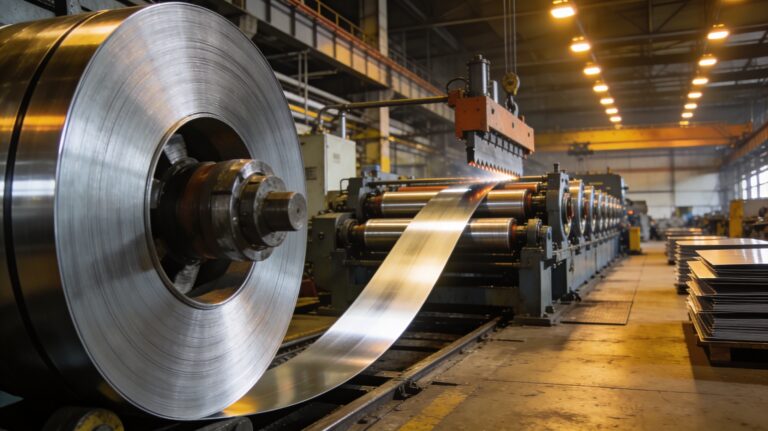
A CTL line uncoils, flattens, and cuts metal coil stock into flat sheets of predetermined length. The process begins with decoiling equipment that handles coil weights from 10 to 35 tons, depending on line capacity. Material passes through a leveling section containing multiple rolls—typically 5 to 17 rolls depending on material thickness and flatness requirements—that remove coil set and induced stresses. Servo-controlled measuring systems track material position with optical encoders, triggering hydraulic or mechanical shears to cut sheets at programmed lengths.

The MaxDo MD-850 demonstrates compact CTL line design, processing material widths from 300-820mm across thickness ranges of 0.3-12mm at speeds reaching 60 m/min. Larger installations like the MD-2200 handle widths up to 2150mm and require 422.5 kW total power consumption—specifications that reflect the energy demands of processing wide-format material at production speeds of 250 m/min.

Multi-Blanking Lines vs. Standard CTL Systems

Multi-blanking lines incorporate programmable servo-controlled shears capable of producing varying blank lengths from a single coil without stopping the line. Standard CTL systems cut repetitive single-length sheets, whereas multi-blanking equipment adjusts cut length automatically based on programmed patterns. This capability proves essential for operations supplying just-in-time manufacturing environments where order mix changes daily.

Experienced operators complete tooling changeovers in 15-30 minutes on servo-equipped multi-blanking systems. Mechanical shear designs require longer changeover periods and cannot match the edge quality consistency achieved through servo-controlled cutting force modulation. When processing stainless steel or pre-coated aluminum, this edge condition difference affects downstream fabrication operations including press forming and welding preparation.

Precision Tolerances: What Modern CTL Lines Actually Achieve

Length accuracy specifications appear straightforward until material variables enter production reality. CTL lines achieve ±0.15 mm length tolerance when processing optimal material conditions—cold-rolled steel between 0.5-2.0 mm thickness at moderate line speeds. Tolerance expands to ±0.5-1.0 mm when processing hot-rolled material or operating at maximum line speed with thicker gauge stock.

Flatness characteristics present another critical precision dimension. CTL leveling systems produce material flatness superior to slitting line output because material passes through multiple leveling rolls rather than experiencing only edge trimming and slitting knife pressure. The International Tolerance Grade (IT) system used in precision manufacturing typically requires flatness within 2mm per meter for general fabrication applications—a specification modern CTL lines exceed when properly maintained.

Material-Specific Processing: Aluminum, Stainless Steel, and Mild Steel

Aluminum’s work-hardening characteristics demand leveling systems with sufficient roll engagement to remove coil set without inducing surface marking. The MD-1350’s working size range of 300-1300mm with customizable coil weight capacity accommodates varying coil dimensions common in aluminum distribution operations. Total power consumption of 318.5 kW reflects the energy requirements for processing this material at speeds reaching 250 m/min while maintaining surface quality standards.

Stainless steel processing introduces edge quality requirements absent in carbon steel applications. Material tendency toward work hardening during cutting necessitates shear blade maintenance protocols more frequent than those for mild steel. Operations processing 304 or 316 stainless grades typically replace or regrind blades after 50,000-75,000 cuts, compared to 150,000-200,000 cuts when processing cold-rolled carbon steel.

Mild steel represents the baseline material for CTL line design optimization. Hot-rolled and cold-rolled carbon steel processing establishes equipment capacity specifications, with systems sized to handle maximum anticipated thickness at acceptable production speeds. The MD-1650’s 422.5 kW power requirement demonstrates infrastructure considerations necessary for facilities processing heavy gauge material at production volumes.

How CTL Lines Reduce Material Waste and Improve Yield

CTL automation achieves approximately 2.5% scrap rates through optimized coil utilization and precise length control. Manual cutting operations or aged semi-automatic equipment typically generate 4-6% scrap rates. For facilities processing 1,000 metric tons monthly, reducing scrap from 4% to 2.5% recovers 15 tons of saleable product monthly—representing substantial revenue when calculated across annual production cycles.

Material efficiency stems from automated coil tracking systems that calculate optimal cutting patterns based on order requirements and remaining coil length. Contemporary installations integrate centralized servo control coordinating decoiling tension, leveling pressure, and cutting sequencing to minimize material handling stresses that compromise dimensional accuracy. The complete technical comparison between slitting and CTL processing methods explains how different coil processing approaches affect material yield metrics.

Servo Control Technology and Automation Benefits

Servo-controlled measuring and cutting systems differentiate high-precision CTL lines from mechanical designs still operating in many facilities. These systems employ real-time position feedback from optical encoders, adjusting material feed rates continuously to maintain programmed dimensions regardless of material property variations. Processing accuracy of ±0.1 mm becomes achievable under optimal conditions—specifications required by just-in-time automotive and appliance manufacturing operations.

Automation advantages extend to leveling operations where servo-controlled roll positioning adjusts leveling intensity based on material thickness and coil set characteristics detected through automated measurement systems. This adaptive leveling capability prevents over-leveling that induces material thinning or under-leveling that leaves residual curvature affecting downstream fabrication. Modern CTL installations increasingly incorporate enterprise resource planning (ERP) system connectivity enabling automated production scheduling based on order requirements and available coil inventory.

Production Speed vs. Material Thickness: Understanding the Trade-Off

Processing velocity specifications require contextual understanding of material thickness relationships. The MD-850 achieves 60 m/min maximum speed when processing lighter gauge material (0.3-1.5mm), but velocity reduces significantly when processing maximum thickness capacity of 12mm. This inverse relationship between thickness and speed reflects mechanical limitations of leveling roll deflection, shear cutting force requirements, and material handling system capacity.

Larger capacity lines demonstrate different speed characteristics. The MD-2200 maintains processing speeds up to 250 m/min across its thickness range of 0.3-12mm, though maximum velocity applies primarily to lighter gauge material. Facilities planning equipment investments must calculate production capacity based on actual material mix processed rather than maximum rated speeds, as real-world throughput depends on order size distribution, thickness mix, and changeover frequency.

Equipment Selection Criteria for High-Volume Operations

CTL line selection requires matching equipment capabilities to production requirements across multiple dimensions. Working width capacity determines material size range processable without edge trimming. Facilities supplying automotive stamping operations typically require 1650-2200mm width capacity to accommodate body panel blanks, whereas HVAC component suppliers may find 850-1350mm width sufficient.

Coil weight capacity affects material handling efficiency and production flow. Lines handling 35-ton coils reduce changeover frequency compared to 10-ton capacity systems, but require structural foundations and crane capacity supporting loaded mandrel weights exceeding 40 tons. The MD-1650’s customizable weight capacity from 10-35 tons enables facilities to specify equipment matching existing material handling infrastructure.

Power infrastructure represents another critical specification often underestimated during initial equipment evaluation. The MD-1350’s 318.5 kW total power consumption requires electrical service capacity significantly exceeding standard industrial distribution system specifications. Facilities must verify transformer capacity, incoming service sizing, and voltage stability before finalizing equipment specifications to avoid costly infrastructure upgrades discovered during installation planning.

Maintenance Requirements That Determine Long-Term Costs

Shear blade condition monitoring prevents edge quality deterioration requiring secondary deburring operations. Blade life varies from 50,000 cuts (stainless steel) to 200,000 cuts (cold-rolled carbon steel) depending on material hardness and thickness processed. Facilities processing multiple material types require blade inventory management strategies ensuring replacement blades remain available without excessive capital tied to spare parts inventory.

Leveling roll maintenance presents ongoing operational considerations. Roll surface condition affects material surface quality, with worn or damaged rolls inducing marking that renders material unsuitable for visible applications. Periodic roll grinding restores surface finish, though severely worn rolls require replacement to maintain processing capabilities. Operations processing abrasive materials like hot-rolled steel experience accelerated roll wear compared to facilities handling exclusively cold-rolled or pre-coated stock.

Hydraulic system maintenance affects both safety and operational reliability. CTL shear systems develop cutting forces measured in hundreds of tons, requiring hydraulic pressure monitoring and preventive component replacement before failure occurs. Annual maintenance protocols should include hydraulic fluid analysis, cylinder seal inspection, and accumulator pre-charge verification to prevent unplanned production interruptions.

Integration With Existing Production Systems

CTL line integration with coil handling infrastructure determines overall production flow efficiency. Facilities operating multiple processing lines benefit from shared coil storage systems with automated coil selection minimizing forklift traffic and material handling delays. The MD-2200’s 10-35 ton coil capacity necessitates overhead crane capacity evaluation during installation planning, as loaded mandrel weights exceed typical fabrication shop crane specifications.

Downstream material handling systems must accommodate CTL line output rates to prevent production bottlenecks. A line processing 250 m/min produces approximately 15-20 sheets per minute when cutting 2-meter lengths—output rates requiring automated stacking and banding equipment rather than manual material handling. For specialized applications requiring detailed machine specifications, the MD-850 cut-to-length line technical documentation provides comprehensive equipment dimensions and utility requirements.

Real-World ROI: When CTL Lines Deliver Measurable Returns

CTL line investments deliver quantifiable returns through multiple financial mechanisms. Material waste reduction from 4% to 2.5% scrap rates generates immediate cost recovery in raw material consumption. For operations processing $5 million annually in metal coil purchases, 1.5% waste reduction produces $75,000 annual material savings—recovering equipment investment over project lifecycle when combined with labor efficiency gains.

Labor efficiency improvements stem from automation reducing manual measurement, handling, and cutting operations. A manually operated hydraulic shear with two operators processing 400 sheets daily compares unfavorably to an automated CTL line with single operator supervision producing 1,200 sheets daily. When calculated across multiple shifts and annual production schedules, labor cost differential justifies equipment investment within 18-36 months depending on material mix and production volumes.

Quality consistency represents another economic consideration often overlooked in equipment justification calculations. Dimensional accuracy within ±0.15mm enables automotive and appliance manufacturers to reduce press die tryout cycles and minimize scrap during stamping operations. According to sheet metal forming principles documented by manufacturing engineering organizations, blank dimensional consistency directly affects forming success rates in progressive die applications.

Modern metal processing operations face increasing pressure to deliver dimensional precision, minimize material waste, and maintain competitive pricing in global markets. CTL and multi-blanking line technology addresses these requirements through automated processing that reduces human error, optimizes material utilization, and enables just-in-time production strategies. Facilities evaluating equipment investments should analyze production requirements across material types, volume mix, and quality specifications to identify systems delivering measurable operational returns rather than selecting equipment based solely on initial capital costs.

Share your love