

MaxDo Cut to Length Line Delivered to Turkey: Stainless Steel Service Center Case Study
The machine handled carbon steel and galvanized coil adequately, but when the center expanded into stainless steel coil processing — responding to demand from local kitchen equipment, elevator panel, and automotive trim fabricators — it encountered three persistent quality problems that domestic machine suppliers could not resolve.
| Detail | Information |
|---|---|
| Client Location | Istanbul, Turkey |
| Business Type | Stainless steel service center (coil processing and sheet distribution) |
| Primary Products | Precision-cut stainless steel sheet supplied to metal fabricators and stamping factories |
| Material Processed | SS 304, SS 316L, SS 430 — cold-rolled coil |
| Coil Thickness Range | 0.4 mm – 3.0 mm |
| Coil Width Range | 600 mm – 1,500 mm |
| Equipment Supplied | High-Precision Cut to Length Line (thin and medium gauge stainless) |
| Length Tolerance Required | ±0.5 mm |
| Flatness Requirement | ≤ 3 mm/m² (for stamping-grade sheet) |
| Daily Output Target | 15–20 tons per shift |
The Client’s Challenge
The Istanbul-based service center had been operating a domestically sourced cut to length line for five years. The machine handled carbon steel and galvanized coil adequately, but when the center expanded into stainless steel coil processing — responding to demand from local kitchen equipment, elevator panel, and automotive trim fabricators — it encountered three persistent quality problems that domestic machine suppliers could not resolve.
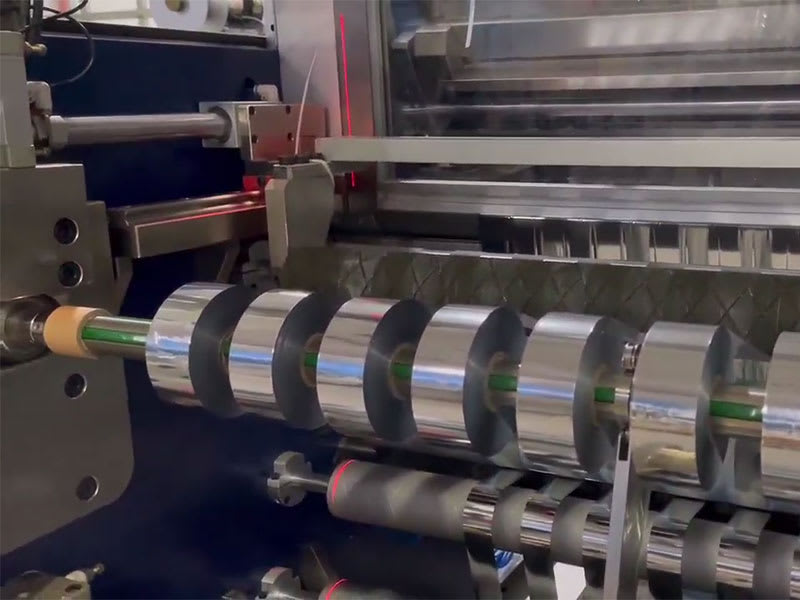
Flatness failures on thin stainless sheet. Cold-rolled stainless steel at 0.4–0.8 mm thickness requires a significantly more aggressive leveling system than carbon steel of the same gauge. The existing machine’s 7-roll leveler was designed for carbon steel and could not eliminate the residual coil set and edge wave that caused rejection from stamping customers specifying flatness ≤ 3 mm/m².
Length deviation at high speed. At the service center’s target throughput of 15 tons per shift, the shear timing on the existing machine produced length deviation of ±1.5–2.0 mm — too wide for precision component blanks being cut to specification for appliance manufacturers requiring ±0.5 mm.
Surface marking on 2B and BA finish stainless. The existing machine’s driven roller and leveler roll surfaces were not designed for contact with mirror-adjacent stainless finishes. Roller marking on 2B finish sheet was causing rework costs and customer complaints that were eroding the service center’s position with its highest-value accounts.
The service center’s commercial director framed the requirement simply: the new machine had to produce stamping-grade precision-cut stainless sheet that competed with quality levels available from European service centers — at a running cost that the market price for Chinese-supplied sheet allowed.
Why MaxDo Was Selected
The Istanbul center evaluated four suppliers: two from China (MaxDo and a Zhejiang-based CTL specialist), one from Germany, and one from Italy.
The German and Italian machines met all technical specifications but came at a 3–4× price premium that would have extended the payback period beyond the center’s investment horizon for this product line.
Between the two Chinese options, the selection came down to two factors:
Leveling system specification. MaxDo’s proposal for this order included a 17-roll precision leveler with individually adjustable roll force — appropriate for thin-gauge stainless with high residual coil set. The Zhejiang supplier proposed a 9-roll leveler rated for stainless and acknowledged that flatness performance at 0.4 mm gauge would be “dependent on coil quality.” MaxDo provided flatness test data from an existing similar installation on SS 304, 0.5 mm, confirming ≤ 2.1 mm/m² flatness on standard mill-quality coil.
Surface protection system. MaxDo’s standard CTL line for stainless includes neoprene-sleeved driven rollers and felt-lined leveler roll housings to prevent contact marking on 2B and BA finish material. The Zhejiang supplier’s standard machine used bare steel rollers, with rubber sleeving available as an add-on at additional cost and extended lead time.
Equipment Configuration
High-Precision Stainless Steel Cut to Length Line
Uncoiling section:
- Double-head hydraulic uncoiler, 5-ton capacity per mandrel
- Automatic coil loading car with alignment guide
- Coil edge position control (EPC) for strip centering
Leveling section:
- 17-roll precision leveler (work roll diameter: 55 mm)
- Individually adjustable upper roll beam (servo-controlled)
- Neoprene roller sleeves on all driven feed rolls
- Anti-mark felt protection on leveler housing contact surfaces
- Leveler cassette quick-change system (15-minute cassette swap for gauge changeover)
Measuring and shear section:
- Servo-driven encoder measuring wheel (resolution: 0.1 mm)
- Hydraulic guillotine shear (cutting force: 160 tons)
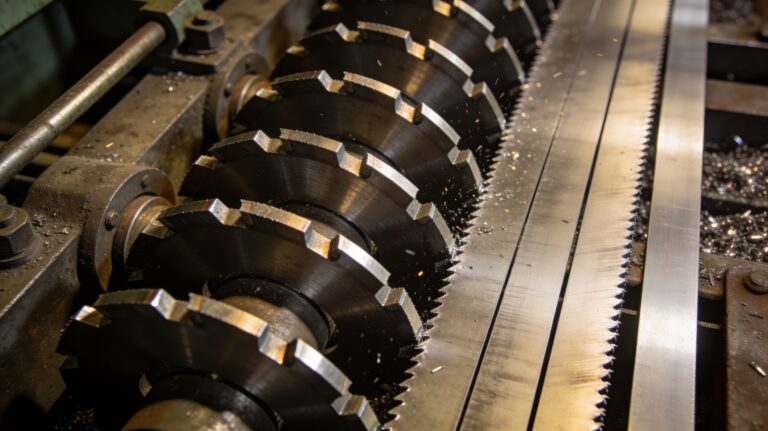
- Shear blade material: SKD11, HRC 60–62
- Programmable length: 200 mm – 6,000 mm
- Length tolerance achieved: ±0.3 mm at line speeds up to 25 m/min
Stacking and discharge:
- Magnetic sheet transfer conveyor (non-contact for stainless — uses vacuum cups, not magnets, to prevent surface marking on 2B/BA finish)
- Pneumatic stacker with adjustable stack height sensor
- Interleaving paper feed (optional, installed at this site for BA finish protection)
Control system:
- Siemens S7-1500 PLC
- 15″ touchscreen HMI with Turkish-language interface
- Production data logging: length, quantity, coil ID, operator ID per batch
- Remote access module for MaxDo technical support connection
Installation and Commissioning
Turkey-specific logistics notes:
- Equipment shipped to Ambarlı Port (Istanbul) via sea freight from Foshan
- Import under Turkey-China trade terms; CE certification documentation provided for Turkish customs clearance
- Turkish customs classification: metalworking machinery (CTL lines classified as precision shearing equipment)
Timeline:
| Phase | Duration |
|---|---|
| Engineering and manufacturing | 65 days |
| Factory Acceptance Test (FAT) at MaxDo | 3 days |
| Sea freight (Foshan → Ambarlı Port, Istanbul) | 28 days |
| Customs clearance and inland transport | 5 days |
| Installation and alignment | 5 days |
| Trial production and commissioning | 3 days |
| Total: order to first production | ~109 days |
The HMI Turkish-language interface was a specific client requirement, delivered as part of the standard software package. During commissioning, the MaxDo engineer trained two operators on: coil loading procedure, leveler cassette changeover, shear parameter programming, and the vacuum cup stacker maintenance schedule.
One commissioning issue was identified: initial flatness measurements on 0.4 mm SS 304 showed edge wave of approximately 4 mm/m² on the first two passes — above specification. MaxDo’s engineer diagnosed a slightly asymmetric upper leveler beam setting and corrected it within the commissioning window. Post-correction measurements: 1.8–2.3 mm/m² flatness on 0.4 mm SS 304, consistently within the ≤ 3 mm/m² specification.
Production Results After 90 Days
Flatness: Average flatness of 2.1 mm/m² on 0.4–0.6 mm SS 304 and 316L — within the stamping-grade specification. The service center’s top stamping customer (supplying elevator panel blanks) confirmed zero flatness-related rejections in the first three months of supply from the new line.
Length accuracy: Measured length deviation of ±0.2–0.4 mm at operating speeds of 18–22 m/min — within the ±0.5 mm specification. The center’s kitchen equipment fabricator customer, previously sourcing precision blanks from a German service center at a 12% price premium, switched to the Istanbul center’s supply within 30 days of the first delivery.
Surface quality: Zero roller marking incidents reported on 2B finish stainless in 90 days of operation. The vacuum cup stacker eliminated the surface contact issue that had affected the previous line. The center has since begun quoting BA finish sheet processing — a product category previously avoided due to surface damage risk.
Throughput: 17–19 tons per shift achieved, within the 15–20 ton target range. The leveler cassette changeover (15 minutes, as specified) has been executed 3–4 times per shift on days with mixed gauge orders without significant throughput loss.
The Turkey Market Context
Turkey’s steel service center sector is one of the most developed in the EMEA region, with domestic steel consumption supported by a strong manufacturing base in automotive, white goods, construction, and industrial equipment. Stainless steel processing capacity has grown as Turkish manufacturers supplying European OEMs face increasing surface quality requirements that domestic processing equipment has historically struggled to meet consistently.
The gap between Turkish market demand for stamping-grade stainless sheet and domestic processing capability creates a sustainable commercial opportunity for service centers that invest in precision equipment — particularly for the 0.4–2.0 mm thin-gauge stainless segment where flatness and surface protection requirements are most demanding.
Frequently Asked Questions from Turkish Buyers
Is CE certification standard on MaxDo cut to length lines?
Yes. All MaxDo equipment for export is CE-marked as standard. CE documentation package (Declaration of Conformity, technical file summary) is provided with every shipment, which simplifies Turkish customs clearance and installation permit processes.
Can the HMI be supplied in Turkish?
Yes. Turkish-language HMI is available as a standard option (no additional cost) for all MaxDo CTL lines. The control system uses Siemens S7 hardware with MaxDo-developed software — Turkish language files are maintained and updated by MaxDo’s software team.
What is the lead time for spare shear blades?
SKD11 shear blades are held in bonded stock at MaxDo’s Foshan warehouse. Standard dimensions ship within 3 business days of order by DHL express (transit to Istanbul: 4–6 days). Blade dimensions are standard — local Turkish sharpening services are available for regrinding worn blades to extend service life.
Does MaxDo have references in other EMEA markets?
Yes. MaxDo has supplied equipment to customers in Turkey, Saudi Arabia, Egypt, Poland, and Germany. Reference contacts in the EMEA region are available for qualified buyers on request.
Next Steps
Stainless steel service centers and coil processing operations in Turkey and the wider EMEA region can request:
- Technical proposal for cut to length line matched to specific coil dimensions, material grades, flatness requirements, and output targets
- Flatness performance data from existing similar installations
- CE documentation samples for customs and regulatory review
- Reference contacts at operating MaxDo CTL installations in EMEA
→ Contact MaxDo for a CTL line configuration and proposal