

CTL Lines and Multi-Blanking: Engineering Sheet Metal Production That Actually Pays Back
Modern metal processing operations face increasing pressure to deliver dimensional precision, minimize material waste, and maintain competitive pricing in global markets.
Last month, an Ohio automotive stamping supplier called about a problem that was costing them $180,000 annually. Their aging CTL line couldn’t maintain ±0.5mm length tolerances on mixed-gauge steel, forcing them to add 3mm safety margins to every blank. At 8,000 tons yearly volume, those extra millimeters represented pure waste—material they paid for, processed, and sent straight to scrap bins.
After upgrading to servo-controlled cut-to-length equipment with real-time measurement, their length accuracy tightened to ±0.15mm. The reduced safety margins alone recovered $165,000 annually in material costs, but the real value emerged when they started accepting orders requiring tighter tolerances—business they previously had to decline.
That’s the difference between CTL equipment that works and machinery that merely functions. MaxDoMachine has spent two decades helping facilities understand what determines whether cut-to-length investments deliver measurable returns or become expensive disappointments. This guide explains the engineering principles and operational realities that separate productive systems from underperforming ones.
What Actually Happens in Cut-to-Length Processing
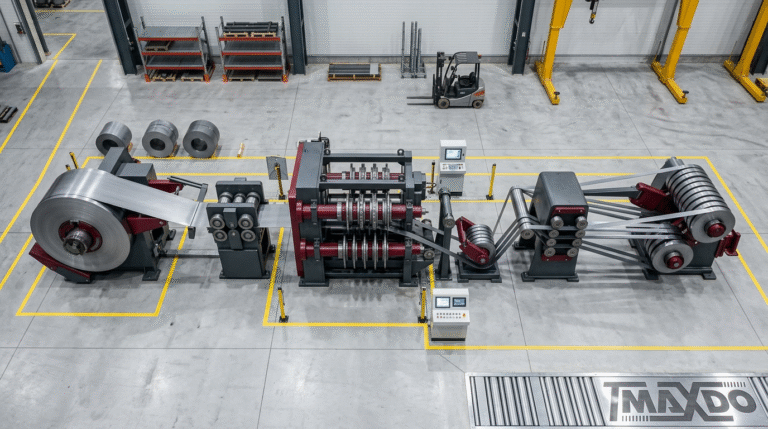
Strip cut-to-length processing down to fundamentals and you’re uncoiling wide metal, flattening it, measuring precise lengths, and shearing crosswise into flat sheets. The physics sounds straightforward until you consider what happens at 200 meters per minute with material thickness varying within individual coils.
Decoiling systems handle 10-35 ton coils while maintaining controlled tension that prevents telescoping and edge damage. The material feeds through leveling sections containing 5-17 rolls—the exact number depending on thickness and required flatness—that remove coil set and induced stresses accumulated during hot rolling and coiling operations.
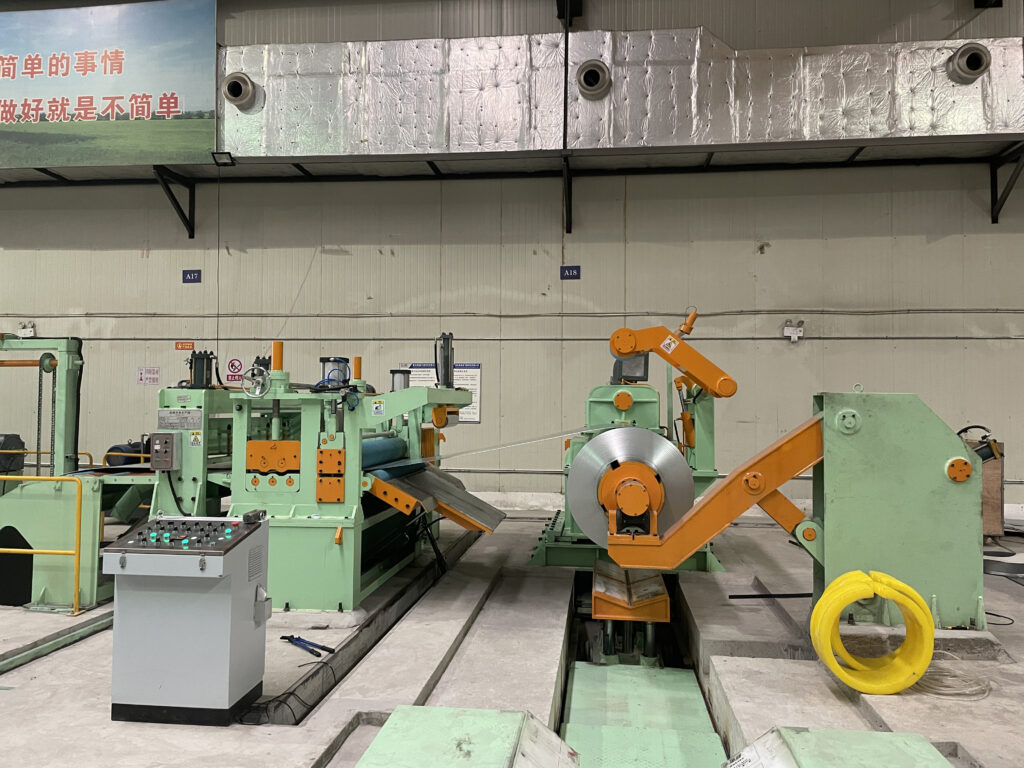
Servo-controlled measuring systems use optical encoders to track material position with sub-millimeter accuracy. When the programmed length arrives at the shear, hydraulic or mechanical cutting systems generate hundreds of tons of force within milliseconds to produce clean edges without distortion. The cut sheets stack automatically, ready for shipping or downstream fabrication operations.
Modern systems coordinate these operations through centralized control that adjusts decoiling tension, leveling pressure, and cutting timing continuously based on material properties detected during processing. This integration prevents the handoff issues and material damage inherent to older segmented systems running independent controls.
The MD-850 cut-to-length system demonstrates compact CTL design for operations processing 300-820mm widths across 0.3-12mm thickness ranges. Processing speeds reach 60 meters/minute on lighter gauges, with automatic adjustment for thicker materials requiring reduced velocity to maintain dimensional accuracy.
Larger facilities need different capabilities. Operations supplying automotive body panel stamping require 1,650-2,200mm width capacity to accommodate blank sizes without edge trimming. The MD-2200 handles these wide formats while maintaining ±0.15mm length accuracy through enhanced structural rigidity and more sophisticated measurement systems.
Multi-Blanking Technology: Why Flexibility Costs More But Often Pays Better
Standard CTL lines cut repetitive single-length sheets—load a program, run the coil, produce identical blanks until the material runs out. Multi-blanking equipment adds programmable servo-controlled shears that automatically vary blank lengths from a single coil without stopping the line.
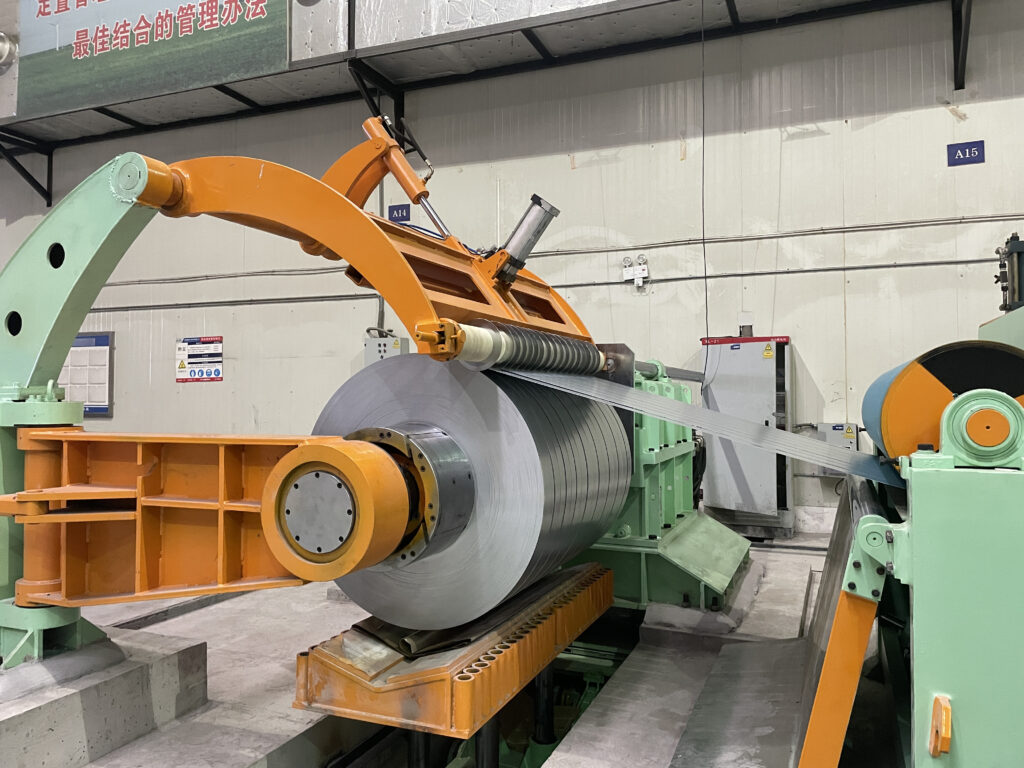
This capability matters enormously for operations serving just-in-time manufacturing environments where order mix changes daily. A fabrication shop supplying multiple customers can process a single coil into six different blank lengths, eliminating the inventory costs and material waste from running separate coils for each specification.
Changeover speed separates modern multi-blanking systems from older mechanical designs. Experienced operators complete tooling changes in 15-30 minutes on servo-equipped systems versus 60-90 minutes for mechanical shear designs. When facilities run 8-12 product changeovers daily, those time differences accumulate into substantial productivity impacts.
Edge quality consistency presents another advantage. Servo-controlled cutting force modulation adjusts shear pressure based on material thickness and hardness detected during processing, producing consistent edge conditions regardless of coil property variations. When processing stainless steel or pre-coated aluminum, this edge quality affects downstream welding and forming operations significantly.
A Michigan appliance manufacturer discovered this after analyzing their press forming yield data. Blanks from their conventional CTL line showed 12% rejection rates during deep drawing operations due to edge condition inconsistencies. After upgrading to servo-controlled multi-blanking, forming rejections dropped below 3%—the improved blank quality eliminated $280,000 in annual scrap costs.
Precision Realities: What Modern Equipment Actually Achieves
CTL suppliers quote ±0.15mm length accuracy specifications that sound impressive until you understand the conditions required to achieve them. That precision applies when processing cold-rolled steel between 0.5-2.0mm thickness at moderate line speeds with optimal material properties.
Real production introduces variables that degrade theoretical accuracy. Hot-rolled material with thickness variations, processing at maximum line speeds, or handling coils with edge damage all push tolerances toward ±0.5-1.0mm regardless of equipment capabilities. The difference between achieving specification and missing it often comes down to material quality and operating discipline more than equipment sophistication.
Flatness characteristics matter at least as much as length accuracy for many applications. CTL leveling systems produce superior flatness compared to slitting operations because material passes through multiple leveling rolls rather than experiencing only edge pressure from slitting knives. When comparing slitting versus CTL processing, flatness requirements often determine which approach suits specific applications better.
The International Tolerance Grade system used in precision manufacturing typically requires flatness within 2mm per meter for general fabrication. Modern CTL lines exceed this specification when properly maintained, achieving 1mm per meter or better on materials suited to the equipment capacity.
A regional steel service center processing architectural panel blanks found flatness more critical than length tolerance for their applications. Panels with 3mm bow across a 2-meter length caused installation problems worth thousands in field corrections. After optimizing their CTL leveling parameters, flatness improved to under 1mm—eliminating customer complaints and strengthening relationships with major contractors.
Material-Specific Processing: Why Steel Isn’t Just Steel
Aluminum’s work-hardening characteristics demand leveling systems with sufficient roll engagement to remove coil set without inducing surface marking that renders material unsuitable for visible applications. The MD-1350’s 300-1,300mm working width with customizable coil weight capacity accommodates the varying dimensions common in aluminum distribution operations.
Processing parameters that work perfectly for aluminum fail completely when applied to stainless steel. Stainless grades work-harden during cutting, necessitating blade maintenance protocols far more frequent than those for mild steel. Operations processing 304 or 316 stainless typically replace or regrind shear blades after 50,000-75,000 cuts versus 150,000-200,000 cuts for cold-rolled carbon steel.
A Texas fabricator processing both aluminum and stainless discovered this principle after their blade costs tripled within six months. Investigation revealed they were using identical cutting parameters for both materials—the excessive work-hardening in stainless was destroying blades designed for aluminum processing. After implementing material-specific programs, blade life normalized and edge quality improved substantially.
Mild steel represents the baseline for CTL line design optimization. Hot-rolled and cold-rolled carbon steel processing establishes equipment capacity specifications, with systems sized to handle maximum anticipated thickness at acceptable production speeds. The MD-1650’s 422.5kW power requirement demonstrates infrastructure considerations necessary for facilities processing heavy gauge material at production volumes.
Pre-coated materials introduce another variable layer. Galvanized and painted surfaces require specialized handling to prevent coating damage during leveling and cutting operations. Excessive leveling pressure removes zinc coatings, while improper shear blade geometry causes paint chipping along cut edges.
Material Yield: Where CTL Lines Actually Make Money
CTL automation achieves approximately 2.5% scrap rates through optimized coil utilization and precise length control compared to 4-6% typical of manual cutting operations. For facilities processing 1,000 metric tons monthly at $1,000/ton material cost, reducing scrap from 4% to 2.5% recovers $180,000 annually in material that would otherwise become waste.
Material efficiency stems from automated coil tracking systems that calculate optimal cutting patterns based on order requirements and remaining coil length. Contemporary installations integrate centralized servo control coordinating decoiling tension, leveling pressure, and cutting sequencing to minimize material handling stresses that compromise dimensional accuracy.
A Wisconsin steel service center analyzed their material flow and discovered 8% of processed coils became partial remnants too short for standard orders. After implementing automated coil tracking with optimized cutting patterns, remnant generation dropped to 3%—the reduced waste recovered $240,000 annually while improving inventory management.
Edge trim requirements present another yield consideration. CTL operations processing material to exact ordered widths without slitting don’t generate the edge trim waste inherent to slitting processes. However, facilities receiving coils with edge damage must trim defective areas, reducing effective yield.
The difference between slitting and CTL operations becomes clear when analyzing material utilization patterns. Slitting excels at maximizing yield from wide coils by producing multiple narrow strips, while CTL optimizes coil length utilization through precise sheet cutting without width reduction.
Servo Control Technology: Why It Costs More and Usually Delivers More
Servo-controlled measuring and cutting systems differentiate high-precision CTL lines from mechanical designs still operating in many facilities. These systems employ real-time position feedback from optical encoders, adjusting material feed rates continuously to maintain programmed dimensions regardless of material property variations.
Processing accuracy of ±0.1mm becomes achievable under optimal conditions—specifications required by automotive and appliance manufacturing operations running just-in-time production schedules where dimensional inconsistency causes expensive line stoppages.
Automation advantages extend to leveling operations where servo-controlled roll positioning adjusts leveling intensity based on material thickness and coil set characteristics detected through measurement systems. This adaptive leveling prevents over-leveling that induces material thinning or under-leveling that leaves residual curvature affecting downstream fabrication.
An Illinois automotive supplier processing blanks for progressive die stamping operations found leveling consistency critical to die performance. Flatness variations exceeding 1.5mm caused timing issues in their progressive dies, reducing tool life and increasing maintenance costs. After implementing servo-controlled leveling with automated adjustment, die life improved by 35%—worth $120,000 annually in reduced tooling costs.
Modern CTL installations increasingly incorporate ERP system connectivity enabling automated production scheduling based on order requirements and available coil inventory. This integration eliminates manual production planning that often creates batch size inefficiencies and excess inventory carrying costs.
Production Speed Versus Material Thickness: Understanding Real Capacity
Processing velocity specifications require understanding material thickness relationships. Compact systems achieve 60 meters/minute when processing lighter gauges (0.3-1.5mm), but velocity reduces significantly when processing maximum thickness capacity approaching 12mm.
This inverse relationship reflects mechanical limitations of leveling roll deflection, shear cutting force requirements, and material handling system capacity. Larger installations demonstrate different speed characteristics—wide-format lines maintain higher speeds across broader thickness ranges through enhanced structural rigidity and more powerful drive systems.
Facilities planning equipment investments must calculate production capacity based on actual material mix processed rather than maximum rated speeds. Real-world throughput depends on order size distribution, thickness mix, and changeover frequency—variables that dramatically affect effective capacity regardless of equipment specifications.
A Pennsylvania steel service center discovered this principle after their new CTL line failed to meet projected throughput targets. Analysis revealed their order mix included far more thick-gauge material requiring slower processing speeds than the thin-gauge products used for capacity calculations. After adjusting production planning to account for actual speed constraints, throughput improved to acceptable levels—though still below original projections.
Equipment Selection: Matching Capabilities to Production Realities
CTL line selection requires matching equipment capabilities to production requirements across multiple dimensions simultaneously. Working width capacity determines material size range processable without edge trimming—facilities supplying automotive stamping typically need 1,650-2,200mm capacity while HVAC component suppliers may find 850-1,350mm sufficient.
Coil weight capacity affects material handling efficiency and production flow. Lines handling 35-ton coils reduce changeover frequency compared to 10-ton systems, but require structural foundations and crane capacity supporting loaded mandrel weights exceeding 40 tons. The MD-1650’s customizable weight capacity from 10-35 tons enables facilities to specify equipment matching existing infrastructure.
Power requirements represent another critical specification often underestimated during initial evaluation. Systems consuming 300-400kW require electrical service capacity significantly exceeding standard industrial distribution specifications. Facilities must verify transformer capacity, incoming service sizing, and voltage stability before finalizing equipment orders to avoid costly infrastructure upgrades discovered during installation.
A Georgia fabricator learned this lesson after discovering their facility’s 480V service couldn’t support their new CTL line’s 350kW demand without voltage drops affecting other equipment. The required electrical system upgrade added $95,000 to project costs and delayed commissioning by six weeks.
Maintenance Requirements That Determine Long-Term Success
Shear blade condition monitoring prevents edge quality deterioration requiring secondary deburring operations that destroy productivity. Blade life varies from 50,000 cuts processing stainless steel to 200,000 cuts for cold-rolled carbon steel depending on material hardness and thickness.
Facilities processing multiple material types require blade inventory management strategies ensuring replacement blades remain available without excessive capital tied to spare parts. A smart approach involves predictive replacement based on cut count tracking rather than waiting for quality problems to emerge.
Leveling roll maintenance presents ongoing operational considerations. Roll surface condition affects material surface quality, with worn or damaged rolls inducing marking that renders material unsuitable for visible applications. Periodic roll grinding restores surface finish, though severely worn rolls require complete replacement to maintain processing capabilities.
Operations processing abrasive materials like hot-rolled steel experience accelerated roll wear compared to facilities handling exclusively cold-rolled or pre-coated stock. A Minnesota service center processing 70% hot-rolled material discovered leveling roll life averaged 18 months versus 36+ months at comparable facilities processing cold-rolled steel.
Hydraulic system maintenance affects both safety and operational reliability. CTL shear systems develop cutting forces measured in hundreds of tons, requiring hydraulic pressure monitoring and preventive component replacement before failure occurs. Annual protocols should include hydraulic fluid analysis, cylinder seal inspection, and accumulator pre-charge verification to prevent unplanned production interruptions.
Real ROI: When CTL Lines Actually Pay Back
CTL line investments deliver quantifiable returns through multiple mechanisms working simultaneously. Material waste reduction from 4% to 2.5% generates immediate cost recovery—for operations processing $5 million annually in metal purchases, 1.5% waste reduction produces $75,000 annual savings.
Labor efficiency improvements stem from automation reducing manual measurement, handling, and cutting operations. A manually operated hydraulic shear with two operators processing 400 sheets daily compares unfavorably to automated CTL with single operator supervision producing 1,200 sheets daily. When calculated across multiple shifts and annual production schedules, labor cost differential justifies equipment investment within 18-36 months depending on material mix and volumes.
Quality consistency represents economic value often overlooked in equipment justification. Dimensional accuracy within ±0.15mm enables automotive and appliance manufacturers to reduce press die tryout cycles and minimize scrap during stamping operations. Blank dimensional consistency directly affects forming success rates in progressive die applications where timing depends on precise material positioning.
A Tennessee automotive parts supplier calculated that improving blank length consistency from ±0.5mm to ±0.15mm reduced their progressive die setup scrap by 40%. At 15,000 tons annual production with $1,200/ton finished part value, the quality improvement recovered $720,000 annually—paying back their CTL line investment in under 24 months.
Making Equipment Decisions That Actually Work
Metal processing operations face mounting pressure to deliver dimensional precision, minimize material waste, and maintain competitive pricing in global markets. CTL and multi-blanking technology addresses these requirements through automated processing that reduces human error, optimizes material utilization, and enables just-in-time production strategies.
The difference between CTL investments that transform operations and those that disappoint comes down to matching equipment capabilities to actual production requirements. Facilities must analyze material types processed, volume patterns, quality specifications, and downstream fabrication needs rather than selecting based solely on capital cost.
MaxDoMachine’s MD Series demonstrates engineering focused on metal processing realities. Our systems incorporate proven control hardware combined with process expertise developed through two decades of CTL implementations. We’ve seen what determines success versus disappointment in real production environments.
For facilities evaluating equipment options, the critical question isn’t which line offers most impressive specifications—it’s which configuration delivers measurable operational returns aligned with your actual production patterns and customer requirements.
Contact MaxDoMachine’s engineering team to discuss how cut-to-length processing solutions address your specific challenges. We’ll analyze your material requirements, volume targets, and facility constraints to recommend configurations delivering quantifiable ROI for your operations.