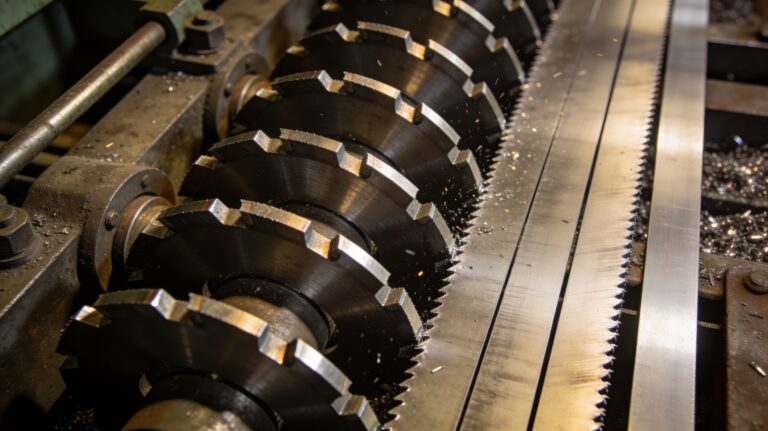



MA-1350 Mid-Width Slitting Fit Checklist
A narrow MA-1350 mid-width slitting fit checklist for matching 300-1350 mm coils, thickness, strip count, tolerance, setup burden, case evidence, and support needs.
This page is a narrow support page for MA-1350 mid-width slitting fit. It owns only one question: when coil width, thickness, strip count, tolerance target, setup burden, case evidence, and support expectations make the MA-1350 metal slitting machine the right mid-width route. It is not the main metal slitting line core page, not the full MA/MD model fit matrix, and not a product specification page.
This page is a narrow MA-1350 model-fit checklist in the MaxDo slitting topic network. It should remain a narrow MA-1350 mid-width fit checklist, not a broad coil-processing overview. The page owns one question: when a buyer’s coil width, thickness, strip count, tolerance target, setup burden, and support expectations make the MA-1350 metal slitting machine the right mid-width route.
For the main slitting process, use the metal slitting line core page. For the full product family, use the metal slitting machine category. For MD-series width-class routing, use the MD series RFQ fit matrix. If the buyer needs finished flat sheets rather than slit coil, route the project to the metal cut-to-length line category instead of treating it as an MA-1350 slitting fit question.
MA-1350 Fit Boundary
The MA-1350 path is strongest when the buyer needs a mid-width slitting line for 300-1350 mm coil programs and wants a balanced machine route before stepping into wider MD-class equipment. It is not the automatic answer for every 1350 mm RFQ. The decision depends on the real coil window, finished strip program, material strength, edge-quality target, recoiling method, setup frequency, and available plant layout.
| Fit layer | MA-1350 evidence to confirm | Route away when |
|---|---|---|
| Coil width | Normal master coils fit within the 300-1350 mm working window | Future programs regularly exceed the mid-width boundary |
| Thickness and strength | Material grade, thickness, yield strength, and cutting force are inside the accepted project envelope | The buyer is choosing only by thickness and has not frozen grade or strength |
| Strip program | Finished widths, strip count, trim, burr limit, and camber limit are defined | The project only says “slitting line” without output evidence |
| Setup burden | Knife setup, spacer control, first-piece release, and recipe needs are documented | Frequent changeover is the real constraint and needs a broader setup audit |
| Support burden | Training, spare parts, FAT/SAT records, and service expectations are attached to the RFQ | The buyer is comparing price without commissioning and support evidence |
Compare MA-1350 With Nearby Model Routes
Use MA-850 when the plant mostly runs narrower or compact slitting jobs. Use MA-1350 when the normal program sits in the mid-width range and the buyer needs a balanced slitting route. Compare MD-1650 when width growth, handling burden, or service-center workload starts to exceed the MA-1350 fit boundary. Compare MD-2200 only when wider/heavier coil programs justify the larger route.
This model comparison should stay tied to buyer evidence. A wider model is not automatically better. If the actual material file and strip program fit MA-1350, oversizing can add cost, layout burden, setup complexity, and support requirements without improving the accepted output.
Acceptance Evidence Before the RFQ
An MA-1350 RFQ should include acceptance evidence before price comparison begins. The buyer should define material family, grade, thickness, tensile or yield range, coil width, coil weight, finished strip widths, strip count, edge quality, width tolerance, burr limit, camber limit, recoiling target, separator method, line speed expectation, and FAT/SAT sample plan.
For tolerance wording, use the slitting width tolerance measurement protocol. For changeover and first-piece release, use the slitting setup time reduction checklist. For material behavior, use the MD series material compatibility checklist as a material-risk support page, while keeping this page focused on MA-1350 fit.
Use Case Evidence Without Turning This Into a Case Page
This page can route to delivered evidence without becoming a case study. For stainless strip service-center evidence, compare the India precision stainless slitting case study and the Saudi Arabia stainless steel slitting case study. For material-specific surface risk, compare the aluminum alloy slitting case study. These case nodes support proof; they do not replace the MA-1350 model-fit decision.
Support and Handoff Checklist
- Confirm whether the buyer needs slit coil, narrow strip, or flat sheet before routing to MA-1350.
- Freeze the normal and edge-case coil width, thickness, material grade, and strip count.
- Attach width tolerance, burr, camber, setup, recoiling, separator, and packaging release requirements.
- Define FAT/SAT samples, training records, spare parts, maintenance handoff, and support response expectations.
For service, warranty, documentation, spare-parts, and commissioning evidence, use the coil processing equipment support evidence matrix. To ask MaxDo to review an MA-1350 fit file, send material data, coil window, strip program, tolerance target, case evidence needs, and support expectations through the contact form.