Get Your Equipment Now!

Contact Form Demo

1350mm Slitting Line Supply: Specifications, Suppliers & Cost Analysis

Complete guide to 1350mm slitting line supply with MD-1350MM specs, supplier selection criteria, TCO analysis, and procurement strategies for metal processors.

Sourcing the right 1350mm slitting line supply requires balancing technical specifications against total cost of ownership while ensuring supplier reliability. The MD-1350MM platform represents an optimal capacity class for steel service centers and metal processors handling standard 1000-1250mm coil widths, delivering ±0.1mm cutting accuracy across thickness ranges from 0.3mm to 12mm. This guide provides procurement-focused intelligence combining technical specifications, supplier evaluation frameworks, and TCO modeling to support data-driven equipment investment decisions for production managers and industrial engineers.

MD-1350MM Slitting Line Technical Specifications

The MD-1350MM supply 1350mm slitting line platform features a working width range of 300mm-1300mm with four distinct thickness capability categories designed for diverse metal processing applications. The thin gauge configuration handles 0.3mm-3.0mm materials ideal for automotive trim and appliance panels, while the medium gauge setup processes 1.5mm-6mm thicknesses common in HVAC components and construction materials.

Heavy gauge capabilities extend from 2mm-8mm for structural applications and 4mm-12mm for industrial equipment fabrication, with blade configurations optimized for each thickness band. Variable speed operation ranges from 1-250 m/min with speed inversely proportional to material thickness, enabling high-volume production runs on thin gauge stock while maintaining precision control for thicker materials.

Customizable weight capacity spans 10-35 tons to accommodate different coil handling requirements, with total power consumption of approximately 318.5KW optimized for continuous operation. Precision tolerance of ±0.1mm cutting accuracy delivers material yield rates exceeding 96%, significantly reducing scrap costs compared to older slitting technologies that typically achieve 92-94% yields.

Material Processing Categories

The four-tier thickness capability structure allows operators to maintain optimal blade configurations without frequent changeovers:

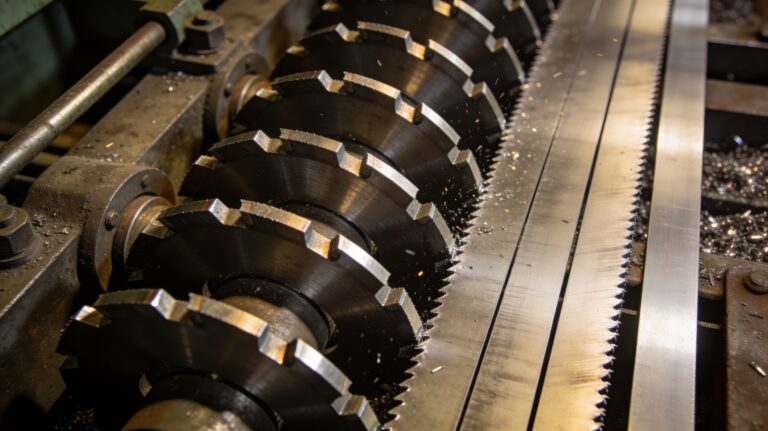
  • Thin gauge (0.3mm-3.0mm): High-speed steel blades running at 180-250 m/min for cold-rolled steel and aluminum
  • Medium gauge (1.5mm-6mm): Carbide-tipped tooling at 80-150 m/min for galvanized and stainless steel grades
  • Heavy gauge (2mm-8mm): Reinforced blade assemblies at 40-100 m/min for hot-rolled and structural steel
  • Extra-heavy gauge (4mm-12mm): Ceramic-coated blades at 10-60 m/min for abrasive-resistant materials

Key Supplier Selection Criteria

Evaluating potential suppliers for supply 1350mm slitting line equipment requires systematic assessment across technical capability, installation experience, and after-sales infrastructure. ISO 9001 certification serves as baseline quality assurance, but production managers should verify manufacturing experience exceeding 15 years specifically in metal processing equipment rather than general machinery fabrication.

Installation track record verification should include documented evidence of 300+ global installations across diverse industrial applications including steel service centers, automotive tier suppliers, and appliance manufacturers. Request customer reference lists segmented by material type and thickness range to confirm supplier expertise matches your specific processing requirements.

After-sales support infrastructure represents a critical procurement consideration that impacts long-term operational costs. Evaluate local service team availability, spare parts inventory locations, and typical response times for emergency breakdowns—premium suppliers maintain 48-72 hour parts delivery commitments with regional warehouses.

Technical Documentation Quality

Comprehensive technical documentation differentiates professional equipment suppliers from commodity vendors. Request sample documentation packages during RFQ evaluation including:

  • 3D CAD models in STEP or IGES format for facility layout planning
  • PLC programming access with ladder logic documentation for customization
  • Preventive maintenance schedules with detailed inspection checklists
  • Electrical schematics showing control system architecture

Customization capabilities for specialized material types including stainless steel 304/316, aluminum alloys, and copper sheets should include specific case studies demonstrating successful implementations rather than generic marketing claims. MaxDo’s 20+ years of R&D experience with 500+ installations across 30+ countries provides verified expertise in multi-material processing configurations About MaxDo’s manufacturing expertise.

Complete Cost Breakdown & TCO Analysis

Equipment acquisition costs for 1350mm slitting line systems range from $350,000 for semi-automated configurations to $800,000+ for fully automated lines with advanced material handling and quality control integration. Base unit pricing includes standard features like manual blade adjustment and basic coil handling, while customization premiums for specialized configurations can add 15-40% to initial investment.

Installation and commissioning expenses encompass foundation requirements, electrical infrastructure upgrades, and operator training programs. Foundation specifications typically require 12-18 inch reinforced concrete pads capable of supporting 45-80 tons total weight including machine base and maximum coil capacity. Electrical infrastructure must provide 400-480V three-phase power at 318.5KW load with appropriate transformer capacity and circuit protection.

Operating expenses include energy consumption at 318.5KW continuous load, blade replacement cycles averaging 500,000-800,000 linear meters depending on material type, and preventive maintenance schedules requiring 8-12 hours monthly for critical component inspection. Hidden cost factors include downtime during blade changeovers (typically 45-90 minutes per setup), scrap rates from edge trim (2-4% of coil width), and quality control system integration expenses for automated thickness verification.

ROI Timeline Comparison

Mid-tier supplier equipment typically achieves 3-year payback periods when processing 300+ tons monthly, while premium supplier systems with extended warranties and superior after-sales support demonstrate 4-5 year payback horizons but lower total cost of ownership over 10-year equipment lifecycles. Calculate ROI using the formula: ROI = (Annual Profit / Initial Investment) × 100.

A steel service center processing 400 tons monthly with $150/ton outsourced slitting costs generates $720,000 annual revenue. Subtracting operating costs of $280,000 (labor, energy, maintenance, blades) yields $440,000 annual profit against a $500,000 equipment investment, producing a 1.14-year payback period.

Material Compatibility & Application Range

Ferrous material processing includes cold-rolled steel, hot-rolled steel, and galvanized coatings with thickness-specific blade configurations optimized for each substrate type. Cold-rolled steel in 0.3mm-3.0mm thicknesses requires high-speed steel blades with 0.010-0.020mm blade clearance to prevent edge burrs, while hot-rolled material in 4mm-12mm range demands carbide or ceramic-coated tooling with increased blade overlap.

Non-ferrous processing capabilities encompass stainless steel 304/316 grades, aluminum alloys (1100, 3003, 5052 series), and copper sheets with specialized tooling requirements to prevent work hardening and edge galling. Stainless steel processing mandates carbide blades with titanium nitride coating and specialized coolant systems to manage heat buildup during high-speed operations. Learn more about material-specific processing requirements in MD Series material compatibility guide.

Industry-Specific Applications

Automotive parts manufacturing utilizes 1350mm slitting line equipment for body panel blanks, structural reinforcements, and trim components requiring ±0.1mm dimensional accuracy. Appliance production applications include refrigerator panels, washer drums, and HVAC housings where surface finish preservation is critical for powder coating adhesion.

Construction materials processing covers roofing panels, siding profiles, and metal decking where consistent edge quality prevents installation issues and weather infiltration. Gauge-specific performance parameters include thin gauge (0.3-3.0mm) optimized for 180-250 m/min processing speeds, medium gauge (1.5-6mm) at 80-150 m/min, and heavy gauge (4-12mm) at 10-60 m/min to maintain quality standards for burr control, edge straightness, and surface finish preservation.

Automation & Control System Features

Touchscreen PLC controls with intuitive graphical interfaces reduce operator training time by 40% compared to legacy button-panel systems requiring extensive manual programming knowledge. Modern HMI (Human-Machine Interface) systems display real-time production parameters including line speed, coil length processed, strip width verification, and tension control status with color-coded alerts for out-of-tolerance conditions.

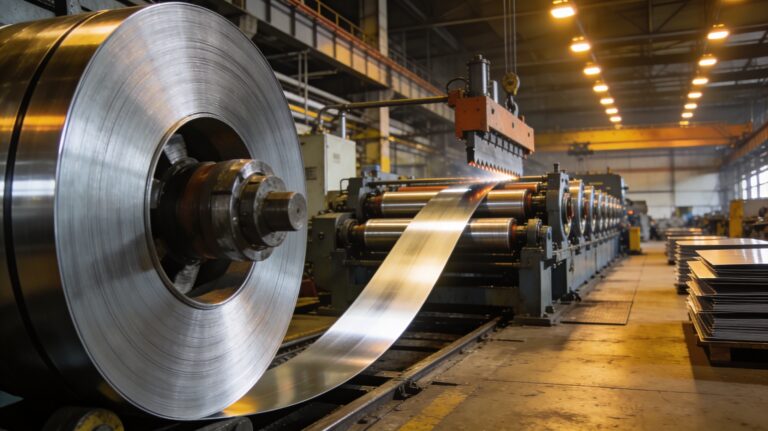
Automatic coil feeding and recoiling systems incorporate hydraulic mandrel expansion, closed-loop tension control, and optical edge guiding sensors that maintain ±2mm strip positioning accuracy throughout processing runs. Tension control systems utilize load cells and dancer roll feedback to maintain 200-800 kg tension forces appropriate for material thickness and yield strength characteristics.

Safety and Monitoring Integration

Safety integration features include emergency stop protocols with dual-channel safety relay circuits, light curtains protecting blade access zones, and blade guard interlocks that prevent operation when guards are open per ISO 12100 machinery safety standards. Production monitoring capabilities provide real-time speed tracking, length counters accurate to ±5mm over 1000-meter runs, scrap percentage calculation, and OEE (Overall Equipment Effectiveness) data logging for continuous improvement initiatives.

Remote diagnostics capability enables predictive maintenance through vibration monitoring, thermal imaging of bearing assemblies, and PLC fault code transmission to supplier technical support teams. Firmware updates delivered via ethernet connectivity allow feature additions and process optimization without requiring on-site service visits. Explore automation upgrade options in MaxDo’s automated metal processing solutions.

Procurement Strategy & Negotiation Tips

RFQ (Request for Quotation) preparation requires detailed material specifications including substrate type, thickness range, width dimensions, surface finish requirements, and annual volume projections. Include accuracy tolerances (typical ±0.1mm for precision applications, ±0.5mm for commercial grade), edge quality standards (burr height limits, perpendicularity requirements), and delivery timelines with production ramp-up schedules.

Supplier evaluation matrices should weight technical capability at 40%, after-sales support at 30%, pricing at 20%, and delivery performance at 10% to balance immediate cost considerations against long-term operational reliability. Technical capability assessment includes equipment specifications, customization experience, and reference customer verification.

Factory Inspection and Contract Terms

Factory inspection checklists should document production floor tour observations, quality control procedures including CMM (Coordinate Measuring Machine) verification of critical dimensions, and spare parts inventory verification showing 2-3 year stock depth for high-wear components. Witness testing procedures enable customers to bring sample materials for trial runs demonstrating thickness capacity, speed capability, and edge quality.

Contract negotiation leverage points include payment terms (standard 30% deposit, 60% before shipping, 10% after commissioning), warranty extensions beyond standard 12-18 month coverage, operator training packages covering 3-5 days on-site instruction, and consumables pricing agreements locking blade and tooling costs for 2-3 years. Acceptance testing protocols should specify tolerance verification methods, trial run duration (typically 8-24 hours continuous operation), and customer material processing to validate real-world performance.

FAQ

What is the typical lead time for a 1350mm slitting line supply from order to installation?

Standard lead time for supply 1350mm slitting line equipment ranges 12-16 weeks total: 6-8 weeks for manufacturing completion, 2-3 weeks for international shipping and customs clearance, and 1-2 weeks for on-site installation and commissioning. Custom configurations incorporating specialized blade assemblies, multi-material capability, or integrated quality control systems may add 3-4 weeks to manufacturing schedules. MaxDo provides detailed project timelines during quotation phase with milestone tracking for manufacturing progress, shipping coordination, and installation planning MaxDo project management process.

How does the MD-1350MM compare to smaller 850mm or larger 1650mm models?

Comparing slitting line capacity classes requires analyzing coil width requirements, throughput needs, and floor space constraints. The MD-850 model handles 300-820mm working width with 93kW total power consumption suited for narrow strip production in electronics and precision stamping applications. The MD-1350MM offers optimal balance for steel service centers processing standard 1000-1250mm coils with 318.5KW power and 1-250 m/min speed range. The MD-1650MM accommodates 300-1650mm widths with 294.5KW power for wide coil processing in construction and appliance manufacturing. Price-performance analysis shows 15-25% cost premium per width increment with corresponding 20-30% throughput capacity gains.

What minimum order volumes justify investing in a dedicated 1350mm slitting line?

ROI threshold analysis indicates break-even processing volumes of 300+ tons monthly when comparing in-house slitting costs against outsourcing to service centers charging $120-180 per ton. Equipment depreciation over 10-year lifecycle ($50,000 annually for $500,000 investment), combined with labor ($80,000-120,000 for two-shift operation), energy ($35,000 at $0.12/kWh), and maintenance ($25,000-40,000) totals approximately $190,000-250,000 annual operating costs. Processing 300 tons monthly generates 3,600 tons annually, yielding $108-144 per ton internal cost versus $120-180 outsourced rates. Sensitivity analysis for different material types shows stainless steel achieving faster payback (18-24 months) due to higher outsourcing costs ($180-220/ton) compared to cold-rolled steel (30-36 months).

Can the MD-1350MM process both ferrous and non-ferrous materials?

Multi-material capability requires blade configuration adjustments and tooling changes between substrate types. Stainless steel processing demands carbide or ceramic-coated blades instead of HSS (High-Speed Steel) tooling used for mild steel, with blade overlap increased 15-25% to compensate for work hardening characteristics. Aluminum processing needs specialized edge treatment including blade angle modifications and coolant application to prevent galling and material adhesion. Quick-change tooling options enable blade assembly replacement in 45-90 minutes for mixed production environments processing multiple material types daily. Learn about material-specific processing parameters in MD Series material processing capabilities.

What are the main differences between standard and customized 1350mm slitting line configurations?

Standard configurations include manual blade adjustment, basic hydraulic coil handling, and touchscreen PLC controls suitable for single-material, moderate-volume production environments. Customized systems incorporate servo-driven blade positioning (±0.02mm repeatability), automated quick-change tooling, integrated thickness gauging, and advanced material handling with automated coil cars and bundling systems. Customization premiums range 15-40% above base pricing depending on feature complexity, with typical additions including: upgraded tension control systems ($15,000-25,000), automatic edge trimming and scrap winding ($20,000-35,000), and integrated quality verification with statistical process control ($25,000-45,000). Evaluate customization ROI against production volume, material variety, and quality requirements—facilities processing 500+ tons monthly with multiple material grades typically justify automation investments through reduced labor costs and improved yield rates.

Share your love