


Cut-to-Length Lines for Fabricators: Value Matrix
A narrow shop-floor value matrix for sheet metal fabricators evaluating cut-to-length lines, covering sheet availability, labor, flatness, length accuracy, waste, inventory, and RFQ readiness.
Cut-to-length lines can help sheet metal fabricators when the shop needs more control over sheet availability, flatness, length accuracy, surface condition, and order timing. The value is not only faster cutting. The value is whether the fabricator can turn coil into usable sheets with fewer purchasing delays, fewer manual handling steps, and more predictable downstream fabrication.
This page is a narrow support page for sheet-metal fabricator CTL value. It owns only the shop-floor value layer: sheet availability, labor steps, flatness, length accuracy, waste, inventory, stacking, and RFQ readiness. It is not the main cut-to-length process page and not a CTL supplier acceptance matrix. For the station-by-station process, use the cut-to-length process acceptance map. For a short definition and RFQ intake page, use what is a cut-to-length line. For supplier evaluation, use the CTL supplier acceptance matrix.
Start With the Fabricator’s Bottleneck
A CTL line is useful only if it removes a real shop-floor bottleneck. Some fabricators are constrained by purchased-sheet lead time. Others lose time in manual shearing, rework, sheet handling, or poor flatness before laser cutting, bending, welding, or panel assembly. Define the bottleneck before comparing machine speed.
| Fabricator problem | CTL value to check | Acceptance question |
|---|---|---|
| Purchased sheets arrive late or in fixed sizes | In-house sheet availability and custom length control | Can the line make the shop’s main sheet sizes on demand? |
| Manual cutting creates rework | Repeatable length, squareness, and cut quality | Can inspection records prove the tolerance target? |
| Flatness affects downstream work | Leveling before cutting and stacking | Can the leveler meet the fabricator’s flatness need? |
| Inventory is too large | Coil-to-sheet flexibility and lower finished-sheet stock | Can the shop replace slow-moving sheet inventory with coil inventory? |
Value 1: Sheet Availability Under the Fabricator’s Control
Fabricators often buy sheets in standard lengths and wait for outside service centers when a customer needs a different size. A CTL line can shift that control in-house. The buyer should define the main sheet length families, coil grades, daily or weekly tonnage, and whether custom-length orders are frequent enough to justify the equipment.
If the shop is still deciding whether it needs sheets or slit coils, compare the slitting vs CTL order-mix guide. For the broader route from coil to sheet or strip, use the sheet metal coil processing workflow map.
Value 2: Fewer Manual Cutting and Handling Steps
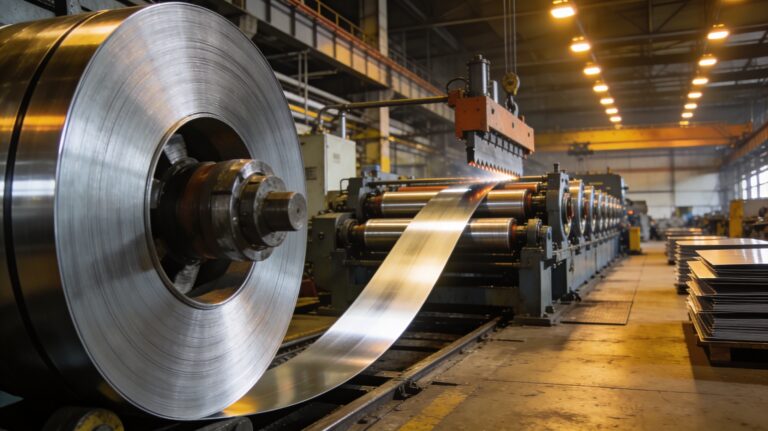
Manual or semi-manual cutting can work for low volume, but it adds handling, operator dependence, and inconsistent setup records. A CTL line links decoiling, leveling, feed measurement, shearing, transfer, and stacking in one controlled sequence. The value appears when downstream operations receive sheets that are easier to schedule and inspect.
For the control side of length positioning, review the servo roll feeder and grip feed positioning architecture. For automation scope across the plant, use the automated metal processing system map.
Value 3: Better Flatness and Length Consistency for Downstream Work
Laser cutting, press brake work, punching, welding, and panel assembly all suffer when sheets are not flat or length control is inconsistent. A fabricator should define flatness, length tolerance, squareness, surface condition, and stacking requirements as acceptance criteria, not as marketing claims. These criteria should be used in FAT and SAT.
For light and medium gauge CTL boundaries, use the light vs medium gauge CTL boundary matrix. If the project is mainly about supplier proof, use the CTL supplier matrix before placing the order.
Value 4: Lower Waste Through Better Coil-to-Sheet Planning
CTL value is not only scrap percentage. It also includes fewer wrong-size sheets, fewer damaged sheets, less remnant confusion, better coil planning, and fewer emergency purchases. The RFQ should define sheet length families, minimum usable remnant, reject handling, and how operators record first-piece approval and production deviations.
Value 5: More Flexible Small-Batch and Repeat-Order Production
Fabricators often run a mix of repeat orders and short batches. A CTL line can help if recipe control, length changeover, stack separation, and operator workflow are designed around that order pattern. If the line is sized only for maximum speed, the shop may still struggle with changeovers, labeling, pallet handling, or mixed material flow.
Fabricator CTL RFQ Checklist
- Current bottleneck: purchased-sheet lead time, manual cutting, flatness, waste, inventory, or changeover.
- Material data: grade, thickness range, coil width, coil weight, coating, surface sensitivity, and usage volume.
- Finished sheet data: length families, tolerance, flatness, squareness, surface requirement, stack height, and pallet method.
- Workflow data: downstream process, batch size, changeover frequency, inspection method, labeling, and handling path.
- Acceptance data: test coil, FAT/SAT checklist, measurement method, training scope, and deviation response.
Route the Fabricator to CTL Equipment Paths
After the value map and RFQ data are clear, compare the metal cut-to-length line category, including CT-850, CT-1350, and CT-1650. If the same plant also needs strip output, compare the metal slitting machine category.
To request a CTL value review for a sheet-metal fabrication shop, send MaxDo the current bottleneck, material range, sheet length families, tolerance target, flatness requirement, handling method, batch pattern, and acceptance expectations through the contact form.