


Light vs Medium Gauge CTL Boundary Matrix
A narrow CTL boundary matrix for light and medium gauge coils, focused on thickness range, flatness target, shear type, line speed, surface handling, stacking, and CT model fit.
This page is a narrow support page for light and medium gauge CTL boundaries. It owns only the gauge-boundary question: when a CTL program should use light-gauge handling, medium-gauge leveling force, shear capacity, surface protection, stacking control, and CT model fit. It is not the main cut-to-length process page, not the CTL definition/RFQ page, and not a broad coil-processing workflow hub.
For the main station sequence, use the cut-to-length process main page. For CTL product routing, use the metal cut-to-length line category. For upstream coil workflow, use the sheet metal coil processing main workflow hub.
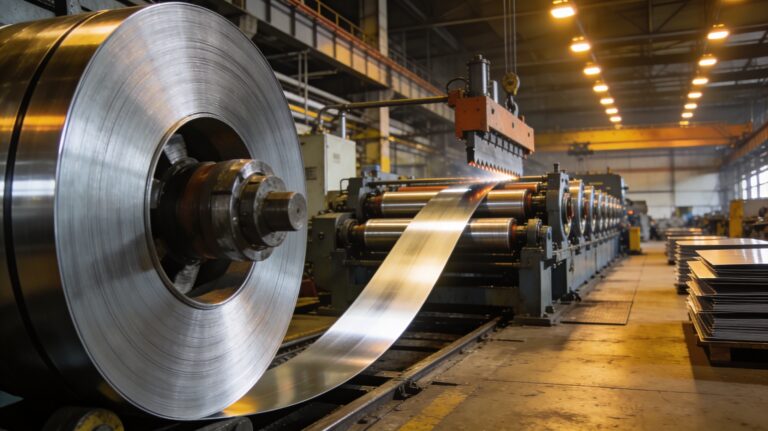
Light and medium gauge cut-to-length lines should not be selected only by coil width. The real boundary depends on thickness range, flatness target, cut length, shear type, line speed, surface protection, stacking method, and how often the plant changes material or sheet size. A light gauge CTL line is built around speed and surface care. A medium gauge CTL line is built around force, stability, and reliable flatness under heavier load.
For the full process flow, use the cut-to-length process guide. For material behavior across aluminum, stainless steel, and mild steel, use the slitting or CTL by material guide. This page focuses on gauge selection: where light gauge ends, where medium gauge begins, and which CTL line details should drive the RFQ.
Define Gauge by Processing Load
Gauge labels are useful only when they reflect processing load. Light gauge work usually emphasizes clean feeding, high repeatability, surface protection, and fast sheet output. Medium gauge work usually places more demand on decoiler stability, leveling force, shear capacity, drive load, and stack handling. The same coil width can require different line architecture when thickness and material grade change.
| Selection boundary | Light gauge emphasis | Medium gauge emphasis |
|---|---|---|
| Thickness range | Thin coils, higher speed, lower force | Thicker coils, higher leveling and shear load |
| Flatness target | Precision sheet control for panels and appliance work | Stable flatness under stronger coil set and heavier stock |
| Shear choice | Flying or high-cycle shear when speed matters | Hydraulic or heavy-duty shear when force matters |
| Stacking | Surface-safe handling and clean sheet separation | Rigid support, weight control, and safe transfer |
When a Light Gauge CTL Line Fits
A light gauge CTL line fits thin aluminum, galvanized, pre-painted steel, stainless sheet, HVAC panels, appliance skins, small blanks, and other work where surface condition and repeatable length matter. The key questions are whether the line can feed without slipping, level without marking, cut accurately at speed, and stack sheets without scratching or bending them.
For narrower light-to-medium work, review the CT-850 cut-to-length line. It is a practical model anchor when the RFQ centers on compact coil widths, frequent sheet programs, and space-sensitive CTL production.
When a Medium Gauge CTL Line Fits
A medium gauge CTL line fits heavier sheet production, general fabrication stock, service center sheet programs, structural components, and coils where leveling force and shear capacity become more important than maximum output speed. The line must hold flatness through stronger coil set while maintaining safe, stable stacking for heavier sheets.
For wider or heavier CTL planning, compare the CT-1350 cut-to-length line and CT-1650 cut-to-length line. These product anchors help convert gauge, width, thickness, and sheet-length requirements into a practical model discussion.
Flatness Target Decides the Leveler
Flatness is not only a quality claim. It determines leveler design, roll count, penetration control, drive load, and commissioning time. Light gauge panels may need careful surface-safe leveling. Medium gauge stock may need stronger leveling force and more stable strip control. If the downstream process is laser cutting, stamping, bending, or visible-panel assembly, write the flatness requirement into the RFQ.
Shear Type Should Match the Job Pattern
High-speed light gauge work may justify a faster shear approach when sheet length is repeated and surface handling is controlled. Medium gauge work often prioritizes cutting force, blade life, rigidity, and clean cut edges. Do not choose shear type by speed alone. Choose it by thickness range, material grade, cut length, edge requirement, and expected daily job pattern.
Check Surface Handling and Stacking Early
Surface-sensitive materials can fail after the cut, not during the cut. Guides, feed rolls, conveyors, stackers, sheet separators, and unloading methods all affect whether finished sheets remain usable. Aluminum and pre-painted steel need special attention here. Medium gauge sheets need support and transfer methods that prevent bending, edge damage, and unsafe handling.
Build the Gauge Selection RFQ
Before comparing models, prepare coil width, thickness range, material grade, coil weight, sheet length range, flatness target, surface protection requirement, cut edge requirement, line speed target, run length distribution, changeover frequency, and stacking method. For production-flow planning before model selection, use the slitting vs CTL order-mix planning guide.
You can also start from the MaxDo metal cut-to-length line category or the broader sheet metal coil processing guide. To discuss a light or medium gauge CTL project, send the gauge range, material, flatness target, sheet length, and stacking requirement through the MaxDo contact form.
If the same gauge range must leave as slit coil or narrow strip instead of stacked sheets, keep this page as the CTL gauge-boundary page and route the equipment decision to the metal slitting machine category. That route change is an output-form decision, not a change to the CTL selection boundary.