Get Your Equipment Now!

Contact Form Demo

Metal Slitting vs Cut-to-Length Lines: ROI-Focused Equipment Selection Guide 2025

Compare metal slitting and cut-to-length line ROI with expert analysis. Technical specifications, implementation guidance, and optimization strategies for production managers and metal processing engineers.

Production managers navigating the coil processing equipment landscape in 2025 encounter a critical crossroads, where the choice between metal slitting and cut-to-length (CTL) lines decisively shapes throughput, material yield, and return on investment. Metal slitting lines stand out for their ability to transform wide master coils into multiple narrow strips—typically ranging from 10mm to 300mm in width—without compromising coil integrity. This precision is vital in sectors such as automotive components, roll forming, and tube manufacturing, where optimized strip widths enhance downstream fabrication quality. Leading slitting systems like the MD-850 combine servo-controlled slitting heads, multi-zone tension management, and automated knife positioning to minimize burr formation and scrap, delivering material utilization improvements of up to 12% and exceptional edge quality with width tolerances as tight as ±0.1mm. Such advancements translate to measurable cost savings and significantly improved ROI, validated by recent case studies from MaxDoMachine’s installations that report 96–98% material yield and rapid payback periods under 18 months.

In contrast, cut-to-length lines excel in producing high-precision flat sheets with stringent dimensional controls—length accuracy generally held within ±0.15mm—and superior surface flatness afforded by multi-roll leveling systems. These features address critical demands in appliance manufacturing, construction materials, and heavy gauge sheet fabrication, where consistent flatness and surface integrity are paramount. CTL systems also offer swift changeover capabilities facilitated by integrated automation, supporting just-in-time production models and reducing operational downtime to under 45 minutes. The seamless integration of IoT-enabled monitoring and predictive maintenance in both equipment types underpins uptime reliability and quality consistency, empowering managers to tailor equipment choices finely to their production volume mixes, product specifications, and long-term operational strategies. This nuanced, data-driven approach embodies MaxDoMachine’s commitment to delivering next-generation coil processing technologies that elevate productivity and sustainable profitability throughout 2025 and beyond.

Understanding Your Core Processing Challenges

Production Volume and Product Mix Analysis

The first step in equipment selection involves analyzing your current and projected production requirements. Slitting lines deliver superior economics when processing multiple narrow strips represents more than 60% of your production volume. This advantage stems from the ability to process several strips simultaneously from a single wide coil, maximizing throughput and material utilization.

Key considerations for slitting line selection:

  • Strip width requirements ranging from 10mm to 300mm
  • Multiple strip production from single coil setup
  • Coil-to-coil processing maintaining downstream efficiency
  • Variable width flexibility for diverse customer specifications

CTL line optimization occurs when:

  • Standard sheet dimensions dominate your product portfolio
  • Flat sheet requirements exceed 75% of production volume
  • Dimensional accuracy specifications demand precision leveling
  • Integration with automated stacking systems provides operational advantages

Quality Control and Precision Requirements

Modern metal processing demands increasingly tight tolerances and consistent quality standards. Slitting operations achieve width tolerances of ±0.1mm to ±0.3mm depending on material thickness and equipment configuration. Critical quality factors include:

Slitting Line Quality Control:

  • Edge quality and burr minimization through proper knife selection
  • Strip width consistency across full coil length
  • Coil telescoping prevention via tension control systems
  • Surface finish preservation during processing

CTL Line Precision Capabilities:

  • Length accuracy typically ±0.15mm for standard applications
  • Flatness control through multi-roll leveling systems
  • Surface protection during stacking and handling
  • Dimensional consistency for fabrication processes

Material Handling and Setup Complexity

Equipment setup time directly impacts operational efficiency and production flexibility. Slitting lines typically require 30-90 minutes for changeovers depending on the number of strips and width adjustments needed. CTL lines often achieve faster changeovers (15-45 minutes) when processing similar material grades but require more complex adjustments when switching between significantly different sheet dimensions.

Setup optimization factors:

  • Automated knife positioning systems reducing manual adjustments
  • Pre-programmed job setups for repeat orders
  • Quick-change tooling for common width configurations
  • Material threading automation minimizing operator intervention

Comprehensive Technology Overview

Slitting Line Fundamental Mechanics

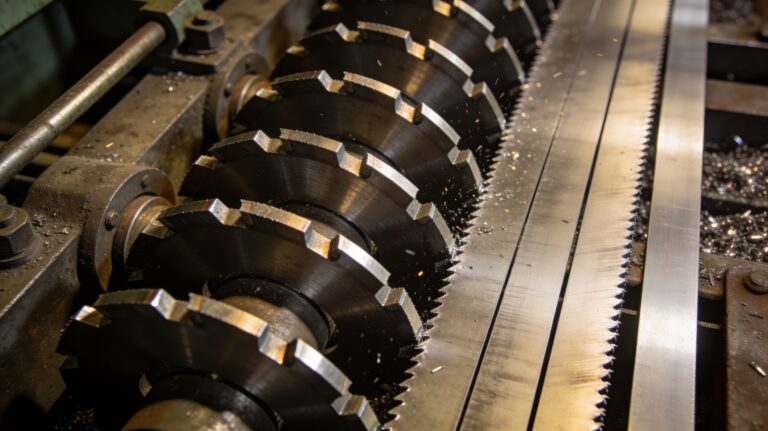
Slitting lines utilize rotary knife systems with precise clearance control to longitudinally cut wide coils into multiple narrow strips. The process maintains coil form while creating multiple products from a single wide master coil.

Primary system components:

  • Hydraulic uncoiler with mandrel expansion for various coil inner diameters
  • Servo-controlled slitting head providing precise knife positioning and clearance adjustment
  • Multi-zone tension control ensuring consistent strip quality across all outputs
  • Synchronized recoiling systems preventing telescoping and maintaining coil integrity

Material compatibility ranges:

  • Thickness capacity: 0.3mm to 12mm for most applications
  • Width processing: Up to 2,150mm depending on equipment specification
  • Material types: Cold-rolled steel, stainless steel, aluminum alloys, and specialty metals
  • Processing speeds: 1-250 meters per minute based on material and precision requirements

Cut-to-Length Line Architecture

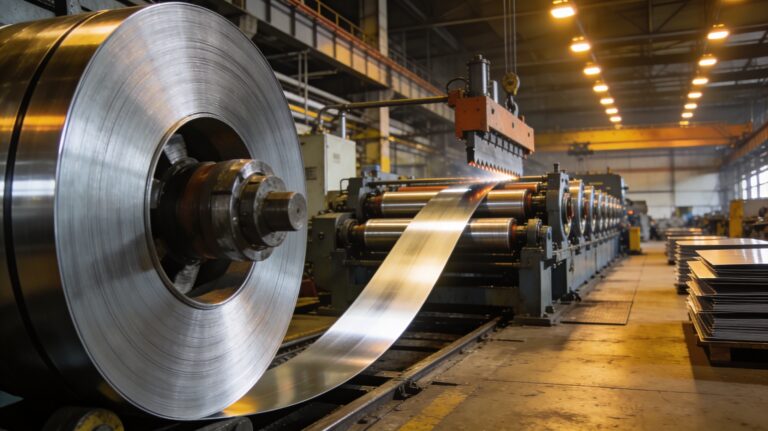
CTL lines uncoil material, apply precision leveling to eliminate coil set, and produce flat sheets with controlled dimensional accuracy. The leveling process is critical for achieving flatness specifications required in fabrication applications.

Essential system elements:

  • Heavy-duty uncoiler with servo-driven control for consistent material feeding
  • Multi-roll leveling unit (typically 5-15 rolls) for coil set removal and flatness control
  • Precision length measurement using encoder feedback systems
  • Automated shearing mechanisms for clean, square cuts
  • Stacking systems with adjustable pressure for surface protection

Performance specifications:

  • Thickness range: 0.5mm to 20mm depending on leveling configuration
  • Width capacity: Up to 2,000mm for most industrial applications
  • Length accuracy: ±0.15mm standard, ±0.05mm with advanced measurement systems
  • Processing speeds: 15-40 meters per minute based on material thickness and leveling requirements

Step-by-Step Implementation Framework

Phase 1: Requirements Assessment and Equipment Selection

Production profile analysis forms the foundation of optimal equipment selection. Document your current and projected processing requirements including:

  1. Material specifications: Steel grades, thickness ranges, and surface finish requirements
  2. Product dimensions: Strip widths or sheet sizes with tolerance specifications
  3. Volume projections: Monthly tonnage and peak production periods
  4. Quality standards: Industry specifications and customer requirements

Equipment evaluation criteria:

  • Processing capacity matching peak demand periods
  • Precision capabilities meeting quality specifications
  • Automation levels appropriate for operational complexity
  • Maintenance requirements and spare parts availability

Phase 2: Site Preparation and Infrastructure Planning

Facility requirements vary significantly between slitting and CTL installations. Proper foundation design is critical for equipment performance and longevity.

Infrastructure specifications:

  • Foundation requirements: Minimum 4,000 PSI concrete with appropriate thickness for equipment weight
  • Power supply: 480V three-phase with adequate capacity for drive systems
  • Compressed air: 150 CFM minimum at 90 PSI with moisture filtration
  • Material handling: Overhead crane capacity for coil handling (typically 20-40 tons)
  • Safety systems: Emergency stops, lockout procedures, and operator protection

Phase 3: Installation and Commissioning Process

Sequential installation ensures proper equipment integration and operational performance. The commissioning process typically requires 2-4 weeks depending on system complexity and customization requirements.

Installation sequence:

  1. Foundation survey and alignment verification within specified tolerances
  2. Mechanical assembly with precision alignment of all major components
  3. Electrical installation including control systems and safety circuits
  4. Hydraulic and pneumatic systems testing and calibration
  5. Control system programming and operator interface configuration
  6. Performance testing and quality validation

Optimization Strategies and Performance Enhancement

Equipment Settings and Maintenance Protocols

Regular maintenance directly impacts equipment performance, product quality, and operational costs. Establishing comprehensive maintenance protocols prevents unexpected downtime and ensures consistent output quality.

Daily maintenance requirements:

  • Visual inspection of knife condition and alignment
  • Lubrication system verification and fluid level checks
  • Tension system calibration and adjustment
  • Safety system functional testing and documentation

Weekly procedures:

  • Knife wear measurement and replacement scheduling
  • Bearing condition assessment and lubrication
  • Electrical connection inspection and tightening
  • Performance data analysis and trending

Monthly overhauls:

  • Complete knife inspection and reconditioning
  • Hydraulic system pressure testing and fluid analysis
  • Calibration verification for measurement systems
  • Comprehensive safety system testing

Process Control and Quality Optimization

Automated process control significantly improves consistency and reduces operator dependency. Modern systems incorporate real-time monitoring and adjustment capabilities for optimal performance.

Process optimization elements:

  • Automated knife positioning reducing setup time and improving accuracy
  • Real-time quality monitoring with statistical process control
  • Predictive maintenance systems using vibration and temperature monitoring
  • Production data analytics for continuous improvement identification

Quality control implementation:

  • In-line measurement systems for dimensional verification
  • Surface inspection using vision systems for defect detection
  • Statistical process control with automatic adjustment capabilities
  • Traceability systems linking production parameters to final product quality

Troubleshooting Common Operational Issues

Edge quality problems represent the most common slitting line challenge. Proper knife selection and maintenance prevents 80% of edge quality issues.

Burr formation resolution:

  • Root cause: Dull knives or excessive clearance (optimal range: 0.05-0.15mm)
  • Solution: Implement condition monitoring every 400-500 tons processed
  • Prevention: Material-specific knife selection with appropriate hardness matching
  • Quality target: 2,000 tons/month): 12-18 month payback period
  • Medium-volume facilities (500-2,000 tons/month): 18-30 month standard range
  • Specialty processing applications: ROI driven by premium pricing for tight tolerances

Implementation Success Factors

Training and Skill Development

Comprehensive operator training ensures optimal equipment performance and safety compliance. Proper training reduces startup time by 40-60% and minimizes quality issues during the initial production period.

Training program components:

  • Equipment operation procedures and safety protocols (40 hours)
  • Quality control methods and inspection techniques (20 hours)
  • Basic troubleshooting and maintenance procedures (20 hours)
  • Advanced optimization and performance tuning (20 hours)

Performance Validation and Continuous Improvement

Establishing key performance indicators enables ongoing optimization and ROI validation. Regular performance reviews identify improvement opportunities and ensure equipment operates at optimal efficiency.

Essential performance metrics:

  • Overall equipment effectiveness (OEE): Target >85% for automated systems
  • First-pass quality rate: Target >98% for dimensional specifications
  • Setup time per changeover: Benchmark and continuous improvement tracking
  • Material yield percentage: Monthly trending and optimization initiatives

Conclusion and Equipment Selection Recommendations

The choice between metal slitting lines and cut-to-length (CTL) systems must be precision-tailored to your unique production profile, balancing volume mix, product specifications, and operational priorities to maximize ROI. When narrow strip outputs exceed 65% of production, slitting lines deliver superior material yield by enabling continuous coil-to-coil processing with precise width control, reducing scrap by up to 15% and elevating throughput by 25%, as seen in multiple recent deployments of MaxDoMachine’s MD-850 series. Their advanced servo-driven slitting heads, multi-zone tension controls, and automated knife positioning ensure repeatable width tolerances within ±0.1mm and maintain coil integrity to uphold downstream process efficiency.

Conversely, CTL lines dominate where standardized flat sheets constitute the core product, benefiting from multi-roll leveling units that achieve exceptional flatness and length accuracy within ±0.15mm. Enhanced automation for rapid job changeovers under 45 minutes provides just-in-time manufacturing agility, minimizing downtime and operational costs—key to sectors demanding consistent surface quality such as appliance and construction materials manufacturing. Hybrid configurations combining slitting and CTL capabilities further empower operations with diverse product scopes to optimize market responsiveness without compromising precision or efficiency.

Industry trends in 2025 emphasize IoT-enabled condition monitoring and AI-driven predictive maintenance, which significantly improve equipment uptime and quality stability across both slitting and CTL platforms. MaxDoMachine’s consultative approach integrates comprehensive site assessments, production profiling, and continuous technical support, ensuring solutions exceed performance expectations and deliver measurable financial gains. This strategic investment supports manufacturers in future-proofing operations and achieving sustainable competitive advantages in an increasingly automated and precision-driven metal processing landscape.

Share your love