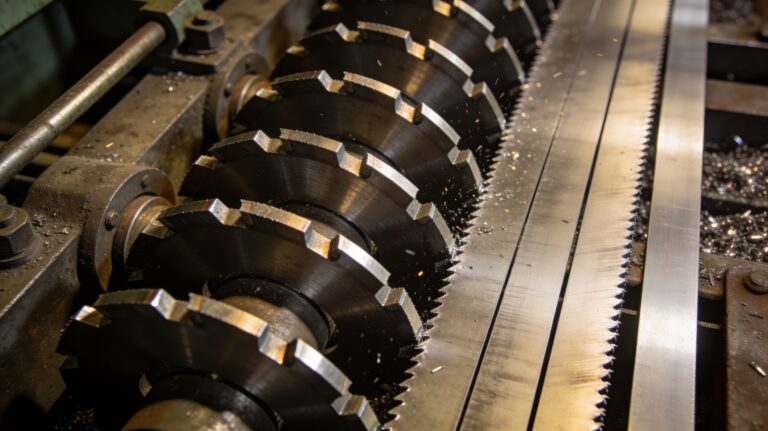



Slitting vs Blanking Quality Acceptance Matrix
A narrow quality acceptance matrix for slitting and blanking operations, focused on measurable criteria, inspection checkpoints, equipment control responsibilities, and product-route decisions.
This page is a narrow support page for slitting vs blanking quality acceptance. It owns only the acceptance-criteria layer: measurable limits, inspection checkpoints, equipment-control responsibility, product-route decisions, and FAT/SAT proof. It is not the core slitting vs blanking comparison page, not a defect-diagnosis protocol, and not a product category page.
Slitting and blanking are often compared by output format, but production teams also need a quality acceptance framework. Slitting produces continuous narrow strips, so quality is judged by edge condition, width stability, camber, surface protection, and recoiling behavior. Blanking and cut-to-length operations produce flat sheets, so quality is judged by length accuracy, flatness, squareness, burr, and stack condition.
For the full equipment-selection comparison, use the core slitting vs blanking guide. For root-cause troubleshooting, use the detailed slit strip vs blanked sheet quality troubleshooting guide. This page sits between them: it defines the acceptance criteria that should be agreed before purchasing, commissioning, or auditing a line.
Quality Acceptance Starts With the Product Form
The first quality question is not whether slitting or blanking is better. The first question is what the customer will measure. A slit strip customer may reject material because the strip width drifts or the coil rewinds poorly. A blanked sheet customer may reject material because the sheet is not flat enough, the length is outside tolerance, or the stack is difficult to feed into the next process.
Quality criteria should follow the output form. If the purchase specification only says “high precision” without naming the measured variables, the buyer and supplier can pass commissioning yet still disagree during production. A good acceptance plan names the variable, method, sample frequency, and corrective action.
| Output | Primary acceptance criteria | Common production risk |
|---|---|---|
| Slit strip | Width tolerance, edge burr, camber, coil tension, recoiling stability | Good cutting speed but unstable downstream strip behavior. |
| Blanked sheet / CTL sheet | Length accuracy, flatness, squareness, surface condition, stack quality | Sheets meet length targets but fail feeding, stacking, or forming requirements. |
Slitting Quality Criteria: Strip Width, Edge, Camber, Recoiling
Slitting quality is continuous. A single coil can produce many strips, and each strip must remain stable across the run. The acceptance plan should define target width, width tolerance, edge burr limit, allowable camber or bow, surface protection requirements, and recoiling expectations. If the strip will feed roll forming, stamping, or automated assembly, the downstream equipment tolerance should drive the slitting tolerance.
Width control depends on tooling, knife setup, material behavior, machine rigidity, and tension discipline. For the technical mechanism, connect this acceptance plan with the guide on precision width tolerance in metal slitting machines. For line options, review MaxDo metal slitting machines and specific models such as the MA-1350 metal slitting machine and MD-1650 metal slitting machine.
Blanking and CTL Quality Criteria: Length, Flatness, Stack
Blanking and cut-to-length quality is sheet-based. The acceptance plan should define length tolerance, diagonal or squareness tolerance, flatness requirement, visible surface limits, burr limit, and stack condition. A sheet that meets length tolerance can still fail if it has coil set, edge wave, crossbow, or poor stack alignment.
The line must control leveling, feed accuracy, shear timing, and stacking. Use the cut-to-length process guide for the process flow, then compare MaxDo metal cut-to-length lines such as the CT-1350 cut-to-length line and CT-1650 cut-to-length line.
Inspection Points: Where to Measure Before Defects Escape
A useful acceptance plan defines inspection points before production starts. For slitting, inspect at first-good-strip approval, after speed changes, after coil welds or material transitions, and before recoiling completion. For blanking or CTL, inspect first sheet length, flatness after leveling, shear edge, stack alignment, and surface condition before downstream handling hides the root cause.
| Checkpoint | Slitting line focus | Blanking / CTL line focus |
|---|---|---|
| First piece | Strip width, burr, edge condition, slit pattern | Length, squareness, flatness, shear edge |
| Stable running | Width drift, tension stability, camber, surface scoring | Feed repeatability, leveler stability, surface marking |
| Output handling | Recoiling tension, telescoping, strip separation | Stack alignment, sheet handling, pile quality |
Equipment Responsibility: Which System Controls Which Defect?
Acceptance criteria should assign responsibility to the correct machine system. In slitting, width and burr are tied to knife setup and tooling condition, while deformation and recoiling problems often involve tension, strip path, and winding control. In blanking and CTL, length accuracy belongs to feed and shear control, while flatness belongs to leveling and material handling.
This distinction prevents vague troubleshooting. If slit strip deformation appears, review the guide on how to eliminate material deformation after slitting. If the issue is a blanked sheet flatness or stacking failure, the corrective action usually belongs to the leveling, shear, or stacking system rather than the slitting architecture.
Acceptance Matrix for Production Managers
| Quality variable | Slitting acceptance question | Blanking / CTL acceptance question |
|---|---|---|
| Dimensional accuracy | Does each strip hold width across the run? | Does each sheet hold length and squareness? |
| Edge quality | Is burr controlled at the slit edge? | Is shear burr acceptable for downstream handling? |
| Flatness / shape | Is camber or bow within downstream limits? | Is coil set, crossbow, and edge wave removed? |
| Surface condition | Are strips protected from scoring through separation and recoiling? | Are sheets protected through leveling, cutting, conveying, and stacking? |
| Output handling | Does recoiling stay tight and aligned? | Does the stack stay square, stable, and ready for the next process? |
Commissioning Checklist Before Signing Off
- Define measured variables separately for slit strip and blanked sheet output.
- Agree on measurement tools, sampling frequency, and pass/fail limits before trial production.
- Run acceptance tests at realistic material thickness, width, speed, and order mix.
- Record first-piece approval, stable-running checks, and output-handling checks.
- Map each failed criterion to the responsible system: tooling, tension, leveling, feed, shear, recoiling, or stacking.
If you are comparing slitting and blanking equipment for a quality-critical application, send your material grade, gauge range, required tolerances, downstream process, and current defect history through the MaxDo contact form. The most useful equipment recommendation starts with the acceptance criteria your customer will actually enforce.