
Get Your Equipment Now!

Contact Form Demo

Slit Strip vs. Blanked Sheet Quality Issues: Troubleshooting Guide 2026

Diagnose and resolve edge burrs, camber, flatness deviations, and dimensional errors in slit and blanked metal products. Equipment-specific solutions for production managers.

Most quality failures in a metal service center come down to one misdiagnosis: treating slit strip and blanked sheet defects as the same problem. They are not. The cutting physics differ, the defect profiles differ, and the corrective actions differ. Production managers who apply generic troubleshooting to both product types lose yield, damage tooling, and chase root causes that don’t exist.

This guide is for production managers, process engineers, and quality supervisors running coil slitting or cut-to-length operations. It covers the root-cause mechanics of each defect type, systematic diagnostic protocols for both product streams, equipment-specific solutions for the MaxDo MD and MA Series lines, and a preventive quality framework that reduces unplanned downtime across both operations.

Why Slit and Blanked Products Fail for Different Reasons

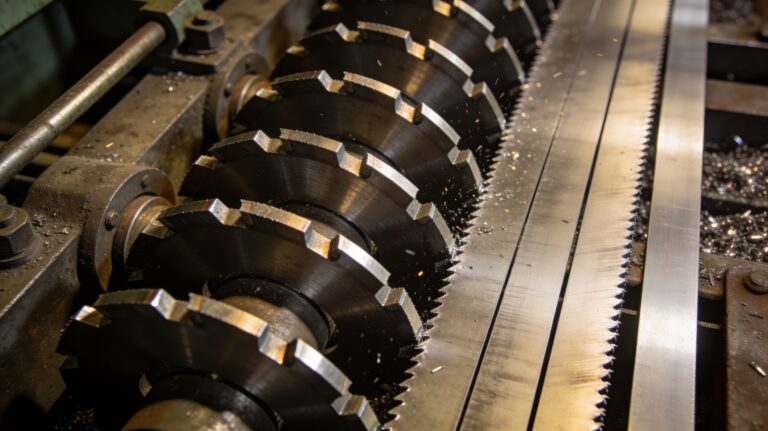
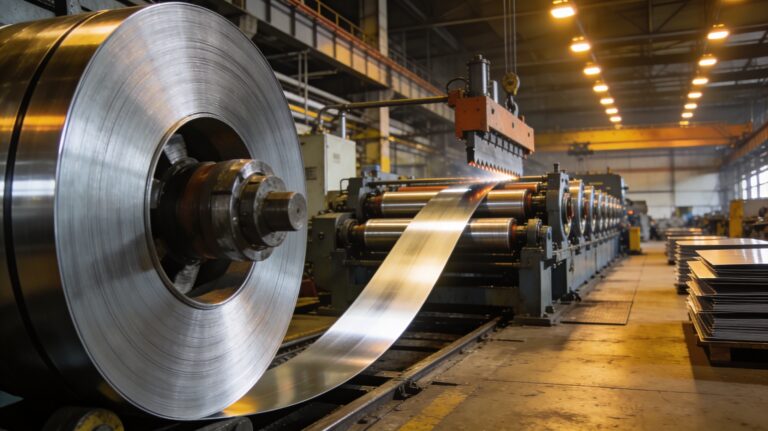
The core difference is cutting geometry. Slitting subjects the coil to continuous rotary shearing — upper and lower circular knives working in tandem as material flows between them under controlled tension. Blanking uses intermittent guillotine-style shearing perpendicular to material flow, with each cut cycle creating a discrete sheet.

These two mechanisms produce fundamentally different stress concentrations, and therefore fundamentally different defect signatures.

In a slitting operation, a single knife clearance error or tension deviation propagates across the entire remaining coil length before it is detected. The longer the run time without correction, the greater the material loss. In a blanking operation, defects are localized to individual sheets — each cut cycle is independent, allowing for correction between sheets and limiting scrap to the affected count.

Understanding this distinction is the first step to deploying targeted diagnostics rather than general troubleshooting.

Slit Strip Quality: Root Causes and Failure Mechanisms

Edge Burr Formation

Burr height exceeding 0.05 mm on a slit edge is the most common customer complaint in a slitting operation. The root cause is nearly always one of three conditions:

  • Excessive knife clearance (> 0.15 mm): Material tears rather than shears cleanly, leaving a ragged burnish zone and elevated burr on the lower strip edge
  • Blade dulling past the wear threshold: Dull knives require more force to initiate the shear, increasing material rollover and burr height
  • Incorrect clearance for material grade: AHSS grades such as DP780 or 22MnB5 require tighter knife clearances than mild carbon steel at the same gauge — using a generic clearance setting for high-strength material will generate excessive burrs immediately

Common mistake: Setting knife clearance as a fixed percentage of material thickness (e.g., 10% of gauge) regardless of tensile strength. For AHSS above 780 MPa, tighten clearance to 5–7% of gauge and use carbide-tipped knives. Running standard HSS knives on DP780 or higher will double blade wear rate within 2–3 coil cycles.

Width Tolerance Drift

Width tolerance errors (outside ±0.1 mm) in slit strip typically stem from:

  • Thermal expansion in the knife arbor shifting knife positions during extended runs
  • Mechanical wear in knife spacers or arbor bearings
  • Improper calibration of the positioning system after a knife change

Width drift is insidious because it develops gradually — operators may not detect a 0.06 mm drift until a full coil is rejected by the downstream stamping press. Real-time laser width measurement systems, available as an option on the MaxDo MD-1350 mid-range slitting line and MD-1650 heavy-duty slitting line, close this detection gap by flagging deviations within seconds.

Edge Camber and Bow

Camber (strip curvature along the length axis) develops when tension is unevenly distributed across multiple strips being slit simultaneously. A 5% tension differential between the innermost and outermost strip on a wide-width coil is sufficient to introduce measurable camber on the lower-tension strip.

Common causes include worn tension rollers with uneven surface contact, misaligned loop pit guides, or incorrect tension setup for thin strips on a mixed-width slit pattern.

Pro tip: When slitting a pattern that includes both narrow (< 50 mm) and wide (> 300 mm) strips from the same coil, calculate required tension for each width independently. The MD-1350’s multi-zone tension control system applies independent tension management per strip group — specify this configuration when ordering if your operation regularly processes mixed-width patterns.

Surface Scoring

Scoring marks on slit strip surfaces indicate debris accumulation on knife surfaces, misaligned edge guides making contact with the strip face, or contamination on the entry tension rollers. Surface scoring is often dismissed as cosmetic, but in automotive exterior panel feedstock (DC01, SPCC) and stainless steel (304/316), even minor scoring causes rejection at downstream inspection.

Blanked Sheet Quality: Root Causes and Failure Mechanisms

Dimensional Accuracy Errors

Sheet length and width accuracy in a cut-to-length operation depends on three interdependent systems: the encoder measuring system, the blade clearance geometry, and the material handling setup.

Length errors beyond ±0.5 mm typically trace to one of:

  • Encoder drift: Measuring wheel slip caused by worn contact surface, incorrect contact pressure, or contamination on the material surface
  • Blade clearance overrun: As blades wear, clearance increases, causing a slight material draw-forward effect that adds to measured length

Width accuracy errors in blanked sheet relate to blade parallel alignment — if the upper and lower blades are not exactly parallel across the full cutting width, the resulting sheet will have a slight taper.

Common mistake: Calibrating only the encoder and ignoring blade geometry when investigating length errors. An accurately calibrated encoder reading a slightly worn blade pair will still produce length errors, because the encoder measures distance traveled, not actual cut position. Inspect blade clearance and parallelism simultaneously with encoder calibration.

Flatness Deviations

A sheet that passes dimensional inspection but fails to lie flat is a common source of disputes in automotive and appliance stamping supply chains. The leveler upstream of the shear is the primary correction point for flatness, but material properties complicate the picture:

  • Coil set memory: Tight-wound coils introduce a permanent curvature set that a under-powered leveler cannot fully correct. Material that has been coiled at an inner diameter below 600 mm at gauges above 3 mm will carry significant coil set.
  • Edge wave and center buckle: These flatness defects originate from differential elongation — material that has been unevenly stretched across its width during rolling. A leveler can reduce but not eliminate this condition; the corrective action is at the incoming material inspection stage.
  • Incorrect roll penetration depth: Too little penetration fails to reverse the coil set; too much over-stresses the material and creates reverse bow on exit.

Pro tip: When processing hot-rolled carbon steel coils (Q235B, SPHC) above 6 mm, increase leveler roll penetration incrementally in 0.5 mm steps while monitoring exit flatness rather than applying a fixed penetration setting. Roll penetration requirements vary by coil set severity, which changes between supplier lots.

Shear Angle Defects

A blanked sheet with a visible twist or shear angle offset along its cut edge indicates loss of blade parallelism. This is a progressive failure mode: as blade wear advances, the clearance gap becomes non-uniform across the cut width, causing the material to shear earlier at the tightest clearance point and drag at the widest.

Left uncorrected, shear angle defects lead to edge cracking in subsequent press-forming operations on AHSS material, because the non-uniform cut edge creates stress concentration points.

Surface Marking During Handling

Stacking and conveying systems that drag sheets across each other cause surface scratches that fail automotive quality standards. Inadequate magnetic conveyors, worn stacking guide liners, and incorrect sheet drop height onto the stack are the most common causes. These are handling system issues, not cutting system issues — distinguishing them from processing defects requires reviewing mark orientation relative to material flow direction.

Systematic Diagnostic Protocols

Slit Strip Edge Quality — Step-by-Step Assessment

Step 1: Visual Edge Inspection

Examine cut edges under minimum 500 lux illumination (use a calibrated work light, not ambient factory lighting). Document:

  • Burr location (upper or lower edge) and uniformity along the strip length
  • Rollover direction and depth — excessive rollover with minimal burr indicates worn knives; sharp burr with minimal rollover indicates incorrect clearance
  • Any scoring, tearing, or secondary cut marks that suggest debris on the knife surfaces

Step 2: Dimensional Verification

Measure strip width at minimum 5 points per coil sample using a calibrated micrometer or digital gauge (±0.01 mm accuracy minimum). Record:

  • Width deviation from nominal at each measurement point
  • Width variation pattern — gradual drift indicates thermal expansion or wear; sudden step change indicates a knife shift event

Step 3: Tension Distribution Check

On a multi-strip slit pattern, verify tension values per zone using load cell readings from the tension control system. Compare against setup calculations. A tension differential exceeding 8% between strips on the same slit pattern requires immediate re-setup before the next coil.

Blanked Sheet — Flatness and Dimensional Control Protocol

Step 1: Measuring System Calibration

Check encoder accuracy using a certified length standard (minimum 3 m reference bar, ±0.05 mm certified accuracy). Verify measuring wheel contact pressure — the wheel must maintain full contact with the material surface without slipping or bouncing. Inspect wheel surface for wear flats or contamination.

Step 2: Blade Geometry Inspection

Measure blade clearance using a precision feeler gauge at three points across the full cutting width: left edge, center, and right edge. Maximum acceptable variation across the three points is 0.02 mm. Check blade parallel alignment using a dial indicator — any reading above 0.03 mm offset requires realignment before production resumes.

Step 3: Leveling System Assessment

Inspect leveler rolls for:

  • Surface wear or contamination (grooves, flats, or built-up material)
  • Roll crown across width — uneven roll pressure creates differential elongation
  • Misalignment between entry guide roll and leveler first roll

Run a sample sheet and measure flatness at four corners and center using a surface plate and dial gauge. A flatness deviation exceeding 1 mm per linear meter requires leveler adjustment.

Equipment Capabilities: MD and MA Series Quality Control Features

The MaxDo MD Series and MA Series incorporate control systems designed to address the specific failure mechanisms described above.

MD Series Slitting Lines — Quality Control Matrix

Model capabilities matched to primary quality control requirements.

ModelGauge RangeMax WidthMax SpeedKey Quality Control Features
MD-8500.3–3.0 mm850 mm120 m/minServo knife positioning, automated clearance control, ±0.1 mm width tolerance
MD-13500.5–6.0 mm1,350 mm100 m/minMulti-zone tension control, precision edge guides, carbide blade option for AHSS to 980 MPa
MD-16501.0–12.0 mm1,650 mm80 m/minClosed-loop servo loop control, vibration monitoring, automated knife alignment
MD-22003.0–25.0 mm2,200 mm60 m/minWide-strip stability systems, Siemens S7 PLC + SCADA option, hydraulic assist

The MD-1350’s multi-zone tension system independently manages tension across multiple strip groups — eliminating the primary cause of inter-strip camber variation in mixed-width slit patterns. The MD-1650’s closed-loop servo loop control eliminates the strip sag and edge wave common in tension stand designs at 80 m/min processing speeds.

Pro tip: When specifying an MD-1350 for automotive DP600/DP780 feedstock, request the carbide-tipped blade upgrade at the time of order. Retrofitting after delivery adds lead time and cost. Carbide blades extend service life by 3–4x on high-strength grades compared to standard D2 tool steel.

Compare MD-850 vs. MD-1350 for your gauge range

MA Series Cut-to-Length Lines — Quality Capabilities

For blanked sheet production, the MaxDo MA Series CTL lineup addresses the primary failure modes through:

  • Multi-roll leveling systems with adjustable roll penetration depth, allowing operators to dial in flatness correction for different coil set severities
  • Servo-driven feed systems with encoder accuracy to ±0.5 mm length tolerance
  • Precision blade gap adjustment for consistent shear angle control across the full cutting width
  • Automated stacking systems with sheet separation to prevent surface marking during handling

The MA-1350 CTL line handles gauges from 0.5 to 6 mm and is the standard specification for automotive tier-2 and appliance panel cut-to-length operations producing DC01, SPCC, and galvanized sheet.

Defect Diagnosis Decision Matrix

Use this matrix as a first-pass diagnostic tool before committing to a specific corrective action.

Match the observed defect to the most likely root cause and corrective action.

Observed DefectSlit/CTLMost Likely Root CauseFirst Corrective Action
Uniform burr on lower edge, full coil lengthSlitKnife clearance too wide (> 0.15 mm for low-carbon steel)Measure clearance; adjust per material grade specification
Intermittent burr, varies along lengthSlitBlade dulling mid-runInspect blade edge; replace or rotate to fresh section
Width drift > ±0.1 mm, gradualSlitThermal expansion in arborAllow thermal stabilization; re-measure after 15-min run-in; recalibrate if drift continues
Width drift > ±0.1 mm, sudden stepSlitKnife shift or spacer failureStop line; inspect knife stack; re-torque or replace spacers
Strip camber on edge strips onlySlitTension imbalance — outer strip under-tensionedIncrease outer strip tension 5–8%; re-run test strip
Surface scoring, parallel to strip edgeSlitDebris on knife or guide contactClean knife surfaces; inspect edge guide contact clearance
Sheet length error, consistent shortCTLEncoder measuring wheel slipClean wheel surface; verify contact pressure; recalibrate
Sheet flatness: edge waveCTLIncoming material differential elongationIncrease leveler penetration depth; flag coil for incoming QC
Sheet flatness: center buckleCTLExcessive leveler roll pressure at centerReduce center roll crown; inspect roll surface for wear
Shear angle visible on cut edgeCTLNon-parallel blade alignmentMeasure blade clearance at 3 points across width; realign if variation > 0.02 mm
Surface scratches parallel to feed directionCTLStacking system drag or conveyor contaminationInspect stacking guide liners; clean conveyor surface

2026 Industry Context: What’s Driving Higher Quality Demands

Two structural shifts are raising quality tolerances in both slit and blanked product streams in 2026.

EV structural component demand: Electric vehicle battery enclosures, structural underbody frames, and motor housing components require slit feedstock from AHSS grades (DP780, DP980, 22MnB5) processed to tighter tolerances than conventional ICE body-in-white parts. The AHSS Insights WorldAutoSteel 2026 case study data confirms that 3rd Generation AHSS grades now offer up to twice the cut-edge ductility of conventional dual-phase steel at equivalent tensile strength — but only when slit with correct knife clearance and adequate tooling hardness. EV programs are actively specifying burr height limits of < 0.05 mm for structural slit strip, compared to the 0.10 mm tolerance that was standard for ICE programs five years ago.

IIoT predictive maintenance adoption: Metal service centers running MaxDo equipment with SCADA-connected control systems (available on the MD-2200 and as an option on the MD-1650) are integrating vibration and temperature sensor data into predictive maintenance platforms. Current IIoT implementations documented in 2026 are achieving 30–50% reductions in unplanned downtime and maintenance cost reductions of 20–30% through condition-based intervention rather than calendar-based replacement schedules. → Industry 4.0 in metal processing — implementation guide

Preventive Quality Control: Maintenance Schedules

Daily Quality Checks

  • [ ] Knife clearance measurement using precision feeler gauges — compare against material-specific setup card
  • [ ] Tension zone calibration verification — check each zone’s reading against setup specification
  • [ ] Edge guide alignment confirmation — verify contact clearance on all strip guides
  • [ ] Surface inspection of tension rollers and contact rolls — remove any debris or built-up material
  • [ ] Blade visual inspection — document any chips, flat spots, or scoring on cutting edges

Weekly Preventive Maintenance

  • [ ] Knife sharpness evaluation via test cut on certified gauge stock — measure burr height against threshold
  • [ ] Bearing condition monitoring — vibration and temperature check on arbor bearings and tension roll shafts
  • [ ] Hydraulic system pressure verification — check against operating specification; inspect for leaks
  • [ ] Encoder accuracy calibration — verify against certified length standard
  • [ ] Leveler roll inspection — check for wear, surface damage, and roll alignment

Monthly Comprehensive Service

  • [ ] Complete knife reconditioning: professional sharpening and precision arbor alignment
  • [ ] Full tension system recalibration using certified load cell equipment
  • [ ] Leveler roll pressure distribution check across full sheet width
  • [ ] Performance data review — analyze quality KPI trends against baseline
  • [ ] Operator training review — refresh procedures for any defect types that appeared during the month

Pro tip: Track knife replacement cycles by material grade, not just by run time. A knife set used primarily on Q235B will last 3–4x longer than the same set used on DP780. Maintaining separate maintenance logs by material type allows accurate prediction of replacement intervals and eliminates surprise blade failures mid-coil.

Statistical Process Control for Quality Management

Key Performance Indicators

Establish baseline values for each KPI within the first 30 operating days on a new line configuration, then set control limits at ±2 sigma from baseline.

KPIDefinitionMeasurement FrequencyTarget
First-pass quality rate% of production meeting spec without reworkPer coil / per shift≥ 97%
Burr height (slit)Measured in mm using edge gaugePer coil (5 measurement points)< 0.05 mm (AHSS) / < 0.10 mm (mild steel)
Width tolerance Cpk (slit)Process capability index for widthDaily statistical review≥ 1.33
Length tolerance (CTL)Deviation from nominal in mmPer shift (10-sheet sample)≤ ±0.5 mm
Flatness deviation (CTL)mm deviation per linear meterPer shift (5-sheet sample)≤ 1.0 mm/m
OEEOverall equipment effectivenessPer shift≥ 85%

Documentation Requirements

Every quality-relevant event requires a traceable record:

  • Incoming coil inspection: Heat number, gauge, width, tensile strength certificate, surface condition — linked to output coil/sheet ID
  • Setup parameter record: Knife clearance, tension settings, leveler penetration depth — documented at setup completion
  • Quality test results: Burr height, width, flatness measurements — recorded on the production traveler
  • Corrective action log: Problem description, root cause, corrective action, verification measurement, responsible operator

Slitting line maintenance schedule — complete reference

Applicable Standards Reference

Slit Strip Standards

StandardScopeKey Tolerance Requirement
ASTM A568MGeneral requirements for steel sheet, carbon and HSLAWidth tolerance, camber, flatness
ASTM A1008MCold-rolled carbon steel sheetSurface finish classification, dimensional tolerances
ASTM A653MZinc-coated (galvanized) steel sheet by hot-dip processCoating weight, edge conditions
EN 10131Cold-rolled uncoated and zinc-coated low carbon steel strip for cold formingWidth/thickness tolerances for European supply chains
JIS G3141Cold-reduced carbon steel sheets and stripsDimensional and edge quality standards for Japanese OEM supply

Blanked Sheet Standards

StandardScopeKey Tolerance Requirement
ASTM A1011MHot-rolled steel sheet and strip, carbon, HSLAFlatness, edge conditions
EN 10130Cold rolled low carbon steel flat products for cold formingFlatness class A/B/C definitions
ISO 6892-1Metallic materials — tensile testingMechanical property verification for material certification
DIN EN 10130Cold rolled low carbon steel for cold forming — EU automotive supplyDimensional and surface quality for press shop supply

Important: When supplying automotive customers in Europe, confirm whether the applicable specification is EN 10131 (strip/slit coil) or EN 10130 (sheet) before processing. The flatness and edge condition tolerances differ between the two standards and affect acceptance at incoming inspection.

Frequently Asked Questions

Q: What is the correct knife clearance for slitting DP780 dual-phase steel at 2.5 mm gauge?

A: For DP780 at 2.5 mm, set knife clearance at 5–7% of gauge, equating to 0.125–0.175 mm. Standard mild steel clearance of 8–10% of gauge is too wide for high-strength grades and will generate excessive burr height. Use carbide-tipped knives — the MD-1350 supports carbide blade configuration for AHSS grades up to 980 MPa tensile strength. Verify clearance with a feeler gauge before first coil and after every 10-coil run on high-strength material.

Q: How do I diagnose whether flatness problems on blanked sheet come from the leveler or from incoming coil material?

A: Run a controlled test: process one coil from a known-good supplier alongside the problem coil on the same line setup without changing any parameters. If the known-good supplier coil produces flat sheets and the problem coil does not, the root cause is incoming material quality (coil set severity, differential elongation, or residual stress). If both coils produce similar flatness problems, the root cause is in the leveler setup or blade system. Document both results before contacting your material supplier.

Q: At what burr height should a slit strip be rejected?

A: This depends on downstream process and customer specification. A common threshold used in automotive stamping supply chains is 0.05 mm maximum burr height for AHSS grades used in structural components, and 0.10 mm for mild steel grades used in non-structural applications. For appliance panel feedstock, surface-quality specifications often also include a maximum rollover depth of 0.15 mm. Always confirm the applicable acceptance criterion with the downstream customer before setting internal rejection thresholds.

Q: How often should slitting knives be replaced on a high-volume line processing mixed carbon steel and AHSS?

A: There is no universal answer — replace knives when measured burr height approaches the rejection threshold, not on a fixed calendar schedule. For a mixed-material operation, maintain separate usage logs per material grade and establish grade-specific replacement triggers based on your own measured data. On lines with no existing baseline, a starting point is to inspect and measure knife condition after every 50 tonnes of mild steel or every 20 tonnes of AHSS above 780 MPa, then adjust intervals based on actual wear rate data.

Q: Can the MD-1350 process AHSS above 980 MPa tensile strength?

A: The MD-1350 handles AHSS grades up to 980 MPa with the carbide-tipped blade upgrade specified at order. For grades above 980 MPa (such as 22MnB5 hot-stamped boron steel at 1,500+ MPa), the MD-1650 heavy-duty slitting line is the correct specification — it provides the additional frame rigidity and servo-controlled arbor system needed to maintain ±0.1 mm width tolerance at those tensile strength levels. Contact the MaxDo engineering team to confirm the correct model for your specific grade and gauge combination.

Q: What is the most common cause of inconsistent sheet length on a cut-to-length line?

A: Encoder measuring wheel slip is the most frequently identified root cause. The measuring wheel must maintain consistent, clean contact with the material surface — verify contact pressure and wheel surface condition as the first diagnostic step. The second most common cause is blade bounce or hesitation on worn blades, which introduces a slight timing error in the cut signal. Check blade condition and clearance alongside encoder calibration when investigating length inconsistency.

Q: How does IIoT integration improve quality outcomes on slitting lines?

A: IIoT-connected slitting lines use vibration sensors on arbor bearings and temperature sensors on motor drives to detect wear-induced performance degradation before it manifests as a quality defect. For example, a bearing wear event that begins shifting knife positions by 0.02 mm per hour will be flagged by vibration monitoring 12–24 hours before it causes a width tolerance exceedance. This shifts maintenance from reactive (after the defect appears) to predictive (before the defect is produced). The MD-2200 supports SCADA integration; the MD-1650 offers IIoT sensor connectivity as a factory option. → Industry 4.0 in metal processing

Ready to Solve Quality Problems at the Source?

Addressing edge burrs, camber, flatness deviations, and dimensional drift requires equipment with the right control architecture — not just process adjustments on underpowered lines.

Related Resources

Share your love