


Slitting vs CTL Material Risk Routing Checklist
A narrow material-risk routing checklist for choosing slitting, CTL, or test runs for aluminum, stainless, and mild steel coil projects.
Choosing between slitting and CTL for aluminum, stainless steel, or mild steel should start with risk routing. Some projects are clearly strip-led. Some are clearly sheet-led. Others need a test coil before the buyer can trust a tolerance, flatness, burr, or surface requirement. The useful question is not only “Which process is better?” but “Which risk decides the route?”
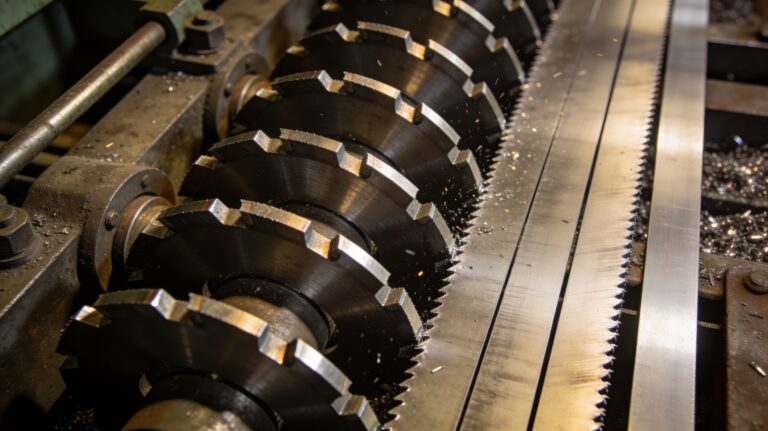
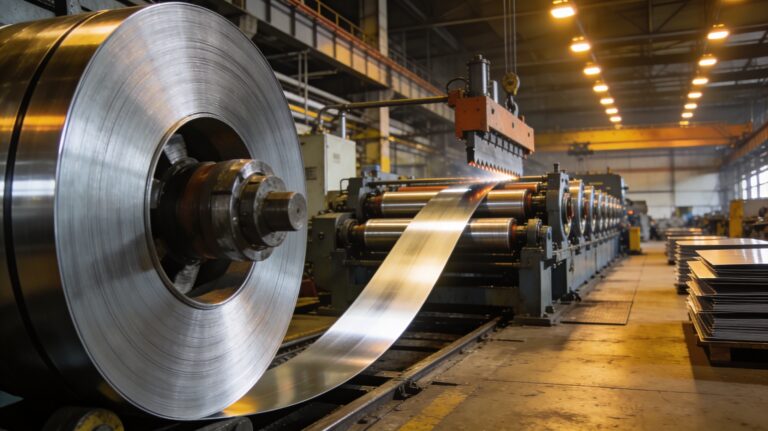
This page is a narrow support page for slitting vs CTL material-risk routing in the MaxDo topic network. It owns only the risk-routing layer: surface sensitivity, springback, burr, scale, coating, hardness, thickness range, sample-run evidence, and whether the project should route to slitting, CTL, or validation testing first. For the material behavior matrix, use slitting or CTL by material. For order-mix planning, use slitting vs CTL production fit. It is not the main slitting vs CTL comparison matrix, not the material-behavior matrix, and not an order-mix planning page.
Route by Risk Signal, Not Material Name Alone
Material family is only the starting point. Aluminum can route to slitting or CTL depending on surface protection and output form. Stainless can route either way depending on springback, burr, and flatness. Mild steel is usually more forgiving, but thickness, scale, and volume can still change the line choice. The RFQ should name the controlling risk before asking for a machine model.
| Risk signal | Usually points toward | What to verify |
|---|---|---|
| Narrow strip output, roll forming, tube mill, strip-fed press | Slitting | Width tolerance, burr, camber, recoiling, separator setup |
| Flat sheet output, laser cutting, fabrication, panel work | CTL | Length tolerance, flatness, squareness, surface-safe stacking |
| Surface-sensitive aluminum or pre-painted material | Test before final route | Guide contact, roller marks, separator pressure, stacking method |
| Stainless springback or edge complaints | Test before final route | Knife clearance, shear setting, leveling result, edge inspection |
Aluminum: Route Around Surface and Handling Risk
Aluminum projects often fail because the surface is marked, not because the line cannot cut the material. Slitting may be the right route when the customer needs narrow coils and the line can protect the strip through guiding, separating, recoiling, and unloading. CTL may be the right route when the customer needs sheets and the line can protect the surface through leveling, feeding, shearing, transfer, and stacking.
If the surface requirement is not defined, route the project to a test plan before final specification. For CTL station checks, use the cut-to-length process acceptance map. For slit-strip quality checks, use the slitting width tolerance measurement protocol.
Stainless Steel: Route Around Springback, Burr, and Tool Load
Stainless steel can make a simple process decision look correct on paper and fail in production. Work hardening, burr, springback, blade wear, and tool load should be checked before treating stainless as a normal steel project. Slitting is strong for continuous strip programs. CTL is strong for flat-sheet programs. If edge quality or flatness is the uncertainty, request sample-run evidence.
When stainless strip deformation or coil build is the complaint, review the slitting deformation control checklist. If the finished output may be either strip or blank, compare the slitting vs blanking decision map.
Mild Steel: Route by Thickness, Scale, and Volume
Mild steel usually gives the buyer more process flexibility. The route is often decided by output form, thickness range, scale condition, and monthly order pattern. Strip-led work should be routed toward slitting. Fabrication sheet work should be routed toward CTL. Mixed programs should be checked against order families, changeover rhythm, and inventory flow before assuming one line can solve every order.
For the broader coil-to-output workflow, use the sheet metal coil processing workflow map. For fabricator-specific CTL value, use the cut-to-length lines for fabricators value map.
Use a Test Coil When the Risk Is Not Settled
A test coil is justified when the buyer cannot yet define surface acceptance, burr, springback, flatness, camber, recoiling behavior, or stacking quality. The test should use the real material or a documented equivalent, the real tolerance target, and the same inspection method that will be used at FAT, SAT, or production release.
- For slitting tests: record strip width, burr, camber, edge condition, coil build, separator setup, and recoiling tension.
- For CTL tests: record sheet length, flatness, squareness, surface condition, stack alignment, and handling damage.
- For both routes: record material grade, thickness, coating, line speed, operator setting, and deviation response.
Material Risk Routing Checklist
- Output form: narrow coil, strip-fed process, flat sheet, blank, or mixed flow.
- Material risk: surface sensitivity, springback, burr, scale, coating, hardness, or thickness range.
- Quality target: width tolerance, length tolerance, flatness, camber, squareness, edge, and surface condition.
- Production rhythm: run length, monthly volume, changeover frequency, and downstream process.
- Evidence needed: sample run, FAT/SAT plan, inspection record, or supplier acceptance matrix.
Route the Decision to Equipment Paths
After the material risk route is clear, compare the metal slitting machine category or the metal cut-to-length line category. For slitting model selection, review MA-850, MA-1350, MD-1650, and MD-2200. For CTL equipment, review CT-850, CT-1350, and CT-1650.
To ask MaxDo to route a material decision, send the material grade, thickness, coating, output form, tolerance target, surface requirement, downstream process, run length, and test-coil expectations through the contact form.