


CTL Line Engineering Handoff Checklist
A narrow CTL engineering handoff checklist for freezing material data, layout, utilities, controls, stacking, FAT/SAT, commissioning inputs, and acceptance records.
This page is a narrow support page for CTL engineering handoff in the MaxDo CTL topic network. It owns only the handoff layer between commercial specification and engineering delivery: material data, layout, utilities, controls boundary, stacking, FAT/SAT, commissioning inputs, and acceptance records. It is not the main CTL process page, not the CTL definition or RFQ intake page, and not the supplier acceptance matrix.
A CTL line engineering handoff turns a sales requirement into a buildable cut-to-length project. The handoff should freeze the material envelope, sheet output, layout, utilities, controls boundary, FAT/SAT method, commissioning inputs, and acceptance records before mechanical, electrical, and controls teams start final engineering.
This page is the engineering handoff layer in the MaxDo CTL topic network. For the operating sequence, use the cut-to-length process station acceptance map. For the basic definition and RFQ intake, use what is a cut-to-length line. Here the focus is narrower: what must be documented when the project moves from commercial specification to engineering delivery.
Separate Process Definition From Engineering Handoff
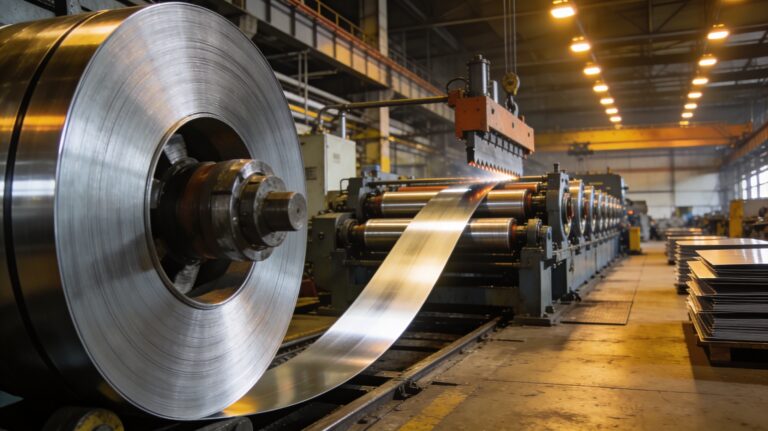
A process definition explains decoiling, leveling, feeding, shearing, conveying, and stacking. An engineering handoff defines the data that lets each station be designed, purchased, wired, tested, and accepted. Mixing those two layers creates repeated clarification loops: sales may know the output target, but engineering still needs tolerances, measuring rules, coil logistics, site constraints, and acceptance responsibility.
| Handoff layer | What must be frozen | Why it matters |
|---|---|---|
| Commercial requirement | Material family, width, thickness, coil weight, sheet size, target output | Sets the practical machine class and capacity boundary |
| Engineering input | Flatness, length tolerance, surface limits, stack quality, measuring method | Prevents vague acceptance claims during FAT and SAT |
| Site input | Layout, foundation, power, air, crane path, guarding, operator access | Reduces installation changes after equipment is built |
| Controls input | Recipe fields, alarms, interlocks, safety zones, data boundary | Aligns PLC/HMI work with production and maintenance needs |
Freeze the Material and Output Envelope
The first handoff record should define the real material envelope, not only the best-selling thickness or width. Include material grade, yield strength range, thickness range, coil width, coil ID and OD, maximum coil weight, sheet length range, length tolerance, diagonal tolerance, flatness expectation, surface protection needs, oil film, burr sensitivity, and stacking method. If the buyer processes mixed gauges, record the expected percentage of each job family.
This is where CTL selection boundaries become practical. A shop that mainly processes light and medium gauge sheet should compare the light vs medium gauge CTL selection boundaries. A service center with mixed coil processing may also need the broader sheet metal coil processing map before the final equipment path is locked.
Confirm Layout, Utilities, and Site Constraints
The layout handoff should cover entry coil storage, loading direction, uncoiler access, loop or pit requirement, leveler maintenance space, shear discharge, stacker exit, scrap path, electrical cabinet position, operator panel location, guarding openings, forklift lanes, crane hook coverage, foundation limits, and future expansion space. Even when the machine specification is correct, weak layout data can create installation delays and operator inefficiency.
| Site item | Engineering question | Record to attach |
|---|---|---|
| Foundation and floor | Can the line support leveling accuracy and coil loading? | Floor drawing, load data, anchor plan |
| Power and air | Are voltage, capacity, cabinet location, and air demand confirmed? | Utility list and connection point drawing |
| Material handling | Can coils, sheets, scrap, and pallets move without crossing unsafe zones? | Crane, forklift, and logistics route sketch |
| Operator access | Can setup, inspection, threading, and maintenance be performed safely? | Guarding, walkway, and panel position review |
Define Controls and Acceptance Boundaries
Controls handoff should not be left as a general request for automation. Define feeder control, shear synchronization, leveler adjustment, stacker coordination, recipe fields, alarm logic, safety interlocks, manual and automatic modes, data export needs, and who owns each interface. This avoids a common project gap: mechanical engineering assumes controls will solve a variation that was never defined as an acceptance condition.
For production-line control architecture, connect the handoff to the automated metal processing system map. For feed accuracy and motion boundaries, use the servo roll feeder and grip feed systems guide.
Turn FAT and SAT Into Engineering Records
FAT and SAT should be designed before manufacturing starts. Define the test coil, sheet length set, speed condition, measuring tools, sample quantity, tolerance rule, flatness check, stacking check, surface inspection, operator training scope, deviation list, corrective-action owner, and sign-off form. If acceptance is only discussed at the end, every side may remember a different promise.
The same discipline applies when comparing equipment partners. Use the CTL supplier acceptance matrix to align quotation review with records that can be tested during FAT, SAT, and commissioning. For sheet-metal fabricators, the CTL fabricator value map helps connect acceptance records to labor, quality, space, and throughput goals.
Build the CTL Handoff Checklist
- Freeze material grade, strength range, thickness, width, coil weight, coil ID/OD, and job mix.
- Define sheet length, length tolerance, flatness, diagonal tolerance, surface condition, stack form, and inspection method.
- Attach layout, foundation, utility, loading, guarding, scrap, and operator-access records.
- Clarify controls ownership for feeder, shear, leveler, stacker, recipes, alarms, interlocks, and data signals.
- Write FAT and SAT forms before manufacturing begins, including test material and acceptance responsibility.
- Close the handoff with commissioning inputs: spare parts, training plan, deviation list, and final sign-off records.
Route Handoff Outputs to Product Paths
After the handoff data is stable, route the project to the metal cut to length line category. Narrow and light-gauge projects can review Cutlength-850. Mid-width requirements often map to CT-1350. Wider coil programs should compare CT-1650.
If the same plant also processes slit coil, keep the CTL handoff separate from the metal slitting machine category. To request an engineering review, send MaxDo the material envelope, output target, layout drawing, utility list, controls expectations, FAT/SAT method, and commissioning schedule through the contact form.